How to Grow Luffa: Early Spring Seedling Techniques and Planting Time Explained
There are many varieties of luffa, and most people choose to grow early spring luffa because it comes to market much earlier than ordinary luffa, which meets market demand and brings high returns. Do you know the methods and timing for growing early spring luffa? Would you like to learn more? Below is an introduction to early spring luffa seedling techniques.
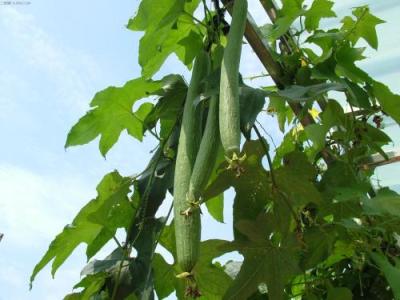
Sprouting and sowing: For early spring luffa production, seedlings are usually raised in early to mid-November. When raising seedlings, first soak the seeds in clean water for 6-8 hours, then disinfect them with 1500x diluted Benlate or about 1000x diluted zinc manganese Metadale for 1-2 hours. Then take a pre-prepared bento box or plate, lay a layer of gauze or toilet paper inside, moisten it with dripping water, and spread the luffa seeds flat on top. Cover to keep warm and move indoors. After the hypocotyl emerges, use plug trays or seedling cups to raise the seedlings. When using plug trays or seedling cups, first add water to the medium and stir until moist. Take out the medium and fill the plug tray to 7 or 8 parts full, then place the seeds flat with the sprout tip pointing down. Then cover with a layer of dry medium so the plug tray reaches 9 parts full, and finally water thoroughly. Keep the medium moist during the seedling period. In this way, when about 1-2 true leaves have formed, they can be transplanted to the field.
Land preparation and bed making: Before preparing the land, soak it with water for 5-7 days to reduce pests and pathogens in the soil. After draining, when the soil is suitably dry, apply 1500 kg of organic fertilizer, 20 kg of ammonium sulfate, 30 kg of superphosphate, and about 20 kg of potassium chloride per fen (10 ares) as base fertilizer, then prepare the land and make beds, covering the beds with plastic sheeting. The bed width depends on the cultivation method.
Netting before planting: To prevent aphids from spreading viral diseases and to reduce the harm of cold waves, early spring luffa may be grown in net houses. If growing in a net house, nylon netting should be stretched before the seedlings are planted. Nylon netting with 32-mesh pores and reinforced edges every 1 meter is more durable. Commercially available netting is 100 meters long and 4 meters wide (about 4 specifications available), and each roll costs about 4200-4500 yuan. A netting height of around 4 meters is more suitable, so about 4 rolls of nylon netting are needed per fen of land. Before stretching the net, thick bamboo poles or 2-inch galvanized ammonium pipes should be erected around the field every 3-4 meters. After the net is stretched, support it further in the field with thinner bamboo poles (10-12 per bundle). Ideally, small holes can be made above the bamboo poles, and plastic netting can be pulled left and right so that the nylon netting does not sag unevenly.
Planting methods: Early spring luffa cultivation methods include: ground-running style, tunnel style, and horizontal style. However, for net house cultivation, the latter two are more suitable. Ground-running style beds are 5-6 meters wide with a plant spacing of about 1.2 meters, two rows per bed, and the bed surface covered with rice straw; tunnel style generally uses double-row planting with beds 5-6 meters wide and a frame height of 1.8-2 meters, and materials can be bamboo, iron bars, or ammonium pipes; horizontal trellis style with single-row planting has beds 2-3 meters wide, and with double-row planting has beds 5-6 meters wide, with a height of 1.8-2 meters, mostly using bamboo as material. For durability, using concrete posts as the framework and pulling iron wires lengthwise and crosswise is the most reliable. The temperature inside a net house is higher than in the open field, and the impact of cold waves is smaller, so the plant spacing may be slightly wider, with 1.2-1.5 meters being suitable. For open-field trellis cultivation, the plant spacing can be reduced to 0.9-1.2 meters, but the seedlings need to be covered with transparent plastic bags for cold protection.
Irrigation and fertilization: Luffa grows vigorously and has a high water transpiration rate, so the field should be kept moist. Because the growth period is long and there are many flowers and fruits, in addition to a high requirement for organic fertilizer, attention should also be paid to topdressing during the growing period. Generally, the first topdressing is carried out 10 days after planting, and thereafter topdressing is applied once every 3 weeks. Before each topdressing, irrigation should be done first. For base fertilizer and topdressing, the following fertilizer amounts may be used as a reference (unit: kg/10 ares).