How to Grow Camellias? A Detailed Guide to Camellia Cultivation Methods and Techniques
What are the cultivation methods for camellias? What should be noted? We ask experienced readers to help share their knowledge. Zhongdi Network has compiled the cultivation methods and key points for camellias, listed below for readers' reference. Growing conditions for camellias: Camellia is also known as shanchahua, mandala tree, etc. It prefers warm, humid, semi-shaded environments...
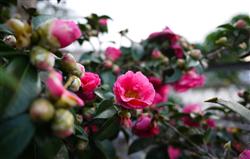 What are the cultivation methods for camellias? What should be noted? We ask experienced readers to help share their knowledge.
Zhongdi Network has compiled the cultivation methods and key points for camellias, listed below for readers' reference.
Growing conditions for camellias:
Camellia is also known as shanchahua, mandala tree, etc. It prefers warm, humid, semi-shaded environments, and dislikes intense sunlight, waterlogging, high temperatures and drought. It likes semi-shaded scattered light, with an optimal growing temperature of 18~25 degrees; at 5~6 degrees it will suffer cold damage. It prefers fertile, loose, slightly acidic mountain soil or sandy loam.
Cultivation methods for camellias:
Potted camellias are best grown in clay flower pots, especially young camellia plants. The potting soil can be made of 6 parts leaf mold, 1 part cake fertilizer residue, and 3 parts sandy loam, or 3 parts leaf mold, 4 parts sandy loam, and 3 parts compost mixed evenly, with broken tile pieces placed at the bottom of the pot for drainage. Potting is best done in early spring from March to April or from late September to early October. When planting, place broken tile pieces at the bottom of the pot for drainage, and do not apply base fertilizer to avoid burning new roots.
When potting, plant the small soil-ball cutting seedlings in the pot. After planting, water thoroughly until water seeps from the bottom of the pot, place in a ventilated shaded area, pay attention to humidity, and if necessary cover with a plastic bag; the temperature inside the bag must not exceed 25 degrees, otherwise survival will be difficult. After 8~10 days, place in a ventilated semi-shaded area. During the growing period, watering should be adjusted according to seasonal changes, following the principle of keeping the potting soil moist; both excessive dryness and excessive moisture are detrimental to plant growth.
During the growth and sprouting period of camellias, watering should be gradually increased. After new shoots stop growing (around late May), watering should be appropriately controlled to promote flower bud differentiation. During the plum rain season, prevent water accumulation in the pot from causing root rot.
In summer high temperatures, water once each in the early morning and evening, and also spray around the plant to increase air humidity. Residents in high-rise buildings can place it in the living room or hallway for the summer, and move it to the balcony before 9 AM or after 5 PM. In winter, the plant enters dormancy, so watering frequency should be reduced; topdressing should mainly use well-rotted dilute liquid fertilizer, avoiding concentrated fertilizer and raw fertilizer.
In early spring, topdress with nitrogen-based liquid fertilizer, once every 10 days, for 1~2 consecutive times, to promote branch and leaf growth. From May to August, apply fertilizer combining nitrogen and phosphorus with phosphorus as the main component, to promote flower bud differentiation; during the hottest days of summer, pay attention to appropriately controlling fertilizer. From September to October, topdress with phosphorus and potassium-based fertilizer to promote further growth of flower buds. Generally, no fertilizer is applied in winter. Generally, small seedlings and weak seedlings should be given less nitrogen fertilizer.
Note that watering should be stopped before fertilizing, and do not splash fertilizer liquid onto branches and leaves. Usually, repot every 1~2 years, mostly in early spring, mainly to change the soil and add well-rotted organic fertilizer as base fertilizer. Under normal circumstances, camellias do not require pruning; simply cut off diseased branches, weak branches, overly dense branches, and leggy branches.
Click to get more camellia growing techniques
Click to get more flower and tree growing techniques