Detailed Explanation of the Methods and Steps for Grafting Camellia onto Oil Tea Trees
How do you graft camellia onto oil tea trees? What should be noted? Netizens have asked for help, so Zhongdiwang has compiled the methods for grafting camellia onto oil tea trees, listed below for netizens' reference. 1. Selection of grafting time: Camellia can be grafted onto oil tea trees during the growing seasons of oil tea and camellia in spring, summer, and autumn...
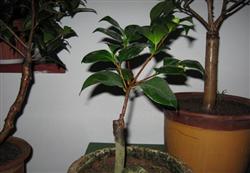 How do you graft camellia onto oil tea trees? What should be noted? Netizens are asked to help explain.
Zhongdiwang has compiled the methods for grafting camellia onto oil tea trees, listed below for netizens' reference.
1. Selection of grafting time:
Camellia can be grafted onto oil tea trees during the growing seasons of oil tea and camellia in spring, summer, and autumn. Grafting from March to June gives better results, because at this time the scion quality is better, the climate conditions are suitable, the scion's growth period in the current year is longer, the growth amount is greater, and the survival rate of the grafted plant is high. From July to August, temperatures are relatively high, so shade and moisture-retention measures must be fully carried out to achieve a satisfactory grafting survival rate. From October to November, although the temperature is suitable and the survival rate of the grafted plant is relatively high, the scion's growth period in the current year is relatively short, and after winter begins the new shoots of the scion have not yet fully lignified, making them susceptible to frost damage.
2. Selection of oil tea rootstock branches:
First, oil tea trees 15 to 35 years old, vigorously growing, and free of pests and diseases must be selected as rootstock. On the rootstock, select 5 to 7 main branches with a branch diameter of 2 to 5 cm as rootstock branches. The angle of the rootstock branches and trunk branches must be appropriate, with a clear primary-secondary relationship and balanced distribution. Only in this way can the grafted plant form a good tree crown after grafting, making the camellia distribution symmetrical and beautiful. For each rootstock plant, in addition to the rootstock branches, 1 to 2 main branches should be retained as nutrient branches, and the rest should be thinned out. Each rootstock branch should retain 1 to 2 side branches as auxiliary nurturing branches, and the rest should be thinned out.
3. Selection of the rootstock grafting site:
The scion mother tree and the rootstock should preferably be in a vigorous growth period when collecting scions for grafting, so that the rootstock plant has a high survival rate and grows in a coordinated and consistent manner. For scion collection on the same rootstock plant, different mother trees with similar flowering periods and similar growth vigor should be selected, so that the rootstock plant's crown develops in a balanced way. If the rootstock's basal diameter is relatively thick, scions of varieties with fast growth and large flowers should preferably be selected; if the rootstock's basal diameter is relatively small, scions of varieties with smaller leaves and smaller flower diameter should preferably be selected. On the same rootstock plant, scions of multiple varieties can be grafted, to form a rich and colorful variety structure with one branch one variety, different on the left and right, different above and below, another color in the middle, and multiple colors around the edges.
4. Collection of camellia scions:
Vigorously growing, pest-free, mature, excellent and precious camellia varieties should be selected as scion mother trees. From the upper outer part of the mother tree's crown, cut healthy, well-developed, plump-budded, lignified or semi-lignified strong branches with a diameter of 0.3 cm or more as scions. Tie the scion branches in small bundles by variety, wrap the bases with wet toilet paper to prevent wind and sun exposure, and use them for grafting as soon as possible. Scions collected in winter should be stored in layers in wet sand; the sand moisture should be such that no water comes out when squeezed in the hand. One layer of sand, one layer of scions, and finally cover with sand and shade with wet grass, then take them out for use when grafting.
5. Grafting operation methods
1. Cut-rootstock bark-pulling grafting method:
On the selected rootstock branch, between 60 and 90 cm from the ground, at a branch diameter of 2 to 5 cm, saw it off, retain the auxiliary nurturing side branches, thin out the other side branches, remove dirt below the cut at the grafting position, smooth the cut surface and make the inside of the cut slightly higher, cut a 2 to 3 cm long cut surface on the back of the leafy scion (so that the leaf surface is at the upper end of the cut surface), cut deep enough to slightly expose the xylem, cut a short cut surface on the opposite side at both ends of the long cut surface so that the cross-section becomes ear-shaped, and cut off half of the leaf. Make two longitudinal cuts downward through the bark of the rootstock branch cross-section, deep to the xylem, with the width between the two cuts and the length of the longitudinal cuts equal to the width and length of the scion's long cut surface. Pry open the bark at the rootstock branch's longitudinal cut and pull it down, insert the scion's long cut surface into the rootstock branch cut, and cover the pulled rootstock bark over the scion.
Finally, wrap the joint well with plastic film tape. While wrapping, cover the scion with plastic film in reverse (for moisture retention), and additionally wrap kraft paper on the outside of the bag (for shade), and tie the bag and shade paper securely.
2. Cambium alignment grafting method:
On the selected rootstock branch, between 60 and 90 cm from the ground, at a branch diameter of 2 to 5 cm, make the grafting position, and remove dirt from the grafting position. On the back of the scion leaf, cut a long cut surface 2 to 3 cm long, deep to the cambium and slightly exposing the xylem; when making this cut surface, the leaf should be at the upper end of the cut surface, cut a short cut surface on the opposite side at both ends of the cut surface so that the cross-section becomes ear-shaped, and finally cut off half of the leaf.
On the rootstock branch, cut a cut surface with the same length and width as the scion's long cut surface, deep to the middle of the cambium and slightly exposing the xylem. Fit the scion's long cut surface against the rootstock branch cut surface, wrap the joint well with plastic film tape, and at the same time tie on plastic film (for moisture retention) and kraft paper (for shade). Finally, break the rootstock branch above the grafting position at the 1/2 point, remove its apical dominance, and promote the scion's sprouting and growth.
6. Management methods after camellia grafting:
1. Unbinding and rootstock pruning
About 30 days after grafting the tea tree, when the scion's new shoots touch the moisture-retention film, the moisture-retention film can be cut off on a cloudy day or in the evening, but the shade paper must still be retained. After about 60 days, the shade paper and binding tape can be removed. After about 90 days, the rootstock body above the rootstock branch grafting position can be cut off, and the sprouts and auxiliary nurturing side branches on the rootstock branch can be cut off; after half a year, the nutrient main branches can be thinned out.
2. Fertilization and irrigation of grafted camellia
Reasonable fertilization should be carried out according to the different growth stages of the grafted plant. In winter, each plant can be given 1 kg of high-quality fertilizer such as cake fertilizer in a ring trench; in spring and summer, diluted liquid fertilizers such as superphosphate, potassium dihydrogen phosphate, and urea can be poured on; during the flower bud differentiation stage and flower bud swelling stage, foliar fertilizer can also be sprayed on cloudy days or in the evening, with a concentration within 0.3%.
Timely and appropriate watering and fertilization are important measures to promote the growth of the grafted plant. Spring, summer, and autumn are the growing seasons for camellia, when water demand is high, so water should be applied when drought appears; in winter, camellia enters a semi-dormant period, so water lightly as appropriate and just keep the soil moist.
3. Pest and disease control of grafted camellia
Sooty mold is the main disease of camellia. This disease covers the plant with a black layer, hindering photosynthesis and thereby affecting the plant's growth and development; sooty mold is caused by scale insects, and the preventive method is to eliminate the scale insects. Scale insects can be killed by spraying 1000-fold Duxiben, once every 10 days, for 3 consecutive sprays. Longhorn beetles and tea stem borers bore into and feed on tea stems; cotton dipped in 2-fold 80% dichlorvos emulsion can be inserted into the bore holes to kill them. The tender leaves of tea trees are susceptible to damage by piercing-sucking and chewing mouthpart pests, and can be killed by spraying 1500-fold Dubensi.
Click to get more camellia planting techniques
Click to get more flower and tree planting techniques