What are the main pests of osmanthus? Introduction to common pest species
What are the main pests of osmanthus? How should osmanthus pests be controlled? We also ask experienced readers to help explain. The common pests of osmanthus generally include jewel beetles, scale insects, stinging moths and bagworms. Zhongdi Network has compiled the harm caused by the above pests to osmanthus trees and their control methods, listed below for readers...
 What are the main pests of osmanthus? How should osmanthus pests be controlled? We also ask experienced readers to help explain.
The common pests of osmanthus generally include jewel beetles, scale insects, stinging moths and bagworms. Zhongdi Network has compiled the harm caused by the above pests to osmanthus trees and their control methods, listed below for readers' reference.
Osmanthus tree jewel beetle:
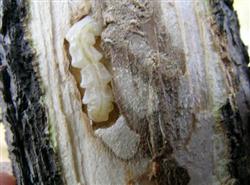
Harm:Jewel beetle larvae bore and feed within the bark layer of branches and trunks, exuding oily dot-like brown gum. When the damage is severe, the bark splits open, and the main branches or the whole plant die. Adults bite and feed on young leaves, causing notches, and in severe cases cause heavy leaf drop. Trees that are poorly managed and weak in growth suffer more severely.
Control methods:During the peak larval hatching period (generally May), scrape off the bark and apply 80% dichlorvos emulsifiable concentrate at 20 times dilution; during the adult occurrence period (about June), spray the canopy 2 to 3 times with 90% trichlorfon at 1000 times dilution.
Osmanthus tree scale insects:
Harm:The scale insects harming osmanthus include red wax scale, cottony cushion scale, and chaff scale. Nymphs and adults insert their mouthparts into branch and trunk tissues to suck sap, causing branches and leaves to wither and die. At the same time, they secrete honeydew, inducing sooty mold, and the damage is severe.
Control methods:During the nymph hatching period, spray 20% fenpropathrin emulsifiable concentrate or 2.5% deltamethrin emulsifiable concentrate at 2500 times dilution for control; when the scale covering is formed, spray 40% methidathion emulsifiable concentrate at 1500 times dilution, which has strong penetration and good control effect.
Osmanthus tree stinging moths:
Harm:Stinging moths mainly include yellow stinging moth, green stinging moth, blue stinging moth, and flat stinging moth. They mostly overwinter as larvae in cocoons. Young larvae gather to feed on leaves, with the heaviest damage from July to September. Adults have strong phototaxis.
Control methods:From May to June, use black light traps to kill adults; manually remove cocoons attached to branches and trunks. During the young larval stage, chemical control should be carried out in time. You may choose 10% cypermethrin at 2000 times dilution or 90% trichlorfon at 1000 times dilution to spray and kill the larvae.
Osmanthus tree bagworms:
Harm:Bagworms include large bagworm, tea bagworm and other species. The larvae can spin silk to make cocoons, with various broken twigs and dead leaves stuck on the outside, forming bags of various forms. The larvae mostly gather at the top of the canopy to feed on leaves. In severe cases, they can eat all the leaves, causing serious damage to plant growth or even death.
Control methods:In winter, prune off infested branches and remove the bags; during the young larval stage, carry out chemical control in time. You may choose 95% crystalline trichlorfon at 1000 times dilution or 50% fenitrothion at 1000 times dilution to spray and kill the larvae.
Click to get more osmanthus tree planting techniques
Click to get more flower planting techniques