How to prevent and control viral diseases in lily cultivation
How do you prevent and control viral diseases when growing lilies? What harm do viral diseases do to lilies? We ask knowledgeable readers to help explain. Lilies are susceptible to viral diseases during cultivation, so Zhongdiwang has compiled the harm viral diseases cause to lilies and the prevention and control methods, listed in detail below for readers' reference....
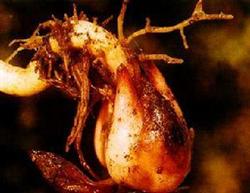 How do you prevent and control viral diseases when growing lilies? What harm do viral diseases do to lilies? We ask knowledgeable readers to help explain
Lilies are susceptible to viral diseases during cultivation, so Zhongdiwang has compiled the harm viral diseases cause to lilies and the prevention and control methods, listed in detail below for readers' reference.
Harm of viral diseases to lilies:
The common viral diseases of lilies mainly include lily mosaic disease, necrotic spot disease, ringspot disease and rosette disease, 4 kinds in total. Lily mosaic disease shows light green and dark green mottled patches on the leaf surface; in severe cases the leaves fork and distort, and flowers deform or buds fail to open.
Some varieties' seedlings can produce mosaic symptoms; lily necrotic spot disease sometimes occurs as latent infection, and sometimes necrotic spots appear, with some varieties' flowers twisting and deforming into a tongue shape; lily ringspot disease produces necrotic spots on the leaves, the plant has no main stem, and there are no flowers or poor development; lily rosette disease causes infected plants to become rosette-shaped, with leaves light green or light yellow, producing streak spots or mottling. Infected young leaves curl downward and distort, and the whole plant is dwarfed.
Causes of lily viral diseases:
The viruses of lily mosaic disease and lily ringspot disease both overwinter in the bulbs and spread through sap inoculation; aphids can also transmit the virus. Lily necrotic spot disease is passed through the bulbs to the following year. In addition, sap rubbing can also transmit the virus, and melon aphids, green peach aphids and other aphids are virus-transmitting vector insects. Lily rosette disease is spread by aphids; when aphid populations are large, this disease occurs severely.
Methods for preventing and controlling viral diseases in lily cultivation:
Method 1: Select bulbs from healthy plants for propagation; where conditions permit, establish disease-free seed-production plots; promptly remove diseased plants when found, and bulbs from diseased plants must not be used for propagation.
Method 2: During the lily growing period, promptly spray 10% imidacloprid wettable powder at 1500 times dilution or 50% pirimicarb ultra-micro wettable powder at 2000 times dilution to control virus-transmitting aphids and reduce the spread of the disease.
Method 3: In the early stage of lily viral disease, spray 3.85% Bingdu Bike wettable powder at 700 times dilution or 7.5% Keduling aqueous solution at 800 times dilution, 0.5% Antiviral Agent No. 1 aqueous solution at 300-350 times dilution, 5% Junduqing aqueous solution at 300 times dilution, 20% Bingduning water-soluble powder at 500 times dilution, once every 7--10 days.
Lily cultivation methods
How to prevent and control lily anthracnose