How to Grow a Money Tree? A Full Guide to Care Methods and Precautions
What are the care methods and precautions for a money tree? We ask knowledgeable readers to help explain. The money tree's petals are split into strips, and the flowers are red, white or pale yellow with a brilliant luster. The money tree also has a peculiar tree shape and leaf shape, and its common name is auspicious, chosen for its lucky omen. In addition, the money tree's upright form is elegant, its leaves are bright green, and its trunk is hammer-shaped, so once potted it is suitable for indoor arrangement and beautification. Therefore, Zhongdiwang has compiled the care methods and precautions for the money tree, listed in detail below for readers' reference.
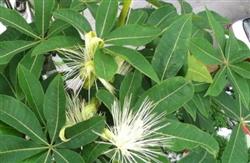 What are the care methods and precautions for a money tree? We ask knowledgeable readers to help explain
The money tree's petals are split into strips, and the flowers are red, white or pale yellow with a brilliant luster. The money tree also has a peculiar tree shape and leaf shape, and its common name is auspicious, chosen for its lucky omen. In addition, the money tree's upright form is elegant, its leaves are bright green, and its trunk is hammer-shaped, so once potted it is suitable for indoor arrangement and beautification. Therefore, Zhongdiwang has compiled the care methods and precautions for the money tree, listed in detail below for readers' reference.
Money Tree Care Methods
1.Suitable growing environment for the money tree:
The money tree likes warmth, humidity, and a sunny or slightly shaded environment, with an optimum growing temperature of 20°C to 30°C. The hot, humid summer season is very favorable for the money tree's growth and is its fastest growing period, so during this stage fertilizer and water management should be strengthened to make it grow robustly. In winter, it must not go below 5°C, and it is best kept at 18°C to 20°C. It dislikes cold and damp conditions; in a humid environment the leaves very easily develop ulcer-like cold spots, which spoils their ornamental value.
2. Choosing a pot and potting soil for the money tree:
The pot for a money tree should be chosen according to the size of the plant. For example, a small plant can use a small pot, and as the money tree grows, a larger pot can be swapped in along with the annual soil change and repotting.
The money tree grows best in loose, fertile soil with good drainage, so the potting soil generally uses loose garden soil or peat soil, leaf mold, and coarse sand, plus a small amount of compound fertilizer or chicken manure as base fertilizer and growing medium.
Generally, the money tree should be planted at a depth of about 1/2 of the swollen part, the plant should be upright and positioned in the center, and the potting soil should be moderately firm. When filling in the potting soil, do not damage the plant tissues, so as to avoid later wound infection. When planting a money tree, it is best to spray the bare trunk with a mixed solution of fungicide (70% mancozeb 500-800 times dilution or thiophanate 500-800 times dilution) and insecticide (40% omethoate 1000 times dilution), so that the solution runs down the trunk into the potting soil.
3. Placement of the money tree:
The money tree likes light and cannot be shaded for long periods. Therefore, when placing it, it should be put in a spot indoors with ample sunlight. When placing it, the leaf surface must face the sunlight. Otherwise, because the leaves grow toward the light, the whole branches and leaves will become distorted.
4. Watering methods for the money tree:
If a money tree is watered too little, the development of branches and leaves stalls; if watered too much, it causes root rot and death; with moderate watering the branches and leaves grow thick and large. The first principle of watering is to prefer moist over dry, and the second is "two more, two less", that is, water more in the hot summer season and less in winter; water more for large and medium-sized plants in vigorous growth, and water less for small newly potted plants.
The money tree can be sprayed on the leaves with a spray bottle once every 3 to 5 days; this both helps photosynthesis proceed and makes the branches and leaves look more attractive.
5. Fertilizing methods for the money tree:
The money tree is a flowering plant that loves fertilizer, and its demand for fertilizer is greater than that of common other flowering plants. When repotting each year, the proportion of fertile soil can be 1/3 or even more. The fertile soil can be made by collecting leaf mold from broadleaf tree litter and mixing it with a little garden soil, miscellaneous bone meal, and soybean cake residue. This fertile soil is highly effective and easy to obtain, but it must be fully decomposed, so as not to "burn" the leaves yellow. In addition, during the money tree's growing period (May to September), a fully decomposed liquid fertilizer or mixed flowering-plant fertilizer can be applied once every 15 days to promote deep roots and lush leaves.
6. Pruning methods for the money tree:
Since the money tree has been grown for a somewhat longer time, the plant's apical dominance is obvious. If it is not pruned at the appropriate time and height, the plant will have few branches and keep growing upward, which affects its ornamental value. Generally, pruning can be done every spring, cutting off the top shoot above the braid at a height according to personal preference. Pruning can also be done together with repotting; cutting off the terminal bud can encourage the plant to branch more and the base of the stem to swell. For detailed pruning methods, click to view >>>Money Tree Pruning Methods
7. Pest and disease control methods for the money tree:
Harm of root rot to the money tree: it causes the stem base and roots to turn blackish brown and rot, and the young leaves lose vigor and wither.
Control methods for root rot: 1. Pay attention to disinfecting the growing medium and flower pot.
2. After transplanting the money tree, remove the bruised and rotten tissue at the top of the roots, then spray the wounds with procymidone, let them dry, and plant.
3. In the early stage of the disease, spray the above-ground part every 10 days with 50% thiram wettable powder 1000 times dilution, or 70% thiophanate-methyl wettable powder 800 times dilution, and drench the underground part 2 to 3 times with 70% mancozeb wettable powder 400 to 600 times dilution.
Harm of leaf blight to the money tree: in the early stage of the disease, blackish brown spots appear, and inside them gray or dark brown spots like sunscald symptoms form; on long-standing spots, black powder can be seen.
Control methods for leaf blight: 1. Remove diseased leaves promptly when found, and destroy them.
2. Strengthen care and management, water and fertilize in good time, and apply foliar fertilizer 2 to 3 times each growing season, such as 0.5% monopotassium phosphate or double-effect micro-fertilizer 200 times dilution.
3. In the early stage of the disease, use 75% chlorothalonil wettable powder 800 times dilution, or 50% thiram wettable powder 600 times dilution, or 50% carbendazim wettable powder 800 times dilution, or 75% thiophanate-methyl wettable powder 1500 times dilution.
Harm of root rot nematodes to the money tree: they mainly harm the money tree's roots and other underground organs, occasionally infecting above-ground parts such as stems and fruits. The tissues of the infected parts turn blackish brown and appear water-soaked, with scars on the surface; the roots become stubby and rot, while the above-ground part shows stunted growth, wilting, or death.
Control methods for root rot nematodes: 1. Appropriately increasing nitrogen fertilizer, especially urea, can suppress the occurrence of root-lesion nematodes.
2. Before planting, treat the soil with a fumigant nematicide such as metam-sodium.
3. For plants already planted, non-fumigant nematicides such as fenamiphos, cadusafos, milbemectin, and phorate can be used for control.
Precautions for Growing a Money Tree
Note 1: The money tree has high temperature requirements, generally with a minimum temperature of 16-18 degrees. If it falls below this temperature, the money tree's leaves turn yellow and drop. Lower temperatures often cause leaf drop in money trees, and in severe cases the branches become bare, which not only spoils the ornamental value but also very easily causes the plant to die.
Note 2: Since the money tree's water requirements are not high, it should not be watered too much, to prevent water accumulating in the potting soil, causing root rot and leading to the plant's death. In summer, water once a day indoors; in spring and autumn, water once every 5-10 days, but this is not an absolute interval and should be managed flexibly, following the principle of keeping the potting soil "dry-wet alternating". Excessively wet conditions will cause waterlogging, and the plant will show yellow leaves, root rot, and accompanying leaf drop.
Note 3: The money tree grows rapidly during its optimum growing temperature period, so it should be fertilized regularly to ensure luxuriant growth. Generally, apply a light fertilizer once about every 20 days, but apply less nitrogen fertilizer to avoid excessive leggy growth. If too much fertilizer is applied, or if the fertilizer applied is not decomposed, it will burn the roots, causing yellow leaves and leaf drop.
Note 4: When repotting and changing soil for a money tree, damage the roots as little as possible. The added medium should be sterile, breathable, fertile, and slightly acidic, and the potting soil should be filled in firmly with no gaps left. If gaps remain, no matter how much water is given, the plant will still suffer from water shortage, showing yellow leaves, severe leaf drop, and shriveled branches.
Reasons for Money Tree Leaves Turning Yellow
Money Tree Pruning Methods