How do you grow potted jasmine so it blooms more?
How can you make potted jasmine bloom more? What methods can make jasmine bloom more and give off a strong fragrance? Experienced readers are also asked to share their advice. If you want potted jasmine to bloom more, you first need to understand the jasmine flowering period. Generally, the jasmine flowering period is divided into three stages: the 1st stage is in June (mold flowers), the 2nd stage is in July to August (prime flowers...
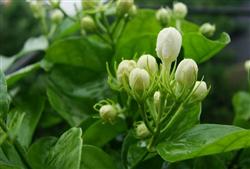 How can you make potted jasmine bloom more? What methods can make jasmine bloom more and give off a strong fragrance? Experienced readers are also asked to share their advice.
If you want potted jasmine to bloom more, you first need to understand the jasmine flowering period. Generally, the jasmine flowering period is divided into three stages: the 1st stage is in June (mold flowers), the 2nd stage is in July to August (prime flowers), and the 3rd stage is in September to October (autumn flowers). Among the three flowering stages, the prime flowers are the best. This is because during bud formation and flowering, the longer the sunshine duration and the higher the intensity, the better the flowering: the flowers are large, numerous, and strongly fragrant. Therefore, Zhongdiwang has compiled several methods to make jasmine bloom more, listed in detail below for readers' reference.
Method 1: Sufficient light:
Because jasmine is a long-day, sun-loving plant, it needs more than 5 hours of light per day. If there is not enough sunlight, the internodes will be sparse, the flowers small, and the fragrance absent.
Method 2: Suitable soil pH:
The soil used for cultivating jasmine should preferably be fertile sandy or semi-sandy soil. Slightly acidic soil at (pH6 to 6.5) promotes the growth and development of jasmine.Soil pH measurement method
Method 3: Reasonable watering:
The key to daily management of potted jasmine lies in water, because jasmine is not drought-tolerant, but it also dislikes waterlogging. For example, during bud formation and flowering, it needs a large amount of water every day, so it should be watered once in the morning and once in the evening, with several sprays on the leaves and sprinklings on the ground to create a moist environment. With sufficient water, the flowers are more numerous and larger; with insufficient water, the flowers are smaller and fewer, and the fragrance is not strong either. Do not spray water on the flowers during the flowering period.
Method 4: Fertilize at the right time:
In high-temperature seasons, jasmine grows vigorously, so more organic fertilizer and phosphorus-potassium fertilizer should be applied, such as cake fertilizer and bone meal. During bud formation and flowering, nitrogen fertilizer must be continuously added, together with phosphorus-potassium fertilizer and organic fertilizer, about once every 3 days. About every 15 days, one spoonful of edible vinegar plus 10 times water can be used to water the plant, to maintain the acidity of the soil. During the summer growing period, the phenomenon of lush branches and leaves without flowering often occurs because too much nitrogen fertilizer causes excessive vegetative growth.
Method 5: Proper pruning:
When jasmine grows quickly in summer, potted jasmine should be pruned in time, keeping 10 to 15 cm at the base, to encourage the growth of many sturdy new shoots; if the new branches grow very vigorously, pinch them when they reach 10 cm, to make the plant compact. Once the flowers fade, the flowering branches should be cut off in time to reduce nutrient consumption and encourage new shoots, so that the branches are dense, the buds numerous, and the flowers plentiful.
Management methods for the jasmine flowering period
Jasmine pest and disease control methods