What is the difference between fast-dissolving, fast-spreading fertilizers and slow-dissolving, slow-spreading fertilizers?
At present, China has a great many types of controlled-release and slow-release fertilizers, and products with various materials and release mechanisms can be said to be flourishing in a hundred flowers. However, because farmers have a low level of knowledge, they are seriously lacking in understanding of such upgraded products. In particular, some unscrupulous manufacturers hype concepts and cut corners, which hurts consumers' feelings and causes them to...
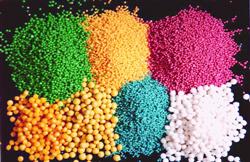 At present, the general consensus in the chemical fertilizer market is that chemical fertilizers, especially compound (mixed) fertilizers, must be as "fast-dissolving" and "fast-spreading" as possible. This is because farmers mistakenly believe that chemical fertilizers should be "fully soluble" and "fast-dissolving," or at least "fast-spreading," otherwise they are fake fertilizers. However, Thailand and Egypt mix and knead NPK fertilizers with raw rubber latex to make slow-release fertilizers; the cemented slow-release fertilizers developed by researcher Zhang Fudao of the Soil and Fertilizer Institute of the Chinese Academy of Agricultural Sciences and Professor Liao Zongwen of South China Agricultural University both show that not spreading and slow spreading give longer fertilizer efficiency and higher nitrogen use efficiency than fast spreading. Urea is a fully soluble, fast-dissolving fertilizer, but when made into slightly soluble urea-formaldehyde fertilizer, it becomes a slow-release fertilizer.
It is estimated that compact, slow-spreading compound fertilizers can increase nitrogen use efficiency by 3% to 5% compared with fast-spreading compound fertilizers. If, based on China's mixed fertilizer output of 12 million tons of N (nitrogen) P (phosphorus) K (potassium) (m(N):m(P2O5):m(K2O)=1:0.5:0.5), 6 million tons of N are processed into compound fertilizers, and assuming that 300 million tons of N should be slow-spreading but is artificially made fast-spreading, thereby reducing N use efficiency from 29% to 25%, this is equivalent to using 120,000 tons less N, equivalent to 260,000 tons of urea. Assuming the farm-gate cost of urea is 2,000 yuan/ton, this concept causes a loss of 520 million yuan each year.