How to Apply Compound Fertilizers? Technical Key Points and Precautions Explained
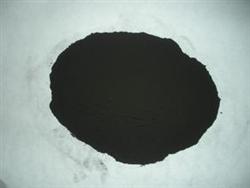
Humic acid fertilizer refers to products made from peat, lignite and weathered coal as raw materials, using different production methods, to produce products containing large amounts of humic acid and the nitrogen, phosphorus, potassium and certain trace elements needed for crop growth and development. The varieties of humic acid fertilizer include ammonium humate, nitro-ammonium humate, humic acid phosphorus, ammonium humate phosphorus...
 Compound fertilizers have the advantages of high nutrient content, few secondary components, and improved physical and chemical properties of fertilizers. Scientific application of compound fertilizers should consider the following aspects.
1. Select suitable varieties according to crop fertilizer requirements and soil characteristics
China has a vast territory and a wide variety of crops. According to the soil fertilizer supply characteristics of different regions and the nutrient requirements of various crops, suitable varieties should be selected in a targeted manner. Generally, food crops should use compound fertilizers with high nitrogen and phosphorus content; legume crops should use compound fertilizers with high phosphorus and potassium content; for certain cash crops, ternary compound fertilizers suitable for the soil and crops should be selected. In addition, soil properties and climatic conditions are also very important reference factors. For example, the rice-producing areas in the south should not use compound fertilizers of the nitric phosphate series; those containing citrate-soluble phosphorus are more suitable for application on acidic soils; for saline-alkali land and chlorine-sensitive crops, chlorine-containing compound fertilizers cannot be used.
2. Select suitable varieties according to the crop rotation system
Due to different crop rotation systems, the suitable compound fertilizer varieties for the preceding and following crops in one rotation cycle also differ. For example, in a wheat-corn rotation system, the wheat seedling stage is in a low-temperature growth phase and is particularly sensitive to phosphorus deficiency, so a high-phosphorus compound fertilizer variety should be selected; while the summer corn production period is in a high-temperature phase, the soil releases relatively more phosphorus, and it can also utilize the residual effect of the phosphate fertilizer applied in the wheat stubble, so a low-phosphorus compound fertilizer variety can be selected.
3. Application techniques for different forms of compound fertilizers
① Nitrate-type compound fertilizers easily lose nitrogen in paddy fields. In hilly tea areas, the relatively high annual rainfall can also lead to the loss of nitrate nitrogen. For fruit tree seedlings and young trees, ammonium-type compound fertilizers have a better effect; after the mature and fruiting stages, nitrate-type compound fertilizers are more conducive to the absorption and transport of fruit trees.
② In paddy fields, applying compound fertilizers containing potassium chloride shows a higher yield-increasing trend than applying compound fertilizers containing potassium sulfate, so paddy fields should preferably use potassium chloride compound fertilizers. However, some crops are sensitive to chlorine, such as tobacco, grapes, potatoes and other chlorine-avoiding crops, and potassium sulfate-type compound fertilizers should be used. According to previous concepts, applying chlorine-containing fertilizers in tea gardens easily causes "chlorine damage," and tea trees are also listed as chlorine-avoiding crops.
4. Combined application with single-element fertilizers
Although the formula of compound fertilizers is determined according to the nutrient requirements of crops and the fertilizer supply characteristics of the soil, it is difficult to fully meet actual needs. Therefore, when applying compound fertilizers, the proportion of nutrient elements should also be adjusted with single-element fertilizers according to the growth conditions of field crops, so that it ultimately suits the nutritional requirements of the crops. This is very necessary.
5. Application methods of compound fertilizers
Compound fertilizers contain phosphorus or phosphorus-potassium components, and most are granular, dissolving more slowly than powdery single-element chemical fertilizers. Therefore, they are generally used as base fertilizer, and can also be used as seed fertilizer and topdressing.
① Base fertilizer, also called bottom fertilizer, is the fertilizer applied during land preparation and plowing. Applying compound fertilizer can meet the demand of crops for multiple nutrients at the seedling stage and is beneficial for strong seedlings, so sufficient base fertilizer is the foundation for obtaining high crop yields. The amount of base fertilizer used is closely related to crop type, soil properties, etc.
② Seed fertilizer refers to the fertilizer applied at sowing or transplanting. When using compound fertilizer as seed fertilizer, it is generally not suitable to apply the fertilizer together with the seeds, and direct contact between the fertilizer and seedlings should also be avoided. Fertilizer granules in the soil should maintain a certain distance from the seeds or seedlings.
③ Topdressing refers to fertilizer added during crop growth. The characteristics of topdressing application are relatively flexible. According to the symptoms shown at different stages of crop growth, suitable fertilizers should be selected for application.