Detailed Explanation of Integrated Water and Fertilizer Technology for Greenhouse Vegetables
Giving greenhouse vegetables an "IV drip" is actually integrated water and fertilizer technology, that is, integrating irrigation and fertilization. Specifically, with the help of a pressure system (or natural terrain drop), soluble solid or liquid fertilizers are prepared into a fertilizer solution according to soil nutrient content and the fertilizer requirements of the vegetable type, and together with irrigation water...
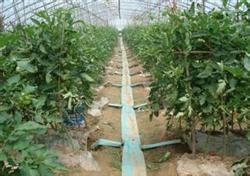
Giving greenhouse vegetables an "IV drip" is actually integrated water and fertilizer technology, that is, integrating irrigation and fertilization. Specifically, with the help of a pressure system (or natural terrain drop), soluble solid or liquid fertilizers are prepared into a fertilizer solution according to soil nutrient content and the fertilizer requirements of the vegetable type, and together with irrigation water, water and fertilizer are supplied through a controllable pipeline system. After the water and fertilizer are mixed, drip irrigation is formed through pipes and emitters, evenly, at fixed times, and in fixed amounts, moistening the vegetable root development zone, so that the soil around the main roots always remains loose and at a suitable water content. It is currently one of the most effective water-saving irrigation methods, and water use efficiency can reach 95%. Because sufficient water is not supplied between plants, weeds do not grow easily, so the phenomenon of vegetables and weeds competing for nutrients is greatly reduced, and weeding labor is also reduced. Because drip irrigation is easy to operate, high-frequency irrigation can be carried out, and the outlet holes are very small with a slow flow rate. Each irrigation lasts relatively long, and soil moisture changes only slightly, so the soil in the root zone can be kept close to the humidity most suitable for vegetable growth for a long time. Drip irrigation is a micro-irrigation method. Water slowly and evenly infiltrates the soil, helps maintain soil structure, and forms a suitable soil water, fertilizer, and heat environment.
1. Composition of the drip irrigation system Drip irrigation equipment is mainly composed of a water source, water pump, filter, flow and pressure regulator, fertilizer mixing tank, fertilizer injector, pipeline system (main pipe, branch pipe, and emitters), and other components. Where there is no tap water, the micro electric pumps currently sold on the market can be used to supply water. The water delivery pressure required for drip irrigation is 1~1 kg/sq cm, which is equivalent to the pressure of a water column of more than 10 m, so when a water tower is installed, its height should be higher than 10 m. The simplest filter is a gauze with more than 30 holes per sq cm, and it is required to be able to remove particles or impurities larger than 4.4 mm in diameter. The volume of the fertilizer mixing tank is generally 0.5~1.0 cubic meters. In winter-warm greenhouses, drip irrigation pipes generally use a two-stage type, namely a main pipe and branch pipes. Emitters are directly installed on the branch pipes. The filter, flow (pressure) regulator, and fertilizer mixing tank should all be installed at the head of the main pipe inside the greenhouse. If water quality is good and it has been settled for a certain period, a filter may also be omitted. The fertilizer solution can be injected into a fertilizer tank and then flushed into the drip irrigation pipe with a small amount of water, or put into a pressurized liquid storage tank. During the use of drip irrigation, the dripping condition of each emitter must be checked frequently, and any abnormal condition must be adjusted promptly.
2. Operating method First, when irrigating with clean water, first close the suction pipe valve of the fertilizer applicator, then open the valve to the maximum, and then connect the pressurized water source to irrigate. Second, when applying fertilizer water, close the valve, open the switch of the fertilizer applicator suction pipe, fix the filter at the bottom of the fertilizer solution bucket, and connect the water source to apply fertilizer. After fertilization is finished, also close the switch on the suction pipe and open the valve to continue irrigating, so as to flush away residual fertilizer in the pipe.
3. Precautions ① The system pressure must be controlled well, and the system working pressure should be controlled within the specified standard range. ② The filter is a key component for ensuring normal system operation and must be cleaned frequently. If the filter screen is found to be damaged, replace it promptly. ③ Emitters are easily damaged and should be managed carefully. When not in use, they should be gently rolled up, and must not be stepped on or dragged on the ground. ④ Strengthen management to prevent debris from entering the emitters or water supply pipes. If debris is found to have entered, promptly open the blocked head and rinse it clean. ⑤ In winter, when the temperature inside the greenhouse is too low, corresponding measures should be taken to prevent plastic parts, water supply pipes, emitters, and the like from freezing and cracking. ⑥ During drip irrigation, the valve should be opened slowly and the flow rate gradually increased to discharge all air, reduce impact pressure on the emitters, and extend their service life.