A Brief Analysis of Key Technical Points for Water and Fertilizer Management in Tobacco Fields
Compared with most other crops, the special characteristic of tobacco leaf is that the harvested part is the leaf. Tobacco leaves grow gradually as the tobacco plant roots continuously absorb nutrients and water from the soil. Therefore, to cultivate high-quality tobacco leaves, water and fertilizer management in tobacco fields is crucial. Scientific fertilization ensures yield and quality...
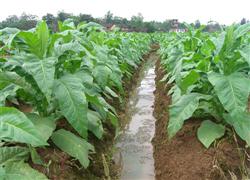
Compared with most other crops, the special characteristic of tobacco leaf is that the harvested part is the leaf. Tobacco leaves grow gradually as the tobacco plant roots continuously absorb nutrients and water from the soil. Therefore, to cultivate high-quality tobacco leaves, water and fertilizer management in tobacco fields is crucial.
Scientific fertilization ensures yield and quality
Soil provides nutrients and water for tobacco plants. Different types of soil have different structures and nutrient compositions. To meet the growth needs of tobacco plants, fertilization must be used to modify the soil nutrient structure.
Tobacco leaf is a crop extremely sensitive to fertilizer. The type of fertilizer, fertilization rate, fertilizer ratio, fertilization timing and fertilization method all have a great impact on tobacco leaf yield and quality. If too little fertilizer is applied, nutrient supply is insufficient and the expected production goal cannot be achieved; if too much fertilizer is applied, the quality of tobacco leaves is greatly reduced, which not only increases production costs but also lowers tobacco leaf quality. Therefore, scientific and rational fertilization is the key to producing high-quality tobacco leaves.
During fertilization, the following key points should be mastered.
First, a reasonable fertilization rate should be determined according to ecological factors such as soil type, water resources and climatic conditions. In plots with overly loose soil or when rainfall is excessive, nutrients are easily lost, so the fertilization rate should be appropriately increased; in plots with heavy clay soil or when rainfall is too low, the fertilization rate should be appropriately reduced to avoid slow release of fertilizer efficacy causing tobacco leaves to remain green and mature late.
Second, a reasonable fertilization method should be determined according to the growth characteristics of tobacco leaves. After tobacco seedlings are transplanted, the uptake of various nutrients such as nitrogen, phosphorus and potassium is very small in the early stage. As time goes on, the rate of nutrient uptake by the tobacco plant gradually accelerates, begins to increase sharply 1 month after transplanting, reaches a maximum at about 55 days after transplanting, and then declines rapidly again. Among these, nitrogen uptake declines fastest, followed by potassium, while phosphorus uptake changes relatively steadily throughout the entire growth period. Therefore, fertilizer supply should follow the principle of "rich when young, poor when old" to meet the growth needs of tobacco leaves.
Fertilization in tobacco fields usually adopts a combination of base fertilizer and topdressing, with heavy application of base fertilizer and little or early application of topdressing.
When applying base fertilizer, the double-strip fertilization method is often used. Before transplanting and when ridging, apply 2/3 of the total fertilization amount on both sides at a distance of 15 cm from the tobacco row, at a depth of about 20 cm, to ensure the growth needs of the tobacco plant in the early and middle stages after transplanting.
Topdressing can not only ensure nitrogen supply during the middle and late stages of tobacco seedling growth and prevent fertilizer deficiency and premature aging during the tobacco leaf maturity stage, but can also adjust the originally planned topdressing amount upward or downward according to the appearance of tobacco plants in the field, soil and climatic conditions, so as to correct the originally planned fertilizer amount. If all fertilizer is used as base fertilizer, then an excessive fertilization rate will cause adverse effects on tobacco leaf quality. Therefore, topdressing is also a remedial measure for adjusting nitrogen. When topdressing, weak seedlings and small seedlings should be given extra application to help them catch up with strong seedlings. This is an effective means of improving the uniformity of tobacco seedlings in tobacco fields. For tobacco fields with poor water and fertilizer retention, relatively low potential nitrogen and weak nitrogen supply capacity in the later stage, as well as plots with excessive rainfall in the early and middle stages and severe nutrient loss, topdressing is even more an effective means of ensuring nitrogen nutrient supply in the middle and late stages of the tobacco plant and stabilizing tobacco leaf yield and quality.
Topdressing can use root irrigation and foliar fertilization. Under normal circumstances, within 25 days after transplanting, use potassium nitrate aqueous solution (NPK compound fertilizer or diammonium phosphate aqueous solution) for root irrigation, and apply topdressing 2 to 3 times according to the amount of rainfall and the growth of tobacco seedlings. In the middle and late stages of tobacco seedling growth, tobacco leaves sometimes show potassium deficiency. At this time, according to the growth of tobacco leaves and soil fertility, use the foliar fertilization method, spraying the front and back of the leaves with a 0.2% Greenfert solution or a 0.5% potassium dihydrogen phosphate solution. Spray once each at the rosette stage, vigorous growth stage and late vigorous growth stage of tobacco leaves.
Because the nutrient absorption rate of tobacco seedlings at night is 3 to 10 times greater than during the day, spraying at night or in the evening is better. Spraying should be carried out in windless weather to facilitate absorption by tobacco seedlings.
Rational irrigation and drainage according to the growth characteristics of flue-cured tobacco
Water is the foundation for the growth and development of tobacco leaves and for ensuring tobacco leaf quality. According to the water requirements of tobacco leaves at different growth stages, adopting rational irrigation and drainage methods and maintaining suitable soil moisture in tobacco fields are necessary conditions for ensuring high-quality and stable-yield tobacco leaves.
During the seedling recovery stage of tobacco seedlings, the nutritional body of the tobacco plant is small, evaporation is low, and water consumption in the tobacco field is not large. However, because the root system is damaged during transplanting, absorption capacity declines, while transpiration from the aboveground part continues, so the water in the tobacco plant body is prone to imbalance, causing the tobacco plant to wilt. Therefore, during the seedling recovery stage, there must be sufficient water supply to increase bottom soil moisture, promote rooting and seedling recovery of tobacco seedlings, and improve the survival rate of transplanted tobacco seedlings. During this period, soil moisture content should reach 70%-80% of maximum field water-holding capacity.
During the root extension stage of tobacco seedlings, while the root system grows rapidly, stems and leaves also gradually grow. Transpiration shifts from being mainly surface evaporation to mainly leaf transpiration, and water consumption gradually increases. If soil moisture is insufficient, tobacco plant growth will be inhibited; but if too much water is supplied, root growth of the tobacco plant will also be affected. Soil moisture content should be maintained at about 60% of maximum field water-holding capacity.
The vigorous growth stage of tobacco leaves is the period when tobacco leaves grow most vigorously and accumulate the most dry matter. The tobacco plant stems rapidly grow taller and thicker, the leaves rapidly increase and expand, and the root system grows further. The physiological activity of the tobacco plant is vigorous, transpiration increases sharply, and water consumption is mainly leaf transpiration. If water supply is insufficient during this period, it will cause irreparable impact on tobacco leaf yield and quality. Therefore, irrigation must be strengthened to maintain soil moisture above 80% of maximum field water-holding capacity to meet the needs of vigorous growth of the tobacco plant.
During the maturity stage of tobacco leaves, after budding, tobacco leaves mature successively from bottom to top. The physiological activity of the tobacco plant is mainly the synthesis, accumulation and transformation of dry matter. As the number of harvests increases, the field leaf area coefficient gradually decreases, transpiration intensity declines accordingly, and the form of water consumption in the tobacco field gradually shifts from mainly leaf transpiration to mainly surface evaporation, so water consumption decreases somewhat. In order for tobacco leaves to yellow and mature normally, soil moisture during this period should be maintained at about 70% of maximum field water-holding capacity.
Tobacco leaf is a crop extremely sensitive to waterlogging, and excessive water is very harmful to tobacco leaf growth. Too much soil moisture will cause a lack of soil air, affecting root development and tobacco leaf growth, and in severe cases will cause tobacco plant death; waterlogging during the maturity stage will cause bottom firing, prevent sufficient accumulation of dry matter, produce thin leaves and no aroma, and reduce sugar and alkali content, seriously affecting tobacco leaf quality. Therefore, during the rainy season, drainage work in tobacco fields must be actively carried out.
In short, irrigation and drainage must be rationally carried out according to the tobacco leaf production period and environmental conditions to ensure the needs of tobacco leaf growth, so that tobacco leaf yield and quality can be effectively improved.