Foliar feeding cannot be done at will; only by mastering the correct method can it be effective
Foliar topdressing of vegetables is a fertilization method in which fertilizer is dissolved in water and sprayed onto the leaf surface. This method is simple, convenient to apply, low in cost, quick in effect and high in benefit. It is especially suitable for topdressing trace elements and plays a positive role in increasing vegetable yield and quality, but it must be done scientifically and reasonably. 1. Fertilizer types...
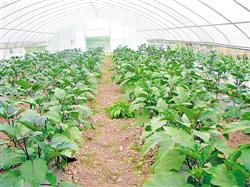 Foliar feeding of plants has outstanding advantages such as small dosage, quick effect, high fertilizer efficiency and good results, and in recent years it has been widely promoted and applied. However, because some farmers mistakenly believe that foliar feeding is like supplementing a person's nutrition, "beneficial and harmless, the more the better," in practice there are problems such as randomly choosing fertilizer types, randomly increasing fertilizer dosage, randomly determining spraying time and randomly increasing the number of sprayings. This not only affects the effect of foliar feeding, but sometimes even causes varying degrees of harm to plants. A large number of surveys show that at least the following points must be observed when carrying out foliar feeding on plants:
Fertilizer types. Many farmers believe that no matter what kind of fertilizer it is, as long as it "dissolves," it can be used as a foliar fertilizer spray, but this is not the case. For example, some fertilizers with strong volatility (such as ammonia water and ammonium bicarbonate) will harm crops when they encounter high temperatures after spraying, so they cannot be used as foliar fertilizers. In addition, some crops (such as tea, tobacco, potato and citrus) are chlorine-sensitive plants, so chlorine-containing fertilizers such as potassium chloride and calcium chloride cannot be sprayed on such crops. In addition, fertilizer must be used according to the seedlings: if crops grow slowly, are thin and short, and the leaves are yellow, this indicates nitrogen deficiency, and foliar feeding should be mainly nitrogen with a small amount of phosphorus and potassium fertilizer; conversely, if the plants have large, tender green leaves and long internodes, and nitrogen nutrition is sufficient, foliar feeding should be changed to mainly phosphorus and potassium fertilizer and cannot remain unchanged.
Fertilizer solution concentration. Some farmers believe that a slightly higher fertilizer solution concentration will produce a better spraying effect. But different crops, at different stages, have great differences in tolerance to different fertilizers. If the fertilizer solution concentration is too high, it often causes fertilizer burn to the leaves. Especially when spraying plant leaves at higher temperatures, within the suitable concentration range, in principle one should grasp the rule of "choose the lower, not the higher." For different foliar fertilizers, the spraying concentrations are generally: urea 0.5%-2.0%, superphosphate 1%-5%, potassium dihydrogen phosphate 0.2%-0.5%, boric acid 0.1%-0.5%, ammonium molybdate 0.02%-0.05%, zinc sulfate 0.05%-0.2%.
Spraying time. Some farmers believe that foliar feeding can be carried out at any stage and any time of plant growth and development, but this is not the case. In terms of the spraying stage, generally foliar feeding should be done in the middle and late stages of plant growth and development when the leaf area is relatively large, and the effect is best then. Spraying when the plant leaf area is relatively small not only wastes a lot of fertilizer solution, but also gives a less than ideal effect. In addition, different plants and different fertilizers also have certain differences in the suitable period for foliar feeding. Gramineous crops such as rice, wheat and corn are suitable for spraying at the booting, flowering and grain-filling stages. Legume crops such as soybean, peanut, broad bean and kidney bean are suitable for spraying at the flowering and pod-setting stages. Cotton is suitable for spraying at the flowering and boll stage. Molybdenum fertilizer is suitable for spraying before plant flowering. Boron fertilizer and zinc fertilizer are best sprayed at the early flowering stage of plants. In terms of spraying time, it should be done on a windless cloudy day or in the morning of a sunny day after the dew on the leaves has dried, avoiding the period of strong sunlight and high temperature, and spraying in the early morning or evening. If spraying is done under strong sunlight and high temperature, the air humidity is low, which not only causes more waste from evaporation of the fertilizer solution, but also the fertilizer solution dries quickly after spraying, making it difficult for the leaves to absorb it, which reduces fertilizer use efficiency and sometimes causes "leaf burn" because the water in the fertilizer solution on the leaves evaporates too quickly and the concentration rises rapidly.
Number of sprayings. Many farmers believe that the more times foliar feeding is done, the better. In fact, for plants with a short growth period, generally 1-2 sprayings are enough. For plants with a long growth period, 2-3 sprayings can be done. Moreover, in terms of the time of each spraying, the interval should generally be more than 7-10 days. For trace element fertilizers, the number of sprayings must not be too many and the concentration must not be too high; otherwise, not only will it fail to increase yield, but it will instead cause trace element poisoning in plants.