Red Imported Fire Ant Control Plan: The Hazards of Red Imported Fire Ants and How to Eliminate Them
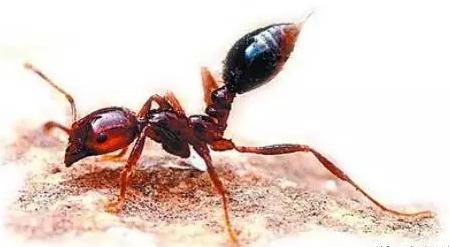
The red imported fire ant - do you know this pest? What do you know about it? The red imported fire ant is an extremely destructive pest, and an invasion by this pest is truly terrifying. To strengthen the prevention and control of the invasive red imported fire ant, we must continue to hold the north-south defense line with a containment strategy, promote joint regional control, and strengthen measures such as consolidating the southern defense line, eradicating scattered outbreak sites outside the line, and expanding surveillance points to grasp the epidemic situation. To make effective use of control resources, the Bureau of Animal and Plant Health Inspection and Quarantine, together with the National Red Imported Fire Ant Control Center, will continue to provide administrative and technical support to local governments, in the hope of controlling the spread of the invasive red imported fire ant.
Strengthening Containment and Control along the Southern Defense Line to Eradicate Scattered Outbreak Sites
The red imported fire ant, listed by the International Union for Conservation of Nature (IUCN) as one of the 100 worst invasive alien species, has been present in Taiwan, China for 15 years and has not yet been eradicated, with the affected areas in Taiwan, China even showing signs of gradual spread. In addition to damaging melon and fruit crops, the red imported fire ant can cause burning and pain when it stings humans, and in severe cases may trigger allergies or shock.
The invasive red imported fire ant is currently mainly distributed in northern Taiwan, China (Taipei and New Taipei, Taoyuan, Hsinchu), with localized occurrences in Miaoli, and scattered individual cases in Taichung, Chiayi (County), Tainan, Kaohsiung and Yilan. At this stage, the Council of Agriculture has adopted a "containment" control strategy, confining the invasive red imported fire ant between the Tamsui River and the Touqian River to prevent it from spreading beyond the defense line. The Bureau of Animal and Plant Health Inspection and Quarantine explained that outside the main outbreak areas in northern Taiwan, China, a small number of scattered invasive red imported fire ant outbreaks have occurred in Gongliao District of New Taipei City and Gongguan Township, Shitan Township, Touwu Township and Tongluo Township of Miaoli County. The bureau has asked the Red Imported Fire Ant Control Center to carry out eradication through special projects to reduce the risk of spread. As for the individual cases in Taichung, Chiayi (County), Tainan, Kaohsiung and Yilan, relevant competent ministries and commissions have been asked to strengthen supervision and control, while the Bureau of Animal and Plant Health Inspection and Quarantine and the Fire Ant Control Center continue to monitor and provide technical support, with the aim of completing eradication in the 108th year of the Republic of China. In addition, comprehensive surveillance work will be expanded in Taoyuan City, Hsinchu County and City, and Miaoli County to strengthen the tracking of control effectiveness and grasp the front edge of the red imported fire ant's spread, serving as a reference for future review and adjustment of control strategies.
To implement containment and control along the southern defense line, for parts where local government resources are insufficient, in the 108th year of the Republic of China the Bureau of Animal and Plant Health Inspection and Quarantine commissioned the Fire Ant Control Center to assist Hsinchu County and Miaoli County in carrying out 3 rounds of comprehensive control work, providing immediate emergency pesticide application at scattered outbreak sites to ensure containment effectiveness. The Bureau of Animal and Plant Health Inspection and Quarantine explained that outside the main outbreak areas in northern Taiwan, China, a small number of scattered invasive red imported fire ant outbreaks have occurred in Gongliao District of New Taipei City and Gongguan Township, Shitan Township, Touwu Township and Tongluo Township of Miaoli County. The bureau has asked the Red Imported Fire Ant Control Center to carry out eradication through special projects to reduce the risk of spread. As for the individual cases in Taichung, Chiayi (County), Tainan, Kaohsiung and Yilan, relevant competent ministries and commissions have been asked to strengthen supervision and control, while the Bureau of Animal and Plant Health Inspection and Quarantine and the Fire Ant Control Center continue to monitor and provide technical support, with the aim of completing eradication in the 108th year of the Republic of China. In addition, comprehensive surveillance work will be expanded in Taoyuan City, Hsinchu County and City, and Miaoli County to strengthen the tracking of control effectiveness and grasp the front edge of the red imported fire ant's spread, serving as a reference for future review and adjustment of control strategies.
Controlling and containing the red imported fire ant requires blocking the movement of contaminated soil
Cases of red imported fire ant invasion in the 107th and 108th years of the Republic of China, upon assessment, were mostly found to involve the invasive red imported fire ant being brought in along with the earth and stone materials and plants used for site setup when large outdoor exhibitions were held. Therefore, the Bureau of Animal and Plant Health Inspection and Quarantine reminds all agencies to strengthen controls on the movement of earth and plants. In particular, when conducting engineering tenders, anti-red imported fire ant clauses should be incorporated into contracts and treated as a key point in completion acceptance, to avoid the invasive red imported fire ant being spread along with such movements.
To grasp the epidemic situation and control effectiveness and strengthen vertical and horizontal liaison and cooperation between central ministries and commissions and local governments, the Bureau of Animal and Plant Health Inspection and Quarantine regularly invites central ministries and commissions, local governments, experimental and research institutions, experts and scholars, and the Fire Ant Control Center to hold implementation meetings to review control measures and effectiveness, and continues to promote cross-county and cross-city joint control, inspections of nurseries and construction sites, controls on the movement of earth and stone materials, education and publicity, volunteer participation, and the development of control technologies and materials.
Correct Control Requires Avoiding Quick Fixes; All-People Prevention Achieves Twice the Result with Half the Effort
According to Lin Zongqi, executive director of the National Red Imported Fire Ant Control Center, the red imported fire ant pesticides currently approved by the government fall into 2 types. One is toxic bait, such as hydramethylnon and indoxacarb. The bait has a low pesticide concentration; in the past it was sent to the Taiwan Agricultural Chemicals and Toxic Substances Research Institute for testing, and it is about one-thousandth to less than one ten-thousandth of the general dose. After the ants eat it, in principle they fall ill and die within 5 to 10 days.
The other is an insect growth regulator bait that must be applied continuously, such as pyriproxyfen. The ants will not die after eating it, but they will be poisoned and then pass it on to other larvae, using the molting habits of insects to make the entire red imported fire ant colony slowly die. On average, only 2 to 10 kg of bait needs to be sprayed per hectare, and the entire ant colony can be eliminated in about 1 month. Although this method does not meet outsiders' demand for immediate results, it is the method with the least burden on the land and the most effective control.
In addition, for correct control, the general public must absolutely avoid seeking quick results by pouring boiling water immediately after applying bait. This will bring the opposite result, causing the red imported fire ants to scatter and spread, creating an even more serious outbreak.
⟦NL> The Bureau of Animal and Plant Health Inspection and Quarantine once again calls for the following: in addition to the full commitment of epidemic prevention personnel, the prevention and control of the invasive red imported fire ant can achieve twice the result with half the effort only if the public has correct understanding and self-protection concepts, cares more about the surrounding environment, or even helps guard it. In the past, when Yilan County was invaded by the red imported fire ant in the 105th year of the Republic of China, because of early discovery by the public and active input from the local government, it took only 1 year to eradicate the red imported fire ant in 146 hectares of affected area throughout the county.