Water-soluble fertilizers are rich in nutrients, saving water and fertilizer while promoting growth with notable results
First, applying small amounts multiple times can improve the utilization rate of water-soluble fertilizers. If applied by flushing, generally about 10 kg per mu per application; if applied by spraying, generally dilute 500-800 times. Second, water-soluble fertilizers are generally used as topdressing, and the appropriate variety and amount of water-soluble fertilizer should be selected according to the amount of base fertilizer applied and the crop's growth condition. Third, for open...
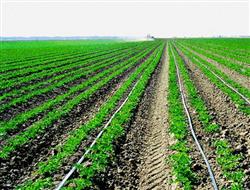 Water-soluble fertilizer is a multi-component compound fertilizer that can completely dissolve in water. It dissolves quickly in water, is more easily absorbed by crops, and has a relatively high absorption and utilization rate. More importantly, it can be applied in facility agriculture such as sprinkler and drip irrigation, achieving integrated water and fertilizer management and attaining the efficiency of saving water, fertilizer, and labor.
Water-soluble fertilizer is simple and convenient to use
First, formulations can be designed entirely according to the nutritional requirements needed for crop growth. A scientific formulation will not cause fertilizer waste, making its fertilizer utilization rate about 2-3 times that of conventional compound chemical fertilizers. Second, water-soluble fertilizer is a quick-acting fertilizer, allowing growers to quickly see the fertilizer's effects and performance, and to adjust the fertilizer formulation at any time according to different crop growth conditions. Of course, the application method of water-soluble fertilizer is very simple. It can be applied with irrigation water, including sprinkler irrigation and drip irrigation, saving water, fertilizer, and labor. With labor costs rising increasingly today, the benefits of using water-soluble fertilizer are obvious. Because the application method of water-soluble fertilizer is irrigation with water, fertilization is very uniform, which also lays a solid foundation for improving yield and quality. Water-soluble fertilizers generally have fewer impurities and low electrical conductivity, and the application concentration is easy to adjust, so they are safe even for tender seedlings, with no need to worry about adverse consequences such as seedling burn.
Because fully water-soluble fertilizers have the characteristics of simple and convenient use, they have been widely applied around the world. Abroad, they are widely used for irrigation and fertilization of vegetables and flowers in greenhouses, various fruit trees, and field crops, for the maintenance of landscape greening plants, golf courses, and even for the maintenance of home greening plants. In China, their high price has affected Chinese farmers' acceptance of them, but in recent years, due to the rapid development of China's flower industry and ornamental horticulture, they have also been accepted by many Chinese professional growers, used for potted flowers, herbaceous flowers, cut flower cultivation, and even some golf courses. To achieve precise proportioning, provide reasonable N, P, K and trace elements, and make plant growth balanced; to achieve reliable professionalism, provide different specialized fertilizers for different plants, growth stages, and water quality. Super spreaders and penetrants are specially added, with good dispersibility and fast absorption, improving the absorption and utilization rate of various nutrients.
Water-soluble fertilizer has been widely promoted
In China, water-soluble fertilizer in Guangxi is mainly used for cash crops such as vegetables, melons and fruits, and fruit trees, so in the past seven or eight years, water-soluble fertilizer has gradually been widely promoted in Guangxi's cash crop areas. Vegetable greenhouse households in Shouguang City, Shandong, basically all use water-soluble fertilizer, which can improve the soil quality in greenhouses and also improve vegetable quality. Qixia City, Shandong, has apples as its main cash crop, and water-soluble fertilizer has been promoted on fruit trees through fixed-point experiments with very good results. In recent years, the use of water-soluble fertilizer on fruit trees has developed rapidly. In the apple-producing areas of the Jiaodong Peninsula, the apple-growing areas of Shaanxi, and the citrus and banana-producing areas of Guangxi, water-soluble fertilizer can greatly improve fruit quality and achieve the goal of increasing yield and income, bringing considerable surprises to fruit growers.
With continuous innovation in production technology, from the perspective of crop nutritional needs, the era of increasing yields by heavily applying ternary compound granular chemical fertilizers has passed. Because water-soluble fertilizer contains all the nutrient elements needed for crop growth, it can meet farmers' goals of increasing yield and income. Promoting basic professional water-soluble fertilizers, changing farmers' traditional fertilization habits, and advancing the development of integrated water and fertilizer management are also needs of the times.
The industry emphasizes quality standards
According to chemical industry statistics, as of the end of the first half of 2011, more than 200 fertilizer production enterprises nationwide had filed with the Ministry of Agriculture to produce water-soluble fertilizers. China had a total of 3,433 registered water-soluble fertilizer products, including 433 macro-element water-soluble fertilizer products, 50 medium-element water-soluble fertilizers, 1,195 trace-element water-soluble fertilizers, 1,010 amino acid-containing water-soluble fertilizers, and 745 humic acid-containing water-soluble fertilizers. In 2010, the national output of water-soluble fertilizer was 400,000-600,000 tons, a sharp increase of more than 50% over the previous year. At present, the state has issued relatively complete product quality standards for macro-element water-soluble fertilizers, trace-element water-soluble fertilizers, amino acid-containing water-soluble fertilizers, and humic acid-containing water-soluble fertilizers, clearly specifying the effective ingredients, packaging specifications, label production, and trade names of various products, and has also made regulatory requirements for product instructions.
Macro-element water-soluble fertilizer: rich in nutrient elements, scientific and reasonable proportions
Standard: According to the standard NY1107-2010 of the Ministry of Agriculture of the People's Republic of China, for solid macro-element water-soluble fertilizer (medium-element type), the main technical indicators are macro-element content >= 50.0% and medium-element content >= 1.0%. For liquid macro-element water-soluble fertilizer (medium-element type), the main technical indicators are macro-element content >= 500g/L and medium-element content >= 10g/L. Among these, macro-element content refers to the sum of total N, P2O5, and K2O content. The product should contain at least two macro-elements, and the content of a single macro-element should not be less than 4.0% (40 g/L). Medium-element content refers to the sum of calcium and magnesium content. The product should contain at least one medium-element, and any single medium-element with content not less than 0.1% (1 g/L) should be counted in the medium-element content.
For solid macro-element water-soluble fertilizer (trace-element type), the main technical indicators are macro-element content >= 50.0% and trace-element content of 0.2%-3.0%. For liquid macro-element water-soluble fertilizer (trace-element type). Among these, macro-element content refers to the sum of total N, P2O5, and K2O content. The product should contain at least two macro-elements, and the content of a single macro-element should not be less than 4.0% (40 g/L). Trace-element content refers to the sum of copper, iron, manganese, zinc, boron, and molybdenum content. The product should contain at least one trace-element, with content not less than 0.05% (5 g/L). Molybdenum content is not higher than 0.5% (5 g/L).
Application characteristics: Macro-element water-soluble fertilizer is rich in the 12 nutrient elements essential for crops, with scientific and reasonable proportions. Continuous application, while ensuring high yield and good quality, can effectively enhance plant resistance, reduce the occurrence of diseases, and greatly improve fertilizer absorption and utilization. Macro-element water-soluble fertilizer can be applied by flushing or drip irrigation, and can also be used as foliar fertilizer. The entire topdressing process does not require applying other fertilizers, eliminating the trouble of fertilizer selection.
According to crop requirements, macro-element water-soluble fertilizer must simultaneously have the following technical characteristics: 1. The water-soluble chelated trace-element composition added to the ingredients must avoid antagonistic effects with phosphorus. 2. For crops, it has the characteristics of stress resistance and yield increase, can significantly improve crop photosynthesis, enhance crop yield and quality, increase sugar content, strengthen stress resistance such as cold resistance, drought resistance, disease resistance, and lodging resistance, and extend the fresh-keeping period. 3. The addition of a high-potassium formula can quickly meet the potassium demand of fruits and grains during expansion, increase fruit sweetness, improve fruit coloration, and extend storage time.
Humic acid-containing water-soluble fertilizer: natural polymer organic matter
Principle: Humic acid is a natural polymer organic compound. Its molecules contain various active groups such as carboxyl, phenolic hydroxyl, and methoxyl groups, which give it strong physiological activity. It can react with heavy metal ions through combination, replacement, complexation, and chelation, modifying them and generating various new substances (new products) with multiple beneficial properties. Humic acid-containing water-soluble fertilizer is a multifunctional fertilizer. At present, there are mainly two ways to combine humic acid with water-soluble fertilizer products: one is combining humic acid with macro-element water-soluble fertilizer. Humic acid can achieve mono-element fusion, binary fusion, or ternary fusion with the macro-elements nitrogen, phosphorus, and potassium, such as humic acid nitrogen fertilizer, humic acid phosphorus fertilizer, humic acid potassium fertilizer, and humic acid compound fertilizer. The standard for humic acid-containing water-soluble fertilizer is NY1106-2010.
Application characteristics: First, humic acid-containing water-soluble fertilizer can stimulate crop growth. The stimulating effect of humic acid foliar fertilizer is mainly shown in promoting seed germination, increasing seed emergence rate, promoting root growth, improving the root system's ability to absorb water and nutrients, increasing tillering or branching, and advancing maturity. Second, it improves soil physical and chemical properties and builds soil fertility. When humic acid fertilizer is applied by flushing or soil application, it can also improve soil and increase fertilizer efficiency. This is because the humic acid organic colloid in humic acid fertilizer combines with calcium ions in the soil to form flocculent gel. This colloid is a good cementing substance that can cement soil particles, increasing the water-stable aggregate structure in the soil, thereby improving the soil's water, fertilizer, oxygen, and heat conditions. It provides nutrient elements for crops. This fertilizer can absorb fertilizer components such as ammonium ions, potassium ions, calcium ions, magnesium ions, and zinc ions, and can also form iron and aluminum complexes with free iron ions and aluminum ions in acidic soil, reducing phosphorus fixation and improving fertilizer utilization. Third, it promotes the reproduction and activity of microorganisms. Humic acid has a stimulating effect on microorganisms, improving the activity of fungi, bacteria, and nitrogen-fixing bacteria, promoting the decomposition of organic matter, accelerating the decomposition of farmyard manure, and promoting the release of quick-acting nutrients.
Trace-element water-soluble fertilizer: enhancing crop disease resistance
Standard: According to the standard NY1428-2010 of the Ministry of Agriculture of the People's Republic of China, for solid trace-element water-soluble fertilizer, the main technical indicator is trace-element content >= 10.0%; for liquid products, the main technical indicator is trace-element content >= 100g/L. Among these, trace-element content refers to the sum of copper, iron, manganese, zinc, boron, and molybdenum content. The product should contain at least one trace-element. Any single trace-element with content not less than 0.05% (0.5g/L) should be counted in the trace-element content. Molybdenum content is not higher than 1.0% (10 g/L) (except for single-substance molybdenum-containing trace-element products).
Application characteristics: Trace-element water-soluble fertilizer refers to a multi-element compound fertilizer that can completely dissolve in water. Compared with traditional varieties such as superphosphate and granular compound fertilizer, water-soluble fertilizer has obvious advantages. Its main characteristics are low dosage, low use cost, fast crop absorption, and extremely high nutrient utilization rate.
The rational use of trace-element water-soluble fertilizer on vegetables has a good effect on improving vegetable yield and quality and enhancing the vegetables' own disease resistance. In single-element trials, boron has very good effects on enlarging fruits, increasing fruit setting rate, and increasing fruit firmness. Zinc has very good effects on improving crop disease resistance, maintaining the biological activity of plant cells, and improving the efficacy of pesticides sprayed to protect crops. Copper can better maintain the cell osmotic pressure of vegetable crops, allowing enzyme metabolism as well as photosynthesis and respiration in crop cells to proceed better. In short, trace elements are of great significance to the healthy growth of vegetables themselves.
Amino acid-containing water-soluble fertilizer: reducing residues, promoting environmental protection
Principle: Amino acids, as the smallest molecules constituting proteins, exist in fertilizers and have the characteristic of being easily absorbed by crops; they also have the function of improving the disease resistance of the fertilized subject and improving the quality of the fertilized crop. They supplement the amino acids essential to plants, stimulate and regulate rapid plant growth, promote robust plant growth, and promote the absorption of nutrients. They enhance plant metabolic function, improve photosynthesis, promote well-developed plant root systems, and accelerate plant growth and reproduction. The standard for amino acid-containing water-soluble fertilizer is NY1429-2010.
Application characteristics: Amino acid fertilizer used on crops has obvious effects in increasing yield, improving quality, reducing pesticide residues, and protecting the ecological environment. In addition, because the production process of amino acid fertilizer continues to improve, raw material sources are broad, and production costs are becoming lower and lower, this provides a guarantee for obtaining amino acid chelates at low cost. Therefore, amino acid fertilizer is playing an increasingly important role in agricultural production.
From the perspective of environmental protection, amino acid fertilizer can balance nutrition, can provide fertilizer for green pollution-free and organic products, and can improve soil quality, increase chemical fertilizer utilization, and reduce environmental pollution. From the perspective of crops and farmer consumers, the yield-increasing effect of amino acid fertilizer is very obvious, especially for cash crops. The application of amino acid foliar fertilizer has obvious effects on improving quality (especially for fruit trees). From the perspective of farmers' consumption awareness, today's farmers, especially in cash crop and vegetable planting areas, are increasingly aware of the development space for organic food and green food, so the market prospects for amino acid fertilizer will become broader and broader.