What are the key points to note when using foliar fertilizer on tomatoes?
When using foliar fertilizer on tomatoes, note the following points: 1. Determine the type of nutrient according to the growth status of the tomatoes. Generally speaking, in the early fruiting stage the plants grow vigorously and are prone to excessive vegetative growth, so foliar nutrients that promote stem and leaf growth should be used sparingly, and potassium dihydrogen phosphate, compound fertilizer, etc. can be chosen. In the peak fruiting stage the plant growth...
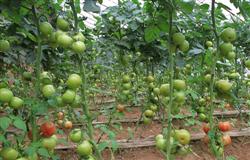
When using foliar fertilizer on tomatoes, note the following points:
1. Determine the type of nutrient according to the growth status of the tomatoes
Generally speaking, in the early fruiting stage the plants grow vigorously and are prone to excessive vegetative growth, so foliar nutrients that promote stem and leaf growth should be used sparingly, and potassium dihydrogen phosphate, compound fertilizer, etc. can be chosen. In the peak fruiting stage the plant growth begins to weaken, so foliar nutrients that promote stem and leaf growth should be used more to boost the vines and protect the leaves, and urea, sugar, etc. can be chosen.
2. Determine the type of nutrient according to weather conditions
On cloudy and rainy days, the light inside the greenhouse is insufficient and photosynthesis is poor, so the sugar supply to the tomatoes is insufficient. At this time, spraying sugar on the leaves gives a relatively good effect.
3. Spray calcium fertilizer on the leaves in time
Tomato fruit growth requires a relatively large amount of calcium. When the soil calcium supply is insufficient, the fruit is prone to blossom-end rot. Therefore, during the fruiting period of tomatoes, calcium chloride, superphosphate, amino acid calcium, calcium supplement, etc. should be sprayed to meet the tomato's need for calcium.
4. The interval between foliar fertilizer applications on tomatoes should be appropriate
The suitable interval for foliar fertilizer application on tomatoes is 5 to 7 days. Spraying inorganic chemical fertilizers on the leaves easily causes fertilizer burn, so the interval should be longer, generally no shorter than 7 days. The interval for spraying organic nutrient fertilizers can be appropriately shorter, generally around 5 days is suitable.
5. Foliar fertilizer application on tomatoes should be combined with disease prevention
Applying foliar fertilizer in winter and spring often causes the air humidity in protected cultivation areas to increase significantly, which easily triggers tomato diseases. Therefore, on consecutive cloudy days, the number of foliar fertilizer sprays should be reduced. When fertilizing, protective fungicides such as Antaisheng and DuPont Yibao should also be added, and short ventilation should be carried out after fertilizing to reduce the disease incidence.
6. Foliar fertilizer application should be moderate
When leaf damage occurs, use clean water to wash off the excess fertilizer and increase the water content of the leaves to alleviate the degree of leaf damage. When the soil water content is insufficient, watering is also needed to increase the water content in the plant and reduce the concentration of fertilizer solution in the stems and leaves.