How to apply foliar fertilizer to grapevines? These techniques must be mastered
Spraying grapevines with foliar fertilizer gives the leaves a wide fertilizer-receiving surface, acts quickly, saves labor and fertilizer, and is a commonly used fertilization method for grapes. Generally, absorption begins 2 hours after the fertilizer solution is sprayed, and 88% of a urea solution can be absorbed within 24 hours after spraying. Spraying 0.2%-0.3% urea solution mixed with 0.1% boric acid or borax or multi-element boron fertilizer during the flowering period can...
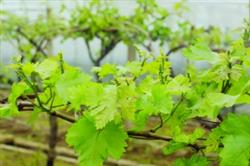
Spraying grapevines with foliar fertilizer gives the leaves a wide fertilizer-receiving surface, acts quickly, saves labor and fertilizer, and is a commonly used fertilization method for grapes. Generally, absorption begins 2 hours after the fertilizer solution is sprayed, and 88% of a urea solution can be absorbed within 24 hours after spraying. Spraying 0.2%-0.3% urea solution mixed with 0.1% boric acid or borax or multi-element boron fertilizer during the flowering period can increase the fruit-setting rate; spraying superphosphate solution during the young fruit and berry ripening stages can significantly increase the sugar content of the fruit and enhance disease resistance; spraying potassium fertilizer during the berry growth period can increase yield by 7%-10% and increase sugar content by 1.5%-2.5%; spraying rare earth aqueous solution in the early stage of berry softening increases yield and sweetness. To achieve the best results from foliar spraying, the following technical points should be mastered:
1. The suitable period for foliar spraying
Generally speaking, foliar fertilizer can be applied throughout the entire growing season of grapes. It is best to spray "shoot-promoting fertilizer" before new shoot growth; spray "flower-stabilizing and fruit-stabilizing fertilizer" during flowering and fruit setting; spray "fruit-strengthening fertilizer" during the fruit enlargement period. Throughout the entire growth and development process, when deficiency symptoms appear, timely targeted spraying should be used for remedial action. As for fertilizer types, from bud break and leaf expansion to around flowering, nitrogen fertilizer is suitable; from the beginning of spring new shoot growth to the berry ripening stage, especially from the peak new shoot growth period to the berry enlargement period, spraying phosphorus fertilizer gives the best effect; potassium fertilizer is best during the berry enlargement period; boron fertilizer works well during flowering; rare earth fertilizer has a great effect in the early stage of berry softening.
2. Suitable fertilizers and spraying concentrations
Commonly used nitrogen fertilizers include 0.2%-0.4% urea aqueous solution, 0.3%-0.5% ammonium sulfate and ammonium nitrate aqueous solutions; phosphorus fertilizer is 2%-5% superphosphate soaking filtrate; potassium fertilizers include 0.4%-0.5% potassium sulfate aqueous solution and 1% potassium nitrate aqueous solution; potassium dihydrogen phosphate is a phosphorus-potassium compound fertilizer with a spraying concentration of 0.2%-0.3%. Plant ash is also a very good potassium fertilizer, generally sprayed as a 3% leaching solution. Trace element fertilizers include 0.1%-0.2% borax or boric acid or multi-element boron fertilizer aqueous solution, 0.05%-0.15% zinc sulfate solution, 0.1% ferrous sulfate solution, 0.1% magnesium sulfate solution, 0.05%-0.1% manganese sulfate solution, and rare earth is 0.05%-0.1% rare earth nitrate aqueous solution.
3. Weather and timing for foliar spraying
Foliar spraying is affected by wind, temperature and humidity. Within a certain range, the higher the temperature, the faster the leaves absorb fertilizer; the greater the humidity, the more fertilizer is absorbed; the lower the wind speed, the longer the fertilizer solution remains moist on the leaves, so more fertilizer is absorbed and less is lost to drift. To improve the effect of foliar spraying, it is best to choose a windless cloudy day for spraying. On sunny days, it is suitable to spray in the evening or in the morning when the temperature is suitable (18-25°C), humidity is relatively high, and evaporation is relatively low.
4. Methods of foliar spraying
The cuticle layer of young grape leaves is thinner than that of old leaves, so more fertilizer solution penetrates; the underside of the leaf has more stomata than the upper side, so absorption is also faster. Therefore, grape foliar spraying should focus on young shoots, young leaves and the leaf surface. Spraying should aim for fine mist droplets to facilitate uniform and dense coverage, spraying until the leaves are completely moist, with the fertilizer solution about to drip but not falling. For field grapes, use a backpack sprayer together with a mist sprayer; for trellised grapes, use high-pressure spraying and spraying cloth. Generally, spray 4-6 times during the annual growth and development cycle. As needed, multiple nutrients can be mixed and sprayed, and they can also be mixed with fungicides or insecticides (including plant growth regulators). To help the fertilizer solution adhere to the leaf surface, 0.1%-0.2% neutral laundry powder can be added to the fertilizer solution as an adhesive.