Apply fertilizer skillfully, and crops will suffer fewer pests and diseases
Research and practice have shown that using chemical fertilizers or organic fertilizers to control crop pests and diseases is not only economical, safe and effective, but can also save pesticides, while at the same time having a fertilizing effect and the characteristics of not harming natural enemies and not polluting the environment. It can be said to achieve multiple benefits at once and is well worth promoting in production. Nitrogen fertilizer ① Ammonium bicarbonate...
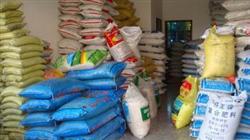
Research and practice have shown that using chemical fertilizers or organic fertilizers to control crop pests and diseases is not only economical, safe and effective, but can also save pesticides, while at the same time having a fertilizing effect and the characteristics of not harming natural enemies and not polluting the environment. It can be said to achieve multiple benefits at once and is well worth promoting in production.
Nitrogen fertilizer
① Ammonium-form nitrogen fertilizers such as ammonium bicarbonate and ammonia water have relatively strong volatility and have a certain stimulating, corrosive and fumigating effect on pests, especially with better results against pests with small bodies and weak endurance such as red spiders, aphids and thrips. Application method: spray evenly with a 1% ammonium bicarbonate or 0.5% ammonia water solution, once every 5-7 days, for 2-3 consecutive sprays.
② Urea has the effect of destroying insect chitin. The "washing-urea mixture" prepared by mixing urea, laundry detergent and water in a ratio of 4:1:400 has a good control effect on many pests harmful to vegetables and flowers, such as aphids, cabbage caterpillars and red spiders.
③ When wheat rust occurs sporadically, spraying with 50% fresh urine or a 3% ammonium sulfate aqueous solution gives good results.
Phosphate fertilizer
① Phosphate fertilizer has an attracting effect on cotton bollworm moths; during the adult occurrence period of cotton bollworm, using a 1%-2% superphosphate extract as a foliar spray fertilizer can turn oxalic acid into calcium oxalate and cause it to lose its attraction to cotton bollworm. In this way, the number of eggs laid can be reduced by 33.3%-73.4%, with an average of 55%; the duration of effect of each phosphorus spray is generally 2-3 days.
② Tomato blossom-end rot is a physiological disease caused by calcium deficiency in the plant. Starting from the early flowering stage of tomato, spraying once every half month with a 1% superphosphate extract, for 2-3 consecutive sprays, gives a relatively obvious disease control effect.
Potassium fertilizer
Potassium can enhance crop stress resistance, and increasing potassium fertilizer application has an inhibitory effect on many crop pests and diseases. According to reports, among 740 fungal diseases and 68 bacterial diseases, those whose damage was reduced due to potassium accounted for 71% and 75% respectively; among 230 pests (mites), 59% showed reduced damage. In production, the potassium fertilizer most directly used to control crop pests and diseases is plant ash.
Plant ash is a high-quality potassium fertilizer, and it also contains multiple nutrient elements such as phosphorus, calcium, magnesium, sulfur, as well as boron, manganese, copper, zinc and molybdenum; using 10 kg of plant ash, adding 50 kg of water, soaking for 24 hours and then filtering, and spraying the filtrate can effectively kill aphids on crops; at the seedling stage, 20-25 kg of plant ash per mu, broadcast along the rows, can raise soil temperature and reduce the occurrence of damping-off, anthracnose, red rot and so on; before trench planting of scallions, garlic or chives, use 20 kg of plant ash per mu,
apply it to the bottom of the trench, or at the seedling stage of vegetables such as scallions, garlic and chives, broadcast 15 kg of plant ash per mu, and then immediately hoe and cover with soil. This can noticeably reduce the damage of root maggots and increase vegetable yield by 15%-20%; when wheat sharp eyespot first occurs, use 30-40 kg of plant ash per mu, and broadcast it along the rows at the base of the wheat plants while the morning dew has not yet dried, which has a certain effect on controlling the spread of the disease; for fruit trees suffering from root rot, first dig open the soil around the roots, scrape off the diseased root bark, let it dry slightly, and then bury 2.5-5 kg of plant ash per tree. After about 1-2 months, the diseased tree can send out new roots.
Silicon-calcium fertilizer
After crops are fertilized with silicon-calcium fertilizer, most of the silicon accumulates in the epidermal cells of the crops, forming a very hard epidermal layer, thereby enhancing their ability to resist invasion by pathogens and pests. Data show that for crops such as corn (2343,-3.00,-0.13%) and soybean (4548,-30.00,-0.66%), applying 30-40 kg of silicon-calcium fertilizer per mu can noticeably reduce the damage of corn borers and bean pod borers; applying silicon-calcium fertilizer to rice can increase the degree of silicification of epidermal cells, thereby noticeably enhancing disease and pest resistance, increasing grain weight, increasing yield by 10%-50%, reducing the incidence of rice blast by 0.3%-19%, and reducing the disease index by 0.5%-13.9%; in rice-growing areas, returning 1/3-1/2 of rice straw with high silicon content to the field can reduce neck blast by 2.63%-7.23%, while also noticeably reducing rice leaf roller.
Zinc fertilizer
After sweet pepper is planted and revived, and at the fruiting stage, spraying once each with a 0.05%-0.1% zinc sulfate solution can reduce the occurrence of viral disease and noticeably increase the fruit-setting rate and single-fruit weight, increasing yield by 15%-37%.
Manganese fertilizer
When sowing Chinese cabbage, dress the seeds with the trace element manganese, or at the seedling stage, rosette stage and heading stage of Chinese cabbage, spray once each with a 0.1%-0.2% manganese sulfate solution. This has a significant control effect on Chinese cabbage tipburn, and after control it can increase yield by 10%-18% and also improve quality to some extent.