How to identify fake and inferior fertilizers and pesticides? The methods matter
In response to the current situation in the agricultural input market where the quality of fertilizers and pesticides varies greatly and cases of cheating and harming farmers occur from time to time, in order to improve the ability of the vast number of farmer friends to identify fake and inferior agricultural inputs and ensure the smooth progress of spring plowing production, the municipal agriculture department recently used the "safe agricultural inputs into villages and households" publicity activity, through distributing...
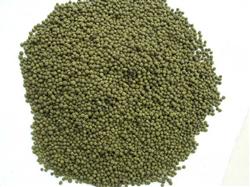
In response to the current situation in the agricultural input market where the quality of fertilizers and pesticides varies greatly and cases of cheating and harming farmers occur from time to time, in order to improve the ability of the vast number of farmer friends to identify fake and inferior agricultural inputs and ensure the smooth progress of spring plowing production, the municipal agriculture department recently used the "safe agricultural inputs into villages and households" publicity activity, through distributing materials, carrying out consultations and other forms, to publicize to farmer friends the knowledge of identifying fake and inferior fertilizers and pesticides.
Identifying the authenticity of pesticides through labels and packaging appearance
It is understood that pesticide labels include the "three certificates," namely the pesticide registration certificate, production license or production approval document, and product execution standard number, as well as product name, active ingredient, content, toxicity, use, weight, method of use, production date, validity period, precautions, and enterprise name, address, postal code, etc. Agricultural experts believe that the quality of pesticide products lacking any one of the above items is questionable, and consumers should not buy them easily. At the same time, packaging and measurement should be checked. Regular pesticides have very complete inner and outer packaging. Therefore, farmers should not buy pesticide products with damaged packaging or those sold in bulk.
Identifying the quality of pesticides by looking at their physical form
Powder and wettable powder pesticides should be loose powder without lumps. Pesticides with uneven color, caking, or a noticeable amount of larger particles should not be purchased. Emulsifiable concentrates should be homogeneous liquids without sediment or suspended matter. If layering, turbidity, or sediment appears, it indicates that the product has quality problems. Suspension concentrates and suspoemulsions should be flowable suspensions without caking. A small amount of layering may occur after long-term storage, and they should return to their original state after shaking; otherwise, it indicates quality problems. If fumigation tablets appear powdery, it shows that they have already become ineffective. Aqueous solutions should be homogeneous liquids without sediment or suspended matter. Granules should be uniform in size and should not contain a large amount of powder.
Five methods to identify fertilizer quality
First is looking. First, look at the fertilizer packaging. Fertilizers produced by regular manufacturers have standardized and sturdy outer packaging, generally marked with a trademark, product name, nutrient content (grade), net weight, factory name, factory address, etc. Second, look at the fertilizer granule size. For example, nitrogen fertilizers and potassium fertilizers are mostly crystalline; phosphate fertilizers are mostly blocky or powdery non-crystals; high-quality compound fertilizers have relatively uniform granule size and specific gravity, smooth surfaces, and are not easy to absorb moisture or cake. Third, look at the color of the fertilizer. Different fertilizers have their own distinctive colors. Nitrogen fertilizers, except calcium cyanamide, are mostly white; potassium fertilizers are white or slightly red; phosphate fertilizers are mostly dark gray. Farmer friends can make a rough distinction based on this.
In addition to looking, fertilizers can also be identified by touching, smelling, burning, and wetting. "Touching" means placing the fertilizer in the palm of the hand, gripping it hard or pressing and turning it, and judging the fertilizer by feel. A feeling of "oily moisture" indicates a genuine product. "Smelling" means making a simple judgment through the special odor of the fertilizer, such as ammonium bicarbonate having a strong ammonia odor; ammonium sulfate having a slight sour taste; and superphosphate having a sour taste. "Burning" means heating or burning a fertilizer sample and identifying the fertilizer from the flame color, melting condition, smoke odor, residue condition, etc. For example, ammonium bicarbonate decomposes directly, produces a large amount of white smoke, has a strong ammonia odor, and leaves no residue, while fake and inferior fertilizers have no obvious odor. Compound fertilizers release a strong ammonia odor when burned and leave a large amount of residue. "Wetting" means scattering fertilizer granules on damp ground or moistening them with a small amount of water, and after a period of time, judging according to the dissolution of the fertilizer. For example, potassium sulfate and potassium chloride can dissolve completely; superphosphate and triple superphosphate partially dissolve; compound fertilizer granules will disintegrate, dissolve, or leave a small amount of residue, while fake and inferior fertilizers have very poor solubility or do not dissolve at all.