How to choose fertilizer when planting wheat? Keep these suggestions in mind
It is again the season of autumn harvest and autumn planting, a time when farmers buy fertilizer in large quantities. But with all kinds of fertilizers on the market, how should one choose? Some farmer friends are worried: they want to buy good quality but fear buying too expensive, and want to buy cheap but fear buying fake. So some people use whatever they used last year, and some follow...
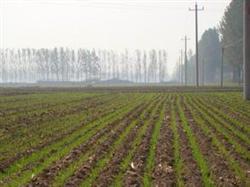
It is again the season of autumn harvest and autumn planting, a time when farmers buy fertilizer in large quantities. But with all kinds of fertilizers on the market, how should one choose? Some farmer friends are worried: they want to buy good quality but fear buying too expensive, and want to buy cheap but fear buying fake. So some people use whatever they used last year, some use whatever they see others using, some say choosing expensive is safer, and some choose cheap for value. What exactly is reasonable fertilization? The author offers a few views for everyone's reference.
1. Choose fertilizer according to your own soil conditions. You always have some idea of your field's fertilization situation over many years, and you should also know fairly well whether the soil is clay or sand. Generally speaking, sandy soil has a coarser texture and poor water and fertilizer retention, but soil temperature rises easily, so a large amount of organic fertilizer or long-acting chemical fertilizer should be used as base fertilizer and applied deeply. Quick-acting chemical fertilizer should be applied as topdressing in several split applications, with each dose not too large. Clay soil is the opposite: mature organic fertilizer can be chosen as base fertilizer, the number of chemical fertilizer applications can be reduced, and each dose can be larger. If conditions permit, take some soil samples to the local agricultural department for testing to see what nutrients the field lacks, and then you will know clearly.
2. Scientifically estimate the amount of fertilizer. According to scientific measurements, producing 50 kg of wheat grain requires 1.5 kg of nitrogen, 0.625 kg of phosphorus pentoxide, and 1.25 kg of potassium oxide. Then producing 500 kg of wheat requires 15 kg of nitrogen, 6.25 kg of phosphorus pentoxide, and 12.5 kg of potassium oxide respectively. Subtract the nutrients already present in the soil, and in theory, to reach a wheat yield of 500 kg, the fertilizer nutrients you apply should be less than the above figures.
3. Accurately compare cost-effectiveness and buy qualified fertilizer rationally. On the market there are single-element fertilizers such as urea and potassium chloride, compound fertilizers such as diammonium phosphate, and also some wheat special fertilizers, compound mixed fertilizers, formula fertilizers, and so on. First, we should see whether the packaging is neat and whether the three certificates are complete; second, ask about the chemical nature of the nutrients contained and whether they are easily absorbed by crops; third, accurately calculate the price and nutrient content. It would be good if you can buy a regular formula fertilizer suitable for the local area, because the effect of mixed fertilizer application is better than applying a single fertilizer.