How should long-acting compound fertilizer be applied to give full play to its fertilizer efficiency?
Recently, a netizen left a message saying: when buying chemical fertilizers nowadays, I often see various kinds of potassium marked on the packaging. What kinds of potassium fertilizer are there exactly? First of all, potassium fertilizers fall into two major categories: one is straight potassium fertilizer, and the other is potassium-containing compound fertilizer. Common straight potassium fertilizers include potassium chloride, potassium sulfate and potassium silicate, etc. Potassium chloride: with...
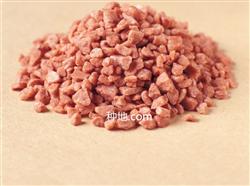 When buying fertilizers, we often see that fertilizers are divided into quick-acting fertilizers and long-acting fertilizers. How can long-acting compound fertilizer be applied well?
The following two points should be noted when applying long-acting compound fertilizer:
1. Long-acting compound fertilizer is a kind of compound fertilizer that slowly releases nutrients. After application, the nutrient release is steady and prolonged. For crops with a large nutrient demand in the early stage, if no quick-acting fertilizer is applied together, the nutrient supply cannot meet the needs of crop growth, and the seedlings will be slow to emerge and show symptoms of nutrient deficiency. This is especially true in light-textured, low-fertility soil. If no quick-acting fertilizer is applied together, it cannot meet the crop's nutrient demand at the seedling stage.
2. When applying long-acting compound fertilizer, good varieties should be selected, and slow-release and quick-acting fertilizers should be reasonably combined. For crops with a large nutrient demand at the seedling stage and a requirement for fast seedling growth, quick-acting fertilizers such as ammonium bicarbonate can be applied together as a base fertilizer or in the early topdressing.
More compound fertilizer application techniques