How to apply potassium fertilizer well? Master the correct fertilization method
How should potassium fertilizer be applied when growing rice? What should be noted when applying it? Growing rice: sufficient potassium is beneficial for enhancing rice photosynthesis, promoting sugar synthesis and accumulation, improving plant resistance, strengthening the rice root system's absorption capacity, promoting nitrogen uptake and protein synthesis, and making rice grains large and plump with high and stable yields...
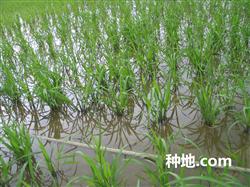 How to apply potassium fertilizer well? Seeking guidance
Potassium is an essential element for crop growth and development, but most farmers have not yet formed the habit of actively using chemical potassium fertilizer. According to surveys, more than 60% of the cultivated land in Pinglu County needs potassium supplementation, and applying potassium fertilizer has become an important technique for increasing agricultural yields.
I. The role of potassium fertilizer. Potassium is a very active element in plants, mainly distributed in the most metabolically active organs and tissues, and is an activator of various enzymes. Its main roles include: promoting photosynthesis, facilitating protein synthesis, carbohydrate metabolism, symbiotic nitrogen fixation, etc., thereby improving the effectiveness of nitrogen fertilizer, accelerating the flow and accumulation of synthesis products, and increasing yield. It activates various enzymes, making crops grow robustly and improving their resistance to freezing, drought, disease and lodging.
II. Symptoms of potassium deficiency in crops are usually yellowing of leaf margins, which then turn brown and scorch as if burned by fire; brown spots or patches appear on the leaves, but the middle of the leaf, the veins and the areas near the veins remain green. As potassium deficiency worsens, the entire leaf turns reddish-brown or withered, necroses and falls off, and some curl downward. The root system is most obviously affected, becoming short and few, prone to premature aging, and rotting in severe cases, making crops prone to lodging. When cereal crops are deficient in potassium, brown spots appear on the lower leaves, and in severe cases the same symptoms appear on the upper new leaves. The leaves become soft and droop, and the stems are thin and weak with short internodes. In cruciferous and leguminous crops as well as cotton, the leaves first show interveinal chlorosis, then turn yellow, appearing as variegated leaves. In severe cases, the leaf margins scorch and curl downward, brown spots develop inward along the interveinal areas, the leaf epidermal tissue loses water and shrinks, the leaf surface arches, and the leaves gradually scorch and fall off. Potassium deficiency symptoms all start from the leaf tip, while the leaf base often remains dark green, and sometimes the symptoms are similar to other conditions, making them difficult to identify. Soil and plant testing and analysis should be used to confirm the diagnosis.
III. Main types of potassium fertilizer. The main types of commonly used chemical potassium fertilizers include: potassium chloride, potassium sulfate, potassium nitrate, monopotassium phosphate, compound fertilizer, potassium magnesium sulfate, etc.
1. Potassium chloride fertilizer comes in white and red types, is easily soluble in water, has a certain hygroscopicity, and will cake after long-term storage. The potassium chloride fertilizer commonly found on the market generally contains about 60% potassium oxide.
2. Potassium sulfate fertilizer is a white crystal or powder, easily soluble in water, and does not easily cake during long-term storage. It is a fertilizer containing both potassium and sulfur, generally containing about 50% potassium oxide.
3. Potassium nitrate fertilizer is white in color, easily soluble in water, hygroscopic, prone to caking, has a low ignition point, and is explosive. It is a fertilizer containing both potassium and nitrogen, generally containing 45% potassium oxide and about 13% nitrogen. Because potassium nitrate fertilizer is relatively expensive, it is rarely used on field grain crops and is mainly sprayed on economic crops such as tobacco, melons and fruits, and vegetables.
4. Monopotassium phosphate is a white crystal, easily soluble in water, and is a fertilizer containing both potassium and phosphorus, generally containing 27% potassium oxide and about 22% phosphorus pentoxide. In practical application, monopotassium phosphate is mainly used for seed soaking and foliar spraying.
5. Compound fertilizer. The nitrogen-phosphorus-potassium ternary compound fertilizer contains a certain proportion of potassium fertilizer, and the amount varies according to different formulations. The raw material for the potassium in compound fertilizer is mainly potassium chloride, so when farmers buy compound fertilizer, they must pay attention to checking the nitrogen, phosphorus and potassium content.
IV. Application techniques for potassium fertilizer. According to nutrient monitoring of cultivated land in recent years, the area of potassium-deficient cultivated land in Pinglu County has been expanding year by year, with more than about 60% of the cultivated land needing potassium supplementation. Therefore, the following points should be noted when applying potassium fertilizer:
1. Determine whether potassium fertilizer needs to be applied based on the abundance or deficiency of soil potassium content. Based on soil analysis and testing and existing data, determine whether the soil potassium content is below the critical value. Usually, a soil available potassium content of 100 mg/kg is the critical value. However, according to our many experiments, when soil available potassium content is greater than 150 mg/kg, applying potassium fertilizer still has a yield-increasing effect.
2. Determine how much potassium fertilizer to apply based on the soil potassium content and crop yield. At the same time, fertilization parameters should be revised in light of local conditions. The target yield should fully consider the influence of local climate, rainfall and other natural environmental factors.
3. Apply potassium fertilizer as a basal application, and at the same time apply it in combination with nitrogen and phosphorus. Potassium fertilizer should be applied in combination with organic fertilizer, nitrogen fertilizer, phosphorus fertilizer and other fertilizers to achieve better results.
4. Foliar spraying of potassium fertilizer. When potassium fertilizer has not been applied or the amount applied is insufficient, and crops show potassium deficiency symptoms, a 0.5%-1.0% solution of potassium chloride, potassium sulfate, monopotassium phosphate, etc. can be sprayed.
5. Potassium sulfate is suitable for various soils and crops and can be used as basal fertilizer, seed fertilizer or top dressing, and can be applied in bands, in holes or by spraying. Potassium chloride is suitable for soils other than saline-alkali soils, and should not be applied to chlorine-sensitive crops such as tobacco, so as to avoid increasing salt content and reducing the combustibility of tobacco. Potassium chloride is generally applied mainly as a basal fertilizer in bands before sowing.
6. General dosage. The suitable amount of potassium supplementation differs for different regions and different crops. High-yield grain fields generally require 10-15 kg of potassium oxide per mu, while potassium-loving or high-potassium-demand crops such as potatoes and fruit vegetables generally require 15-20 kg of potassium oxide per mu.
V. Application effects of potassium fertilizer. According to many years of experiments, rational application of potassium fertilizer can not only increase crop yield but also improve crop quality. Under normal circumstances, 1 kg of potassium oxide can increase the yield of corn by 6.5-9.8 kg, lint cotton by 2.0-3.0 kg, wheat by 6.2-9.3 kg, rapeseed by 2.2-3.3 kg, peanuts by 3.2-4.9 kg, and fruit by 15.7-21.3 kg. At the same time, it can also increase the protein content of grain crops by 0.9%-2% and the crude fat content by 2.5%-5.5%; increase the fat content of oil crops by 0.5%-2.1%; increase cotton lint percentage by 0.05%-1.9%, fiber length by 0.32-2.5 mm, and lint index by 0.37%-0.8%, with fiber strength significantly enhanced; increase the vitamin C content of fruit vegetables by an average of 1.86 mg/kg, reduce sugar content by 0.265 g/100 g, lower acidity by an average of 0.024%, and reduce nitrate content by 37.8%, and it can improve the shape, size, color and flavor of fruit vegetables and enhance their storability.
Click to get more nitrogen, phosphorus and potassium fertilizer application techniques
Click to get more fertilizer application techniques