How to Improve the Fertilizer Efficiency of Potassium Fertilizer? A Detailed Guide to Practical Methods
What should be noted when applying potassium fertilizer to rice? Applying potassium fertilizer to rice can achieve significant yield increases. Sufficient potassium is conducive to enhancing photosynthesis, promoting sugar synthesis and accumulation, improving plant resistance, and it can also enhance the respiration of rice roots, promote nitrogen absorption and protein synthesis, making rice grains large and plump, and achieving high yields...
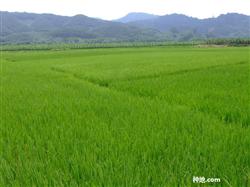 How to improve the fertilizer efficiency of potassium fertilizer?
The following methods can improve the fertilizer efficiency of potassium fertilizer:
(1) Soil potassium content and influencing factors
The total potassium (K2O) content in soil is generally about 0.3-2.5%. If all this potassium were in available form, it could supply crops for one to two hundred years. Unfortunately, the vast majority (over 98%) of soil potassium exists in soil minerals, which crops can hardly utilize; we call this mineral potassium. This is the first form and also the main body of total soil potassium. The second form is slowly available potassium, usually accounting for about 2% of total potassium. It can be gradually released and serves as a reserve of readily available potassium. When evaluating the long-term potassium supply potential of soil, the content and transformation rate of this form of potassium should be mainly considered. The third form is readily available potassium, mainly exchangeable potassium, including a small amount of water-soluble potassium. It accounts for only 0.1-2% of total potassium, and it is mainly this portion that crops utilize during the current season.
The content of various forms of potassium varies greatly among different soils, mainly due to differences in soil parent material and weathering conditions. In northern China, weathering is relatively weak. Regardless of the parent rock from which the soil formed, the clay fraction contains large amounts of hydromica and montmorillonite-type minerals with a strong capacity to retain exchangeable potassium. Except for those with coarse texture and low clay content, the potassium supply capacity is generally high.
South of the Yangtze River, as weathering and leaching gradually intensify, hydromica in the clay fraction gradually decreases, while kaolin-type minerals and gibbsite, which contain no potassium themselves and have poor potassium retention capacity, gradually increase. Therefore, potassium deficiency in soils becomes increasingly evident. Under the same climatic conditions, the degree of potassium deficiency is closely related to the parent rock. In addition, soils formed from alluvial
(2) Overview of potassium supply and demand in different regions
1. Laterite region: Laterite and red laterite (except those developed from granite and metamorphic rock) and the paddy soils formed from them are the soils with the most prominent potassium deficiency among China's zonal soils. In particular, soils developed from shallow marine sediments and basalt have very low potassium content. The large-scale application of potassium fertilizer in China first began in this region. At present, various tropical economic trees and crops all require potassium fertilizer. This is also a region where applying potassium fertilizer can achieve high benefits.
2. Yellow soil region: From a national perspective, the potassium supply potential of this region is also relatively low. For example, soils developed from limestone in Guangxi, and soils developed from red sandstone in Jiangxi and Hunan, have the lowest potassium supply levels in this region, and thus the effect of potassium fertilizer is most significant there. In hilly areas, soils developed from Quaternary red clay also have a prominent demand for potassium fertilizer. Soils developed from river alluvium have higher potassium levels than red soils, and lacustrine deposits generally have higher levels than alluvium.
3. Purple soil region: Neutral and calcareous purple soils developed from purple shale in parts of southwestern and central China are soils with relatively high potassium supply levels in southern China, but acidic purple soils have lower potassium content, and reports of potassium application effects already exist.
4. Middle and lower Yangtze River region: The paddy soils developed from alluvial and lacustrine deposits and yellow-brown soils in this region have a lower potassium supply potential than soils in North China and Northwest China, but higher than red soils in central China. At present, in the high-yield Taihu paddy soil region, the effect of potassium fertilizer has begun to appear, especially for dryland crops such as wheat and rapeseed.
5. North China Plain region: The potassium supply level of calcareous soils in this region varies with texture. Clayey fluvo-aquic soils have high potassium content and currently do not need potassium fertilizer. Sandy soils have a medium potassium supply level, and potassium application is effective for certain crops. Slightly acidic brown soils are the soils with relatively low potassium supply levels in this region. Overall, the fertilizer efficiency of potassium fertilizer on some soils in North China shows an increasing trend.
6. Northwest loess region: The lou soils and dark loessial soils in this region are influenced by loess parent material and have high potassium supply potential. Currently, few show obvious responses to potassium fertilizer application.
7. Northeast black soil region: Black soils and chernozems contain very abundant potassium. At the same time, the multiple cropping index in this region is not high. Except for special crops, potassium fertilizer is generally not needed, but peat soil is an exception.
8. Desert region: The soils in this region have the highest potassium supply levels in China.
At present, about one-third of China's cultivated land is deficient in potassium and needs large amounts of potassium fertilizer, while the current sources of potassium fertilizer are limited. How to apply it rationally to obtain greater benefits is an important issue in current rational fertilization. The existing experience is briefly summarized below.
Ways to improve the effectiveness of potassium fertilizer
(1) Apply in combination with nitrogen and phosphorus fertilizers
In the same soil, when nitrogen and phosphorus nutrient contents are low, or the amounts of nitrogen and phosphorus fertilizers applied are small, and the production level is not high, the potassium problem will not be prominent. As the amounts of nitrogen and phosphorus fertilizers increase greatly and yields rise, the need for potassium fertilizer becomes increasingly obvious. Over the past 40 years, the development process of agriculture has fully confirmed this point. A large number of experiments show that applying potassium fertilizer on the basis of nitrogen and phosphorus fertilizers can generally increase rice yield by about 15%. At present, in some regions, the effectiveness of nitrogen fertilizer shows a declining trend. One reason is the failure to pay attention to combined application of potassium fertilizer, resulting in an imbalance in the nitrogen-to-potassium ratio. Therefore, in production practice, attention must be paid to balanced fertilization.
(2) Apply more potassium fertilizer in cold waterlogged paddy fields
When potassium fertilizer is applied to cold waterlogged paddy fields with poor soil environmental conditions, the improvement of potassium nutrition in rice enhances root activity, and the oxidizing power of the roots is also strengthened, thereby reducing the content of reducing substances in the soil and increasing the redox potential. This prevents or alleviates the harm from sulfides, organic acids and ferrous iron, thus favoring rice growth. Therefore, applying potassium fertilizer to cold waterlogged paddy fields often achieves good results.
(3) Rationally allocate potassium fertilizer in crop rotation
In the double-cropping rice and wheat-single-cropping rice rotation systems, potassium fertilizer has a greater effect when applied to the later-season rice and wheat. The effect of potassium fertilizer on late rice is greater than on early rice for various reasons, mainly related to differences in soil potassium supply during the growth periods of early and late rice. For example, one experiment showed that when early rice was transplanted, the soil readily available potassium content was 9.9 mg, and by maturity it dropped to 4.3 mg. The soil potassium had not recovered before plowing and transplanting late rice, and late rice generally receives less organic fertilizer. Therefore, the effect of potassium application on late rice is greater. When potassium fertilizer is limited, priority should be given to applying it to late rice.
(4) Pay attention to applying potassium in seedling beds
As the saying goes, "Good seedlings are half the rice," which shows that the quality of seedlings affects the growth and development of rice. After healthy seedlings are transplanted to the main field, they turn green quickly, tiller early, and have more leaves, with an obvious yield-increasing effect. Potassium fertilizer has a good effect on cultivating strong seedlings. With the same amount of potassium fertilizer, applying it separately to the seedling bed and the main field often achieves a more significant yield increase than applying it all to the main field. Experiments in Jiangxi showed that when the total amount of potassium chloride was 7.5 kg (15 jin) per mu, applying 2.5 kg (5 jin) and 5 kg (10 jin) separately to the seedling bed and main field, compared with applying all 7.5 kg (15 jin) to the main field, the yields were 357.3 kg (714.6 jin) and 318.7 kg (637.4 jin), respectively, an increase of 11%.
(5) The effect of potassium fertilizer on cash crops is even greater
Cash crops are generally sensitive to potassium fertilizer and require large amounts. For example, high-yield sugarcane absorbs about 40-53 kg (80-106 jin) of K2O per mu, and banana about 95 kg (190 jin), while 500 kg (1000 jin) of rice absorbs only 10 kg (20 jin). Potassium fertilizer can not only increase yield but also improve product quality. However, the soils where cash crops are cultivated often have low potassium supply levels, so developing cash crops requires large amounts of potassium fertilizer.
(6) Apply different types of potassium fertilizer according to crop characteristics
Potassium chloride and potassium sulfate are commonly used potassium fertilizer types. In recent years, potassium magnesium sulfate fertilizer has also been newly imported. Potassium sulfate and potassium magnesium sulfate fertilizer are more expensive than potassium chloride, are available in smaller quantities, and contain no chlorine, so they should mainly be used on chlorine-sensitive crops such as tobacco, while potassium chloride can be widely used on other crops except a few such as tobacco.
(7) Pay attention to application techniques
The application rate and timing of potassium fertilizer are also very important for improving its effectiveness. Each crop has its optimal suitable potassium fertilizer rate. If too much is applied, crops will engage in luxury consumption. Generally, although it does not cause harm, it is not economical. For most crops, potassium fertilizer is best applied as a base fertilizer, and for some crops, a combination of base fertilizer and early-stage topdressing is better. When plants show obvious potassium deficiency symptoms, topdressing is also effective, but by then the crop yield and quality have already been significantly damaged. Because the clay minerals in southern soils are mainly kaolin, which has weak potassium adsorption capacity, and southern regions have abundant rainfall, the applied potassium fertilizer is easily leached away. Sandy soils also have very weak fertilizer retention capacity. Therefore, on these soils, split application should be emphasized to reduce potassium loss.
(8) Make full use of organic fertilizers, especially straw and plant ash
China lacks potassium fertilizer resources, and large amounts of potassium fertilizer rely entirely on imports. In addition to rational application of potassium fertilizer, local materials must be used to increase potassium fertilizer sources. In areas where conditions permit, returning plant ash to the field should be strongly advocated. In areas where conditions permit, returning straw to the field is also an important measure to supplement potassium fertilizer.
Click to get more nitrogen, phosphorus and potassium fertilizer application techniques
Click to get more fertilizer application techniques