How to apply urea for the best effect? Mastering the correct method is key
How should urea be applied for good results? Here is an introduction - one suitability is that it is suitable for foliar topdressing. Urea is a neutral fertilizer, causes little damage to crop leaves, and is easily soluble in water, highly diffusible, and easily absorbed by leaves. After entering the leaves, it is unlikely to cause plasmolysis, so it is very suitable for foliar topdressing. However, choose urea with a biuret content of no more than 2%...
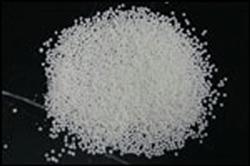
How should urea be applied for good results? Here is an introduction
One suitability means it is suitable for foliar topdressing. Urea is a neutral fertilizer, causes little damage to crop leaves, and is easily soluble in water, highly diffusible, and easily absorbed by leaves. After entering the leaves, it is unlikely to cause plasmolysis, so it is very suitable for foliar topdressing. However, choose urea with a biuret content of no more than 2% to prevent leaf damage. Generally, 0.5-1.5 kg of urea per mu is enough for foliar topdressing. It is best to spray after 4 p.m., when transpiration is low and leaf stomata gradually open, so that the diluted urea solution can basically be fully absorbed overnight, greatly improving urea use efficiency.
Two musts, namely apply early and apply deep. First, apply early. After urea is applied to the soil, it must undergo a transformation process before it can be absorbed and used by crops. Therefore, if urea is applied at the same time as other nitrogen fertilizers, it will delay the period of maximum effect of the crop's nitrogen nutrient uptake. Second, apply deep. Whether urea is used as a base fertilizer or a topdressing, it should be applied deep and covered with soil. Deep application can control the hydrolysis rate of urea, allow it to release nitrogen nutrients evenly, prevent nitrogen volatilization loss, and improve use efficiency.
Three unsuitable practices, namely unsuitable for surface application, seed soaking or mixing, and immediate irrigation after application. First, it is unsuitable for surface application. Especially in saline-alkali land, broadcasting on the surface is even less suitable. This is because the ammonium carbonate, ammonium bicarbonate, and ammonium hydroxide produced after urea decomposition are all unstable compounds. Second, it is unsuitable for soaking or mixing seeds. Urea contains a small amount of biuret, which is toxic to crops. Soaking or mixing seeds with urea will destroy the protein structure of the seeds, denature the proteins, and affect seed germination and root growth of seedlings. Third, it is unsuitable to irrigate immediately after application. After urea is applied to the soil, before it is converted into ammonium bicarbonate, it dissolves in the soil solution in molecular form and is not easily adsorbed by the soil. If water is applied immediately, the fertilizer will be lost with the water, so irrigate a few days after application.
Click to get more nitrogen, phosphorus, and potassium application techniques
Click to get more fertilizer application techniques