What are the methods for identifying the national standard for urea products?
How do you identify the national standard for urea? Please introduce 1 Subject content and scope of application This standard specifies the technical requirements, test methods, inspection rules, and marking, packaging, transport and storage of urea. This standard applies to urea produced by synthesis from ammonia and carbon dioxide. Its main uses are agricultural fertilizer, plas...
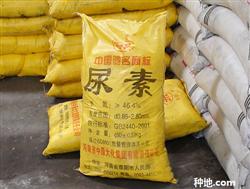
How do you identify the national standard for urea? Please introduce
1 Subject content and scope of application
This standard specifies the technical requirements, test methods, inspection rules, and marking, packaging, transport and storage of urea.
This standard applies to urea produced by synthesis from ammonia and carbon dioxide. Its main uses are agricultural fertilizer and raw material for industrial sectors such as plastics, resins, coatings and pharmaceuticals.
Molecular formula: CO(NH2)2
Relative molecular mass: 60.055 (based on the 1987 international relative atomic mass table)
2 Normative references
GB/T 2441 Determination of total nitrogen content of urea - Distillation titration method
GB/T 2443 Determination of biuret content in urea - Spectrophotometric method
GB/T 2444 Determination of moisture in urea - Karl Fischer method
GB/T 2445 Determination of iron content in industrial urea - Phenanthroline spectrophotometric method
GB/T 2446 Determination of alkalinity of industrial urea - Volumetric method
GB/T 2447 Determination of water-insoluble matter content of industrial urea - Gravimetric method
GB/T 2448 Determination of urea particle size - Sieving method
GB 8569 Packaging of solid chemical fertilizers
GB/T 13256 Determination of sulfate content in industrial urea - Visual turbidimetric method
3 Technical requirements
3.1 Appearance: granules or crystals.
3.2 Urea shall meet the requirements of Table 1:
Table 1 Technical specifications of urea %
Indicator name
Industrial use
Agricultural use
Premium grade First grade Qualified grade Premium grade First grade Qualified grade
Color White White or light color
Total nitrogen (N) content (on a dry basis) >= 46.3 46.3 46.3 46.3 46.3 46.0
Biuret content <= 0.5 0.9 1.0 0.9 1.0 1.5
Moisture (H2O) content <= 0.3 0.5 0.7 0.5 0.5 1.0
Iron content (as Fe) <= 0.0005 0.0005 0.0010
Alkalinity (as NH3) <= 0.01 0.02 0.03
Sulfate content (as SO4-2) <= 0.005 0.010 0.020
Water-insoluble matter content <= 0.005 0.010 0.040
Particle size (φ0.85-2.80mm) >= 90 90 90 90 90 90
Note: Crystalline urea is not subject to the particle size specification.
4 Test methods
4.1 Determination of total nitrogen content
Carry out in accordance with the provisions of GB/T 2441.
4.2 Determination of biuret content
Carry out in accordance with the provisions of GB/T 2443.
4.3 Determination of moisture
Carry out in accordance with the provisions of GB/T 2444.
4.4 Determination of iron content
Carry out in accordance with the provisions of GB/T 2445.
4.5 Determination of alkalinity
Carry out in accordance with the provisions of GB/T 2446.
4.6 Determination of sulfate content
Carry out in accordance with the provisions of GB/T 13256.
4.7 Determination of water-insoluble matter content
Carry out in accordance with the provisions of GB/T 2447.
4.8 Determination of particle size
Carry out in accordance with the provisions of GB/T 2448.
5 Inspection rules
5.1 Urea shall be inspected by the quality inspection department of the manufacturer. The manufacturer shall ensure that every batch of urea leaving the factory meets the requirements of this standard. Every batch of urea leaving the factory shall be accompanied by a quality certificate in a specified format. The certificate shall include the following: manufacturer name, product name, trademark, product grade, batch number, production date, product net weight and the number of this standard.
5.2 The user has the right to carry out quality inspection of the received urea in accordance with the provisions of this standard, and to verify whether its indicators meet the requirements of this standard.
5.3 Urea is inspected by batch. The weight of each batch shall not exceed 1000 t. The user takes as one batch a product of uniform quality accompanied by a quality certificate.
5.4 Sampling method: For packaged products, when the total number of bags is less than 512, the number of bags to be sampled shall be selected according to the provisions of Table 2; when greater than 512, it shall be selected according to the provisions of 3×<>(N is the total number of bags). When sampling, use a sampler inserted vertically into the center of the bag to 3/4 of its depth to take a uniform sample. Or use an automatic sampler, a scoop or other suitable tool to take cross-section samples from the belt conveyor at regular time intervals.
5.5 The samples taken shall be quickly reduced by means of a sample divider or the quartering method, and according to the different requirements for industrial and agricultural products, reduced to a 600-1200 g average sample, then divided and placed into two clean, dry wide-mouth bottles with ground stoppers or other containers with airtight performance. A label shall be affixed to the container stating: manufacturer name, product name, batch number, sampling date and the name of the sampler. One portion is for testing; the other is kept as a retained sample for a retention period of one month for verification purposes.
Table 2 Provisions for selecting the number of sampling bags
Total number of bags
Minimum number of bags to be sampled Total number of bags Minimum number of bags to be sampled
1-10 All 182-216 18
11~49 11 217~254 19
50~64 12 255~296 20
65~81 13 297~343 21
82~101 14 344~394 22
102~125 15 395~450 23
126~151 16 451~512 24
152~181 17
5.6 If one indicator in the inspection results does not meet the requirements of this standard, samples shall be taken again from twice the number of bags for re-inspection. If sampling was carried out on the belt conveyor, re-inspection shall be carried out after sampling again in accordance with the provisions of clause 5.4 regarding sampling from bags.
In the re-inspection results, if even one indicator does not meet the requirements of this standard, the entire batch of urea is deemed non-conforming.
5.7 When a dispute arises between the supplier and the buyer over product quality, it shall be handled in accordance with the relevant provisions of the State Bureau of Technical Supervision. In arbitration, it shall be carried out in accordance with the provisions of this standard.
6 Packaging, marking, transport and storage
6.1 Urea is packaged in plastic woven bags (with a polyethylene film bag as the inner bag) and composite plastic woven bags.
The net weight of each bag is 25±0.1, 40±0.2 or 50±0.2 kg. The average net weight of the bags in each batch shall reach 25, 40 or 50 kg.
The quality of urea packages shall comply with the relevant provisions of GB 8569.
6.2 The packaging bag of urea shall clearly state: manufacturer name, product name, trademark, product net weight and the number of this standard.
6.3 Urea may be transported by means such as trucks, trains and ships. The transport vehicles and loading and unloading tools shall be clean, flat and free of protruding sharp objects so as to avoid piercing or tearing the packages.
6.4 Urea shall be stored in a warehouse with a flat site, cool, ventilated and dry. The packages shall be stacked neatly, and the stacking height shall be less than 7 m.
Click to get more nitrogen, phosphorus and potassium application techniques
Click to get more fertilizer application techniques