The Correct Method for Spraying Foliar Fertilizer on Peanuts
How should foliar fertilizer be sprayed on peanuts? Please advise. Foliar fertilization of peanuts has the effects of a high fertilizer absorption and utilization rate, saving fertilizer, and significantly increasing yield. When nitrogen fertilizer is applied to the leaves, the absorption and utilization rate by peanut plants reaches more than 55.5%, the number of full pods increases markedly, and the economic coefficient rises significantly; when phosphorus fertilizer is applied to the leaves, the yield can generally be increased by 7%-10%...
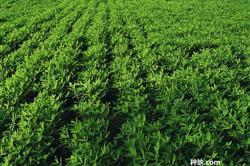
How should foliar fertilizer be sprayed on peanuts? Please advise
Foliar fertilization of peanuts has the effects of a high fertilizer absorption and utilization rate, saving fertilizer, and significantly increasing yield. When nitrogen fertilizer is applied to the leaves, the absorption and utilization rate by peanut plants reaches more than 55.5%, the number of full pods increases markedly, and the economic coefficient rises significantly; when phosphorus fertilizer is applied to the leaves, the yield can generally be increased by 7%-10%; when trace fertilizers such as aluminum, boron, manganese and iron are applied to the leaves, the yield can generally be increased by 8%-10%. Macroelements such as nitrogen, phosphorus, potassium and calcium, as well as trace elements such as molybdenum, boron, manganese and iron, can all be applied to the leaves.
(1) Applying nitrogen fertilizer to the leaves: Weigh 1 kg of urea and stir it thoroughly into 100 kg of clean water to dissolve it into a 1% urea aqueous solution; if peanut plants show signs of fertilizer deficiency in the middle and late growth stages, or if continuous rainfall during the peanut growing period causes waterlogging in the soil and makes it difficult for the roots to absorb nutrients, it can be sprayed at once, with 60 kg of urea aqueous solution sprayed per mu.
(2) Applying phosphorus fertilizer to the leaves: Peanuts have a relatively strong ability to absorb phosphorus. Spraying a 2%-3% superphosphate aqueous solution on the leaves in the middle and late growth stages can increase the rate at which photosynthetic products are transported to the pods and raise pod yield. The specific method is: put 2-3 kg of superphosphate into 100 kg of clean water, stir and soak it, and after 1 day and night, take the upper clear liquid for application, generally spraying once every 7-10 days for 2-3 consecutive sprays, with about 60 kg sprayed per mu each time. Be careful to remove the residue completely to avoid damaging the leaves.
(3) Mixed application of nitrogen and phosphorus: In peanut fields lacking both phosphorus and nitrogen, a mixed solution of 1% urea and 2% superphosphate can be sprayed, which saves labor and gives good results. The method for preparing the mixed solution is: add 1 kg of urea to 100 kg of 2% superphosphate aqueous solution.
(4) Applying potassium fertilizer to the leaves: Generally, plant ash is used for preparation. The preparation method is to take 5-10 kg of plant ash that has not been exposed to rain, add 100 kg of water, stir thoroughly, soak for 12-14 hours, and take the clear liquid, which is a 5%-10% plant ash extract, spraying about 60 kg per mu each time. A potassium sulfate or potassium chloride aqueous solution can also be used; the preparation method is to add 2 kg of potassium sulfate or potassium chloride to 100 kg of clean water, stir until dissolved to make a 2% potassium sulfate or potassium chloride aqueous solution, and spray 60 kg per mu each time.
(5) Combined application of phosphorus and potassium: Take 5 kg of dry plant ash, add 40-50 kg of water and soak it, and at the same time take 2 kg of superphosphate and sprinkle it into the soaking liquid, stir thoroughly, and after half a day filter out the clear liquid; add another 20 kg of water to the remainder, soak and filter again, then combine the two filtrates, add water to make 100 kg, which is homemade potassium dihydrogen phosphate; spray 60 kg per mu each time, and 2 sprays will give an obvious yield-increasing effect.
(6) Points to note when applying foliar fertilizer to peanuts:
1. The fertilization time should be determined according to the growth condition and growth stage of the peanuts; generally it should be applied in the late growth stage.
2. Choose a windless cloudy day, or before 9 a.m. or after 4 p.m. on a sunny day, for spraying, so as to increase leaf absorption and prevent damage to the leaves; if rain falls within 4 hours after spraying, spray again after the rain.
3. Strictly control the spraying concentration; a high concentration can easily damage the leaves and cause fertilizer damage.
4. When spraying, spray evenly and finely, and spray both the front and back sides of the leaves.
Click to get more peanut cultivation techniques
Click to get more foliar fertilizer application techniques
Click to get more fertilizer application techniques