Duck Farming Techniques: How to Make Ducks Leaner
When it comes to duck dishes, the South has its own ways and the North has its own ways. To get it just right, the ingredients are very important. That is why people have started to pay attention to duck farming techniques, and lean ducks are the most popular.
When it comes to eating duck, the South takes the lead. In the South there is a saying that no banquet is complete without duck.From hotels to every household, everyone knows how to cook duck dishes -- pan-frying, deep-frying, boiling, stir-frying, all of it. When you see each of their duck dishes, you could say your mouth waters. According to traditional preparation methods, a few dishes are particularly famous: salt-brined duck, crispy duck, and soy-sauce duck. In the South there is also the custom of using duck to make soup.
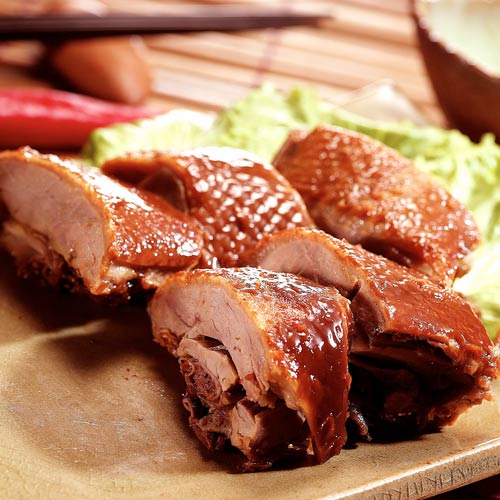
Lean ducks are popular
Consumers react in basically two ways: first, it tastes good; second, it is a bit greasy, and that greasiness takes away from the good taste. China consumes more than 3.5 billion ducks a year, which works out to 3 ducks per person. The most ordinary things are often the most important. Do not underestimate the fatness or leanness of a duck -- it affects many people's daily diet. A little too much fattiness makes people feel something is always missing. In fact, our cooking techniques already remove as much greasiness as possible, but picky consumers still feel there is a little bit of fat left. Chefs cannot solve this problem; it can only be solved at the source of duck production.
Ducks are waterfowl and are born with a certain amount of fat stored in their bodies. On one hand, this reduces their body weight when swimming; on the other hand, it helps them keep warm. There are many duck breeds, and the differences in fatness are quite large. So how do you pick a lean duck? Simply put, whether a duck is lean mainly depends on its skin fat. The less skin fat, the leaner the duck. At present, the main lean duck breeds farmed in China are imported breeds such as the British Cherry Valley duck. These foreign ducks account for 80% of China's domestic market.
Its skin fat rate is 23%-25%, which is currently the standard for a lean-meat duck. The Cherry Valley duck already counts as a lean-meat duck, yet ordinary people still find it too fat and will not buy it, which gives duck farming companies a real headache. What makes companies even more helpless is that even so, the breeding stock of these foreign ducks is still controlled by foreign companies, and domestic farming companies have always been at the mercy of others.
Making ducks lean is a bit difficult
Companies spend large amounts of foreign currency every year importing breeding ducklings. Because breeding ducklings are so expensive, companies have to spread the cost, and the price of the commercial ducks downstream rises accordingly. What troubles domestic experts is that the breeding stock is controlled by foreign companies. They clearly know the foreign breeds are a bit fat, yet they cannot do anything about it. In fact, foreign breeding experts also know their ducks are still a bit fat, but making ducks leaner is extremely difficult. Actually, many people do not know that when they first selected and bred their breeds, they even used China's Beijing duck. The Beijing duck produces a lot of meat and lays many eggs, and has strong adaptability to the environment, so when foreign countries breed meat ducks, they generally use the Beijing duck as the paternal parent. The Cherry Valley duck they developed reduced the Beijing duck's skin fat rate from 26% to 23%. These foreign breeds carrying Beijing duck genes were then imported back into China, forming an almost complete monopoly on China's meat duck market.
The Beijing duck's breeding stock is originally ours, yet now we have to buy breeding ducklings from abroad again, and others keep us by the throat in meat duck farming. This restricts the development of China's duck farming industry. To break the monopoly of foreign breeds, we must breed our own lean duck varieties. The skin fat rate of foreign ducks is 23%-25%. Only if our breeds are leaner than theirs and can replace them can companies make money and ordinary people be satisfied when eating them.
China has at least ten or twenty native duck breeds, including the Gaoyou duck, the Shaoxing duck, and so on. Among these many breeds, Chinese experts know very well that the Ma duck has the lowest skin fat rate, around 13%. Although the Ma duck's skin fat rate is very low, for thousands of years it has been raised in scattered household flocks and is not well suited to large-scale group raising. In addition, compared with its meat and egg production performance, the Ma duck is better suited to egg production; as a meat duck it needs more than 40 days to reach market weight, but the Ma duck needs more than 60 days. So raising an egg duck as a meat duck takes too long and is not cost-effective. Since the 1980s, as meat duck consumption rose sharply, large-scale farms and processing plants developed rapidly. Because there was no domestic meat duck breed suitable for large-scale farming, foreign breeds seized the opportunity.
In order to change the situation in which China's meat duck industry has long relied on foreign breeds, many domestic research institutes and duck farming companies began several years ago to select and breed lean-meat ducks. To breed new varieties, the experts not only selected paternal and maternal parents from China's breeds, but also selected excellent duck breeds from around the world. Breeds such as India's runner duck and Europe's mallard were all chosen.
The newly bred variety needed to make ducks leaner while also meeting multiple targets such as fast growth, high egg production, and low feed consumption. It is like the college entrance exam score: it is not enough to do well in a single subject, the total score must also pass. You can imagine the difficulty is enormous. Fortunately, in the autumn of 2012, China's independently bred lean-meat duck variety finally hatched in Chifeng City, Inner Mongolia Autonomous Region.
The paternal parent of the grassland duck is also the Beijing duck, while the maternal parent was screened out through several generations of crossbreeding from multiple duck breeds with excellent traits from Europe and India. Compared with foreign ducks, the newly bred grassland duck has more outstanding advantages. Its first major feature is its high lean meat rate and low skin fat rate, which exactly suits the needs of us and modern consumers. It fully meets the lean-meat duck standard that experts have been looking for.
Li Bin Quan, president of the Poultry Branch of the China Animal Agriculture Association, said, "This one here is the Cherry Valley duck that most farms raise now; its skin fat rate is 23%-25%. The one I am holding is the newly developed grassland duck; its skin fat rate is 19%-20%." When the skin fat rate drops below 20%, it no longer feels greasy to eat. In addition, the new grassland duck has two other features: one is that it is hardy and easy to raise; the other is its high feed-to-meat ratio, which saves more feed.
Li Bing He, vice president of the China Animal Agriculture Association, said: "The new grassland duck's feed-to-meat ratio is 1.9 to 1, while the Cherry Valley duck we used to raise was 2.2 to 1, so this will bring great benefits to the vast number of farmers." Now that the new lean-meat duck variety has been bred, the experts have not breathed a sigh of relief. Good breeds still need good methods to match, because if feeding is not done well, the excellent traits will be compromised. To keep the grassland duck's skin fat rate below 20%, effort must also go into feeding.
Finding a breakthrough in farming methods
The feeding style and farming methods on the farm can also easily cause meat ducks to accumulate fat. Modern feeding styles are basically similar: to make ducks produce more meat, the amount of feed is often increased during the fattening period. The fattening period is the seven or eight days before the ducks go to market. At this stage, slow-growing ducks are given more feed, and this increase in feed causes the ducks to produce too much fat. Besides eating, the raising side also easily leads to fat accumulation. Large-scale farming almost always uses the dry-raising method for meat ducks. As a result, the ducks stay on the wire mesh for more than 40 days, and the space is too small, so the ducks do not get enough exercise. If you feed them the way you feed Ma ducks and do not let the grassland ducks eat their fill every day, the grassland ducks will naturally be leaner. But if you feed them this way, the ducks will be lean, yes, but when it is time to go to market they will not reach the market weight target, which will not do either. Lean, but lean under conditions -- lean while meeting market standards.
Let the ducks run
In order to raise lean ducks, the technicians analyzed the problem and finally found two breakthroughs: one was to shorten the fattening period, and the other was to find a way to get the ducks moving. This way the ducks would both meet market standards and not accumulate too much fat. Shortening the fattening period meant letting the ducks eat well and grow well in the first 30-plus days of growth. The technicians changed the feed ratio, appropriately increasing the protein content in the feed and reducing the proportion of energy feed. With a nutritionally balanced diet, they tried to make sure not a single duck fell behind, so the fattening period could be shortened.
Not only did the feed ratio have to change, even the feeding method had to change. If the ducks were allowed to eat freely and without restraint, they would overeat without moderation. In order to precisely control how much the ducks ate at each meal, the technicians fed the ducks on a fixed schedule and in fixed amounts. Technical director Li Xu said: "We adopt the method of eating small amounts more often. For example, from 6 a.m. to 10 p.m., we feed them six times, plus two extra nighttime feedings. This is mainly to control their diet and let them eat only 80% full each time, which both meets their daily living needs and controls their fat accumulation."
Through the method of eating small amounts more often, the ducks' fat accumulation was reduced to a certain extent. In order to keep the ducks from storing too much energy, the technicians decided to get the ducks moving, so that through exercise the ducks would become leaner still. Farmed ducks are not like wild ducks; by nature they do not like to move. Moreover, when the temperature is low, the ducks get cold and lie down and do not move; when the temperature is high, they pant constantly and stop eating feed, which affects the ducks' growth. Another thing is that they love cleanliness. If the environment is not good, the ducks, just like people, are unwilling to eat or move.
Ducks cannot stand cold or heat. A temperature between 18-24°C is most suitable for duck growth, and only then will they be willing to move. To get the ducks moving, you first have to make them comfortable. The technicians built the duck houses with insulation boards, which keep warmth in winter and block heat in summer. At the same time, under the wire mesh where the ducks live, they also designed a secret weapon: geothermal pipes. These have two functions. In winter, hot water is connected to them, like our heating, and they warm things up. The ducks sleep on top of the geothermal pipes just like sleeping on a heated brick bed in our rural areas -- very comfortable. In summer, they are used to regulate temperature; after connecting cold water, they cool down the duck house.
Once the temperature was suitable, the environmental hygiene also had to be good. To keep the air in the duck house fresh, the technicians installed a total of six fans at the skylights and at both ends of the duck house to ventilate and exchange the air. Once the ducks' living area was comfortable, they were willing to take a step here and a step there. But this spontaneous behavior still involved too little exercise. Through careful observation, the technicians discovered a very interesting phenomenon when the ducks ate and drank.
Ducks take two or three sips of water, then eat two bites of feed, and right after finishing the feed they immediately go back to take two more sips of water, just like people drinking two sips of soup after eating something dry. This eating habit of ducks inspired the technicians: by placing the feed troughs and water troughs in certain positions, they could increase the ducks' exercise a bit. With the feed trough and water trough separated by a distance of three to five meters, a very good exercise effect could be achieved.
Do not underestimate these three to five meters. We feed them six times a day, and each time they can run back and forth nearly a dozen times. Over more than 40 days, they run nearly 10,000 meters or more, so this is extremely beneficial for our duck farming. In this way, throughout the entire farming cycle, the ducks not only move on their own initiative, but also do not have stress reactions. In order to make the ducks lean, the technicians also put effort into the raising density. In the experiments, they tried three, four, five, and at most eight ducks. At three ducks, the space was especially large, which wasted resources, and for a company operating on a farm scale, the cost was too high. When raised at eight ducks, there was no impact on the ducks' performance or growth, but the ducks moved less.
In the meat duck farming industry, about six and a half to seven ducks are placed per square meter. Through experiments, they lowered the density to five and a half to six. Although it was only one fewer duck, the space was larger and the exercise consumption increased. The newly bred grassland duck, matched with suitable feeding styles and farming methods, is leaner, tastes better, and is more competitive in the market.