Tips for rice field eel farming to help you easily achieve big profits
Ren Chao from Neijiang, Sichuan, started contracting and converting rice paddies to raise rice field eels in 2007. To raise them well, he used quite a few new tricks. Take one of them, for example: putting loach fry into the rice field eel breeding pond.
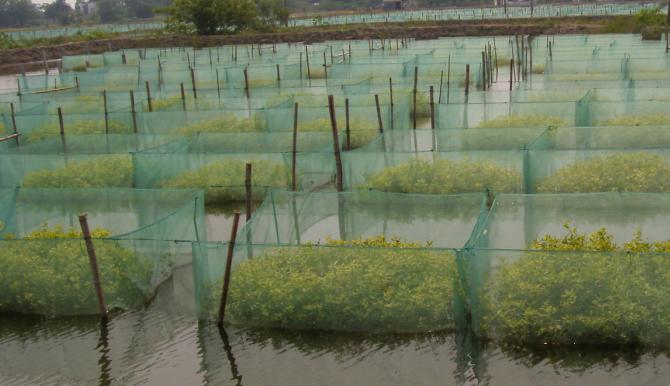
Ren Chao's cage has a water surface area of 6 sq m and holds about 500 rice field eels, with only 12 loaches of about 6-7 cm placed in the cage. Loaches are small in size, and such a small number will not take up too much space or cause oxygen deprivation for either species. This is because both rice field eels and loaches tolerate low oxygen. The gills of rice field eels are underdeveloped, and they use the inner wall epidermis of the oral cavity and laryngeal cavity as auxiliary respiratory organs, allowing them to breathe air directly. Intestinal respiration is a physiological phenomenon unique to loaches. The intestinal wall of the loach is thin and rich in blood vessels, with the function of assisting respiration for gas exchange. Putting such a small number of loaches into the cage neither requires reducing the number of rice field eels being raised nor has a negative impact on the life of the rice field eels.
1. Benefits of adding loaches
The first benefit is that they act as cleaners, removing residue in the cage, purifying the water quality, and reducing diseases in rice field eels caused by water quality problems. Because the feed is high in protein, it falls to the bottom of the cage and sinks. Over time it turns black and smells foul, causing certain pollution to the water quality, leading to skin rot disease in rice field eels, and in severe cases even causing poisoning and death.
Due to their natural instincts, loaches have the function of cleaning up residue. Loaches are somewhat weaker than rice field eels. When rice field eel feed is thrown in, because of their small size, they cannot compete for food as quickly as rice field eels and cannot win the competition, so the loaches hide far away. Only after the rice field eels have finished competing and are full can the loaches go eat the leftover feed residue.
Loaches have strong cleaning ability. Besides acting as cleaners, loaches can also help rice field eels get more exercise.Rice field eels prefer stillness and do not like to move. During the day they like to coil under aquatic plants, in mud, or live in burrows in water-filled stone crevices along embankments. They basically move very little. At night they come out to forage, and after eating their fill they become motionless again.After loaches are added, however, the loaches are naturally active creatures, lively and fond of movement. They swim up and down, darting back and forth. With all this movement, they sometimes inevitably bump into the rice field eels. The rice field eels that were originally staying still get nudged around by the loaches and also start to move.
Loaches are active and can help rice field eels get moving. This is the first benefit of loaches being lively and active. The second benefit is that they can prevent rice field eels from fighting each other.Rice field eels like to gather in groups, especially the smaller ones. When raised in cages, the density is higher than in the wild, and gathering together makes it easy for them to fight and bite each other, causing injuries to their bodies. With loaches around, darting through the group of rice field eels and dispersing them, this can also reduce fighting and biting among the rice field eels.The third benefit of loaches being active is oxygen enrichment. Loaches are very active, swimming up and down in the pond, which can gradually dissolve the saturated oxygen in the upper water layer into the lower water layers, helping the rice field eels live in the water body and also benefiting their growth.
2. Adding grass carp to the field
Ren Chao put just a few loaches in the cage, and they played so many roles. That is a good trick. Actually, Ren Chao has more than just this one good trick. He also put grass carp in the pond outside the cage.Ren Chao said: “Our rice field eel pond was converted from farmland, the kind of rice paddy that ordinary farmers plant. After the rice paddy was converted, a lot of this kind of aquatic grass grew, this alligator weed.”
This aquatic grass mainly grows around the edges of the rice field eel pond. In spring and summer it is green and lush, which is not a problem. But after mid-October when the weather turns cold, it begins to wither over a large area. If not dealt with, it easily rots in the water, and after rotting it causes the water in the entire pond to go bad. Poor water quality makes the rice field eels very susceptible to skin rot disease.At first, the method Ren Chao and his team used was the dumbest method: pulling it out. But this method is truly laborious and thankless. The aquatic grass grows in the mud of the pond, and its roots are very deep, making it hard to pull. Pulling it out is very tiring. After exhausting effort to pull it all out, as soon as the weather warms up it grows back again, filling the whole pond. When winter comes, it has to be pulled again, and it is difficult to eradicate completely.
Ren Chao, head of a rice field eel cooperative in Sichuan, said: “Later we used grass carp, putting them into the rice field eel pond, because grass carp mainly feed on grass. Grass carp eat grass.”Ren Chao puts grass carp into the rice field eel pond every March, stocking 80 grass carp of about half a jin each per mu. Once the grass carp arrive, they gradually eat the grass. By winter there is no grass left in the pond, and the grass carp can also be harvested. The next year, if the grass grows again, he continues to stock fish. In this way, with the help of grass carp for weeding, there is no need to pull grass by hand anymore.
Stocking grass carp not only saves labor but also adds an extra source of income. Each mu can earn over 1000 yuan more from the grass carp. Since no additional bait needs to be fed, this is pure income.Putting grass carp in the rice field eel pond is indeed a good thing that kills two birds with one stone. But the reporter still has a question: with both rice field eels and grass carp living in one big pond, won't there be any conflict between them?
There will be no competition for food between them. Grass carp and rice field eels have different feeding habits. Grass carp mainly eat grass, while rice field eels are mainly carnivorous, so the two will not compete for food. As for oxygen deprivation, that is even less of a concern. Rice field eels tolerate low oxygen, and the oxygen in the pond is mainly for the grass carp. With only 80 grass carp per mu, the oxygen in the pond is sufficient.Also, there is no need to worry about them competing for territory.The rice field eels all stay in the individual cages built in the pond, while the grass carp are placed in the pond outside the cages. They are separated by the cages, so no conflict will occur, and each lives in its own little world.
3. New tricks for rice field eel feed
Adding loaches and adding grass carp are both good tricks. They gave Ren Chao two good helpers in raising rice field eels and helped improve the quality of the rice field eels. But besides improving quality, Ren Chao also wanted to reduce costs, so he also applied his new tricks to the feed formula.
The diet Ren Chao currently prepares for rice field eels is mainly based on freshwater mussels. He has his own reasons for this, and it goes back to the diet he formulated when he first started raising rice field eels.Rice field eels are fish that mainly feed on animal-based feed. The feed is required to include fresh live feed. Earthworms are one of the fresh live feeds that rice field eels like most, and they are nutritionally rich. Their dry body protein content reaches 61%. This kind of feed is beneficial to the growth and development of rice field eels.So the diet Ren Chao initially formulated for rice field eels was 30% earthworms and 70% artificial compound feed. Feeding rice field eels according to this diet could meet their nutritional needs, but Ren Chao found there were also shortcomings.
The price of earthworms on the market is relatively high, generally 15 yuan per jin. Each mu requires 3 jin, so the cost for 100 mu per day is 4500 yuan, and over a year that amounts to over 600,000 yuan.With such high costs, Ren Chao could not earn much money in a year. But Ren Chao did not give up and kept looking for ways to reduce costs and raise high-quality rice field eels. Just when he was worrying, a new turn came.
Ren Chao recalled: “While I was worrying, I went out for a walk. One day when I had nothing to do, I walked to the river and saw people catching fish and shrimp. Next to them were piles of these mussel shells, just like this. At the time they did not want them, and I thought to myself, I could use these. I tried using these mussel shells to feed the rice field eels.”Rice field eels are a typical ferocious fish that mainly feeds on meat, with a large and greedy appetite. Their daily food intake accounts for 5%-10% of their body weight. They like to eat fresh live bait and will not eat food that is unpalatable or rotten and spoiled. They love small fish and small shrimp, and if freshwater mussels and spiral shells are shelled, they also love to eat them.
Among these fresh live feeds that rice field eels love to eat, Ren Chao made a comparison. In their area, there are many water bodies such as rivers, lakes, and ponds, and with plenty of rain and high temperatures, freshwater mussels grow quickly and reproduce very rapidly. There are many wild freshwater mussels, and the purchase cost is the lowest.After shelling, the meat accounts for about 70%. Freshwater mussels have very high nutritional value and are an excellent animal-based high-protein feed. According to measurements, freshwater mussels contain 61% crude protein and 7% crude fat. In terms of nutritional value, they are one of the best substitutes for the fresh live feed earthworms, and in terms of cost, locally they are much cheaper than feeding earthworms.
Ren Chao then made some adjustments to the rice field eel diet, replacing the fresh live feed earthworms with freshwater mussels, and increased the proportion of freshwater mussels in the feed. Freshwater mussels account for 70%, plus 10% small miscellaneous fish, with the remaining 20% artificial compound feed. Done this way, the cost is significantly reduced.With freshwater mussels as the main part of the diet, he can save 300,000 to 400,000 yuan in farming costs per year. For Ren Chao, this solved another big problem in raising rice field eels.
Three tricks for raising rice field eels, making the taste even more delicious
Ren Chao used three tricks in raising rice field eels. The first trick is putting loaches in the cage, the second trick is putting grass carp in the pond, and the third trick is making freshwater mussels the main feed. Done this way, the rice field eels have a good aquatic living environment, eat mainly fresh live feed, and can also exercise often. The rice field eels raised this way are close to the quality of wild rice field eels.
Generally, the skin of artificially farmed rice field eels is mostly blackish. But the skin color of the rice field eels raised by Ren Chao is yellow, with prominent brown spots on the body. Besides looking very much like wild rice field eels, the taste is also very close.
With good quality, there is no worry about selling rice field eels raised this way. The price is 2 to 3 yuan per jin higher than ordinary ones, and distributors still scramble to buy them. Ren Chao figured out good tricks and raised rice field eels that sell well. The farming scale has been continuously expanding, and now his operation has become a local agricultural breeding demonstration base.