Jiuyishan rabbit breeding technology: slowing down reproduction to increase benefits
At the mention of Jiuyi Mountain, one thinks of Mao Zedong's widely recited verse: White clouds fly over Jiuyi Mountain, the emperor's daughters ride the wind down to the green heights. A branch of mottled bamboo holds a thousand tears, ten thousand red clouds form a hundred layers of robes. Besides its famous mottled bamboo, Jiuyi Mountain has another treasure, and this treasure has a very striking characteristic. It was precisely because he took a fancy to this characteristic that Ouyang Dingquan's joys and sorrows became entangled with it from then on.
The treasure Ouyang Dingquan took a fancy to was the Jiuyishan rabbit. Compared with other rabbits, this rabbit has a petite and delicate build, a smaller head, and shorter ears, and it exists only in the Jiuyi Mountain area of Hunan, nowhere else.
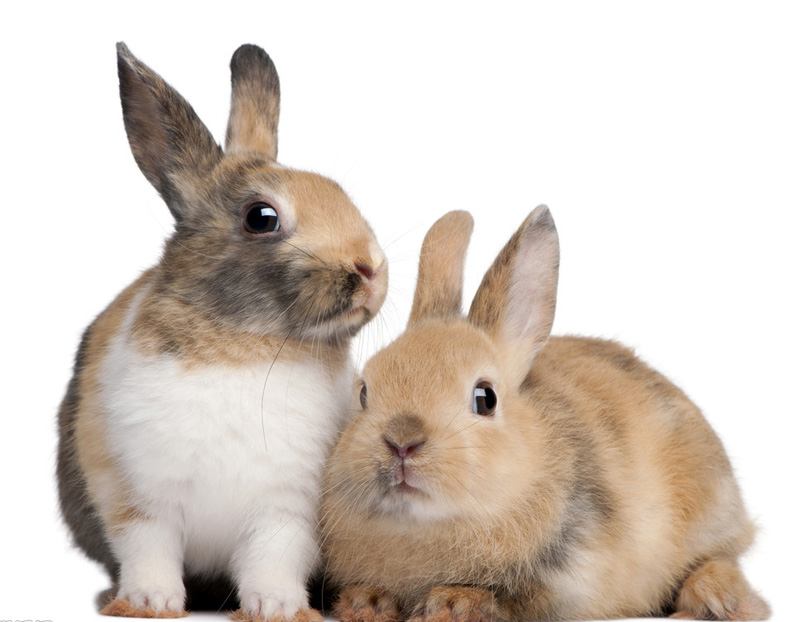
Because the Jiuyishan rabbit is especially prolific and can go through confinement every month, the locals also gave it a nickname: the monthly rabbit. Ordinary domestic rabbits give birth to only five or six litters a year, but the Jiuyishan rabbit can produce one litter every month, which adds up to twelve litters a year. At this rate of reproduction, the scale could quickly grow, and Ouyang Dingquan began plotting his clever scheme to raise Jiuyishan rabbits.
Following the principle of chickens laying eggs, eggs hatching chickens, and continuous growth, Ouyang Dingquan thought it would not be long before this clever scheme really paid off as he wished. He wove a dream of getting rich quickly and wanted to carry out large-scale breeding. Ouyang Dingquan dreamed that after large-scale breeding, he would let the Jiuyishan rabbits breed with all their might, and before long the whole farm would be packed full of rabbits. Compared with raising other breeds of rabbits, the benefits would be many times better.
Ouyang Dingquan thought that as long as he took good care of these treasures and let them fall in love more and give birth more, he could just hold out his money bag and wait for the money to pour in. In 2010, he began to put his plans into action and started raising Jiuyishan rabbits. To raise the rabbits well, he gave them everything he should: green fodder, yes, and complete nutritious concentrate, yes. Moreover, to prevent inbreeding and improve rabbit quality, he did not adopt the free-range model used by farmers but instead raised them in cages. As expected, under his careful care, the Jiuyishan rabbits really were prolific, coming into heat and giving birth every month.
Logically speaking, the money-making idea was sound, and next he should have just held out his money bag and waited to collect the cash. But half a year later, not only had he not received that much money, he could barely keep raising the rabbits at all! What happened? He had run into big trouble! He had expected to harvest thousands of rabbits in half a year. Unexpectedly, although the number of rabbits was sufficient, almost half of what he harvested were sick rabbits, disabled rabbits that could not walk, or even dead rabbits.
The survival rate of the young rabbits was too low. Was the problem with the rabbits, or was there a problem with the raising method? In fact, from the very beginning, Ouyang Dingquan had raised them very carefully for the dream in his heart. The bad situation began after the does had been bred rapidly for a period of time. The does began to be unwilling to nurse the young rabbits, and might even bite them. This problem could not be delayed: if the young rabbits could not get milk, they would not grow well, and naturally they would not sell for a good price. After examination, Ouyang Dingquan found that the problem was insufficient milk. Young rabbits need about 28 days to be weaned. It was still not time for weaning, yet the does had no milk left, so the young rabbits naturally kept pestering the does for milk.
Ouyang Dingquan, person in charge of a rabbit farm in Jiuyi Mountain, Hunan, said: “If the young rabbits still go to suck her teats, and it hurts when they suck, she will bite them. With no milk to eat, we considered giving her a little more nutrition and giving her something to promote milk, like soybeans and kelp. These things can promote milk, but she still had none. After a few days of observation, she still had none.Once the young rabbits had no milk to drink, the adverse consequences soon appeared. Because there was not enough milk and their constitutions were weak, the young rabbits began to contract all kinds of diseases and then die. Even the rabbits that survived did not grow in a way that satisfied Ouyang Dingquan. The main issue was that the rabbits lacked nutrition. When they were small, they were malnourished. Just like a tree or a child, they had a sickly look. Slowly, slowly, they could not grow; no matter how they grew, they weighed only three or four jin.
Haste makes waste. Ouyang Dingquan discovered that his earlier clever scheme had come to nothing. The monthly rabbits could indeed reproduce, but the milk supply could not keep up. Without enough milk, the young rabbits could not grow big, so naturally he could not earn money, let alone make a profit. Ouyang Dingquan's heart went half cold.
Seeing that his money-making plan was about to fall through, in desperation Ouyang Dingquan brought in a man named Li Zhiping, hoping this person could help him solve the problem of the does having no milk. Unexpectedly, Li Zhiping gave him an unexpected suggestion, and this suggestion sent Ouyang Dingquan's already half-cold heart straight to rock bottom. Li Zhiping was an agricultural technology extension researcher in Ningyuan County and had studied Jiuyishan rabbits for many years. He believed that the reason Ouyang Dingquan's rabbits grew poorly lay in blood mating.
As soon as he heard that there was a problem with blood mating, Ouyang Dingquan's heart skipped a beat, because he knew that the secret of why the Jiuyishan rabbit could become a monthly rabbit was that it could come into heat right after giving birth and undergo blood mating. A rabbit's pregnancy cycle is 30 days, and blood mating allows rabbits to become pregnant and give birth almost without interruption. In local farmers' homes, free-range pen raising is generally used. A doe that has just given birth is not affected in coming into heat and can still have a free romance with a buck and undergo blood mating. Farmers not only do not interfere; on the contrary, they believe this brings good benefits. Although Ouyang Dingquan's farm implemented separate cage raising to avoid inbreeding, it still followed the traditional practice of blood mating in order to breed more and faster. Now the expert proposed banning blood mating, which meant not letting the monthly rabbits give birth every month, and this made Ouyang Dingquan very unhappy.
In the expert's view, because local farmers were limited by scale, most of the young rabbits they bred were sold very early, so the adverse consequences of blood mating did not show clearly. But Ouyang Dingquan wanted to breed commercial rabbits on a large scale, so the problems brought by blood mating became very prominent. The reason the does lacked milk lay in blood mating. After a doe becomes pregnant, the progesterone in her body causes breast milk to decrease. Especially in the later stages of pregnancy, the fetuses in her belly grow quickly, while the young rabbits outside her belly want milk. With one doe burdened by two demands, she could not attend to both inside and outside, and the quality of the young rabbits would naturally be affected.
Li Zhiping said: “After blood mating, the survival rate of the young rabbits is much lower, especially as they approach weaning, when shortages are likely, and gastrointestinal diseases in the rabbits may occur. After weaning, when the young rabbits are raised to two or three months old, the mortality rate is somewhat higher. With intensive breeding, the mortality rate can reach about 40%.”
To solve the problem of the high mortality rate of the young rabbits, Li Zhiping then put forward a suggestion that Ouyang Dingquan found even harder to accept. Li Zhiping recalled: “At the time, the suggestion I gave them was to slow down the rabbits' reproductive speed and ensure the quality of the young rabbits. Originally the does' breeding speed was 10 or 11 litters per year, and now it was changed to 6 to 7 litters.”
Obviously, this suggestion to slow down the reproductive speed and let the monthly rabbits take it easy was completely opposite to Ouyang Dingquan's money-making approach. Rabbits that could originally produce 10 to 11 litters a year were now allowed to produce only 6 to 7 litters. With fewer births, the scale could not expand, so how could he still make money? Ouyang Dingquan felt that the expert had completely negated his previous ideas. If that was the case, could the rabbits still be raised? Yet the expert actually guaranteed him that letting the monthly rabbits reproduce slowly would not only fail to hurt the benefits but would also increase them by 20 to 30 percent over the original level.
Ouyang Dingquan, person in charge of a rabbit farm in Jiuyi Mountain, Hunan, explained: “The total number of offspring does not change much. The total number of litters, the total number of litters produced by one doe, is actually the same, but the survival rate of the young rabbits is higher, the growth speed of the meat rabbits is also higher, and the feed conversion is also higher.” After hearing the expert's explanation and considering his own farm's situation, Ouyang Dingquan felt there was some sense in it, though he was still half doubtful. Treating a dead horse as a live horse, he decided to take out a small group of rabbits for an experiment, to see whether fewer rabbits could still yield benefits through quality. According to the expert, if the rabbits were to reproduce more slowly, the key was to change the mating time.
Li Zhiping said: “The Jiuyishan rabbit has a short estrous cycle and a long duration. The general estrous cycle is 8 to 10 days, and the duration of estrus is 2 to 3 days. The estrous cycle of the Jiuyishan rabbit is 2 to 3 days shorter than that of other rabbit breeds, and the duration of estrus is 1 day longer than that of other rabbit breeds.”
A long duration of estrus and a short interval indicate that the Jiuyishan rabbit has a more ample window suitable for mating. As for choosing the timing of mating, the expert also gave clear guidance. Li Zhiping said: “For does that have finished kindling, we generally mate them near weaning or after weaning. What time is that? Generally, if weaning is at 28 days, then we should mate again after 21 days, one week before the weaning time.”
After the adjustment, does and bucks could no longer date casually, which ensured that the newborn young rabbits had enough milk to eat. In addition to the time restriction, the expert also set strict requirements for the body condition of does suitable for pregnancy. Li Zhiping explained: “To judge whether this rabbit can be mated, mainly look at its body condition. When you feel the doe's back, it should be fairly fleshy; you can feel the flesh, but it should not be too fat. It should have some fat, a little body fat. What we call 80 percent body fat. Its weight should reach 2.6 kg.”
When the mating time came, if the doe's body condition did not reach this hard target, she also could not date the buck. The purpose of doing this was also for the sake of the next generation.Li Zhiping stated: “Eighty percent body fat can ensure that the doe has a relatively high conception rate and a relatively high number of offspring. If the body condition is too fat or too thin, the number of offspring will decline. Eighty percent body fat breeds young rabbits in the best condition.” After this adjustment by the expert, the growth of the young rabbits on Ouyang Dingquan's farm improved greatly. Not only did the survival rate of the young rabbits increase, but Ouyang Dingquan also found that after the does' constitutions recovered, the number of offspring per litter also increased.
Ouyang Dingquan, person in charge of a rabbit farm in Jiuyi Mountain, Hunan, said: “Previously, according to the number of young rabbits it kindled, it could reach about 60, but the actual survival rate was about 40, so one third were lost. Now after implementing planned reproduction, it is basically one litter every one and a half to two months, but now the average number of young rabbits kindled can reach 9, and six times nine is 54, about 10 more than before, and they also go to market a bit faster.”
After doing the accounts, Ouyang Dingquan was completely convinced by the expert. So in the early summer of the second year, he confidently abolished blood mating throughout the farm and let the monthly rabbits take it easy in reproduction. But then another phenomenon appeared that Ouyang Dingquan had not expected: the monthly rabbits whose reproductive speed had been slowed actually began to slack off. The does did not come into heat when they should, and spent all day lying in their cages without moving.
The keeper put the does into the bucks' cages, hoping the bucks could relieve the does' boredom and stimulate estrus. Unexpectedly, the does not only refused to be affectionate with the bucks but also would not let the bucks come near, and even fought with them. Some does, even if they reluctantly entered the bridal chamber with a buck, still could not conceive. Why did the monthly rabbits, with their superstrong reproductive ability, suddenly become infertile? Through observation, the keeper found that the changes in the rabbits were related to the weather.
When the weather is hot, generally when it gets to around 30°C, the rabbits lie there and do not move. When the weather is generally in the 20s, they usually drink two buckets of water. When the weather is hot, they need at least four buckets of water. The Jiuyishan rabbit's fear of heat had not been especially obvious when raised in farmers' homes. Why did it become afraid of heat once it came to intensive farming?
It turned out that, to save space, Ouyang Dingquan's farm housed the rabbits in three-story buildings. Not only could they not be close to the ground, the density was also high, so the air was naturally not as cool as in farmers' homes. Once the temperature rose, the rabbits were so hot and restless that they had no mood for romance. Li Zhiping explained: “High temperatures causing a decline in the libido of Jiuyishan rabbits is a common phenomenon. Above 33°C, bucks cannot produce sperm with normal vitality; it is all dead sperm. Does also feel breathing difficulty.”
To let the rabbits be in the mood for romance, the farm modified the sheds. First, an insulation layer was added to the roof, automatic retractable curtains were installed on both sides, thatch was spread on the roof, and at the same time a rooftop spray fountain was installed. When the weather got hot, turning on the fountain made the rabbits feel as if they lived in a water curtain cave, and naturally they were cool.
After the temperature was brought under control, the rabbits began normal romance and reproduction again. Turning the fast rhythm of giving birth every month into the slow rhythm of at most two litters every three months, the comprehensive breeding benefits of the monthly rabbits increased by more than 30%.