The five-character method for high egg production in laying ducks: drive, light, stimulate, molt, release
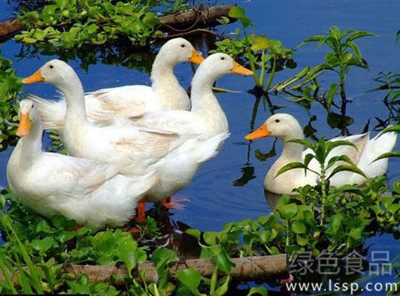
To increase the production of laying ducks: female ducks are called laying ducks from the time they start laying eggs until they are culled. Generally, the useful period of a laying duck is about 350 days (150-500 days of age), which is called the first laying year; some are kept for a second or third year after resting through molting, but their production performance declines year by year, so they are not suitable to be kept. Below is an introduction to the five-character method for high egg production in laying ducks:
Drive, that is, regular deworming.
After the beginning of autumn, deworm the laying ducks once against roundworms, using half a tablet of piperazine citrate per duck, crushed and mixed into the feed; treat once against feather lice by bathing the flock in a 0.2%%-3%% trichlorfon solution; after the beginning of winter, deworm against roundworms once more.
Light, that is, supplementary lighting.
After the ducks enter the shed (house) at night, electric lights should be installed, with one 40-60 watt bulb per 10 sq m of shed, about 1.2-1.5 m above the ground. If grazing in the wild where there is no power supply, one kerosene lamp can also be installed per 5 sq m of shed, with the lamp 0.8-1.2 m high, lit all night. Under sufficient light, laying ducks secrete more ovulation-inducing hormone, which can increase egg production.
Stimulate, that is, inducing "sexual" activity.
Generally speaking, the stronger the sexual desire of laying ducks, the higher the egg production. Therefore, 3%-5% male ducks should always be kept among the laying ducks, which can promote the sexual function of the laying ducks and increase egg production.
Molt, that is, forced molting.
After the beginning of autumn, laying ducks stop laying and molt one after another, but because each duck's body condition and development differ, the speed of molting varies. Therefore, in order to shorten the flock's rest period, increase the flock's laying rate, and reduce feed costs, artificial forced molting can be adopted. Confine the ducks, stop food and water on the first day; stop food and water on the second and third days, and pull out the thick quill feathers from both wings and the tail of the ducks; resume normal feeding and management on the fifth day. 15-20 days after forced molting, the laying ducks begin to lay eggs.
Release, that is, pay attention to releasing for fishy feed.
As the saying goes, raising geese requires green feed, raising ducks requires fishy feed. To make ducks lay more eggs, grazing should be strengthened, letting them forage in riverbanks and ditches for small fish, small shrimp, river mussels and other animal feed.