Use late-blooming flowers in autumn to carefully manage bee colonies and prepare them for overwintering
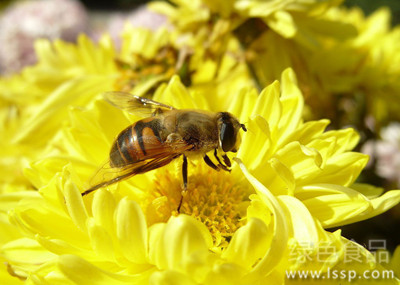
In autumn, make use of late-blooming flowers such as buckwheat flowers and sunflower flowers to carefully manage bee colonies and adjust colony strength in a timely manner, laying a good foundation for colony overwintering and the next year's yield.
I. Raise new queens and breed winter bees
The full bloom period in autumn is a good opportunity to raise queens. Both stationary apiaries and small migratory colonies should breed a batch of queen bees in a planned way. The late autumn flowering period is the final stage for rearing overwintering bees and is also one of the key periods that cannot be neglected in beekeeping production. On the basis of the earlier work of storing honeycombs, extracting honey, breeding, and treating mites, it is necessary to step up colony reproduction. Fully capped honeycombs and empty combs in the hive should be promptly removed, or stored in the supers, and the brood combs should gradually be concentrated in the brood chamber, with smaller ones placed on the two sides and larger ones in the middle. About 500 grams of edge honey should be kept on each brood comb. Do not add empty combs to the hive, do not build new combs, and do not take measures to expand the hive. Keep the bee space at 9-10 mm so that the bees cluster densely to protect the brood, and continue breeding overwintering bees on the basis of the existing brood combs.
II. Stop egg laying at the proper time and tidy the hive
After the last honey source ends, even if the queen continues to lay eggs, they cannot develop into overwintering bees; instead, this merely consumes the queen's strength in vain, causing her to age and die prematurely, weakening colony strength, and at the same time consuming feed. For this reason, egg laying should be stopped at the proper time, which can be achieved by widening the bee space and lowering the nest temperature. Timely stopping of egg laying should be carried out when there are no brood combs, so as to avoid injuring the brood. A queen cage with a queen excluder can also be used to confine the queen inside the cage. Worker bees can pass freely through the excluder and contact the queen directly, which can prevent the released queen from being balled and the hive temperature from rising. Arrange the hive with capped honeycombs, and it is best for the bees to be slightly more numerous than the combs. If there are no capped combs, use empty combs or half-empty combs to arrange the hive, replace uncapped combs or pollen combs, and give them to the colony only after the early-spring cleansing flight.
III. Use medication skillfully to treat mites
Before winter, acaricide No. 1 can be used, spraying the bee bodies with a 1:4000 medicinal solution; place 2 strips of fluvalinate-impregnated strips diagonally in the middle of the brood combs.
IV. Supplement winter feed and increase colony strength
Generally, ripe honey or pure white sugar is used as winter feed. For a 4-5 frame colony, supplement 10-13 kg of honey; weak colonies should be given more to increase colony strength. When using honey as winter feed, add 3-4 kg of water to 50 kg of honey, place it in a pot and heat it to 70°C, maintaining this for half an hour to dissolve crystals. Winter feed honey must be kept clean, and oil and other substances must be strictly prevented from mixing in. When using white sugar as winter feed, use 50 kg of white sugar plus 28-33 kg of water; first heat the water to 100°C, then add the sugar. After the sugar is completely dissolved, heat it again to 100°C, take it out, let it cool, and then feed it. When supplementary feeding, feed enough continuously within a short period; do not prolong the feeding time, so as to prevent the queen from laying eggs.
V. Manage the combs well for overwintering
For overwintering colonies, keep the number of bees and combs equal, or have slightly more bees than combs. Do not let the difference between bees and combs be too great, because with too many combs the bees will not cluster tightly, and with too many bees there will be too much heat and feed will be consumed quickly. For colonies overwintering outdoors, there may be slightly more bees than combs; for 4.5-5 frames of bees, place 4 combs, so as to adapt to the climatic conditions. Place well-capped honeycombs on both sides, poorly capped ones in the middle, and combs with empty cells in the middle; this helps the colony cluster and reduces fermentation of uncapped honey. Add a divider board to the outer side of the arranged hive, cover it with a cloth, and then cover the cloth with a few sheets of paper to prevent cold wind from blowing directly into the hive. In late autumn, reduce bee activity to avoid consuming the bees' strength.