Six Management Points for Raising and Keeping "Meat Ducks" in Spring
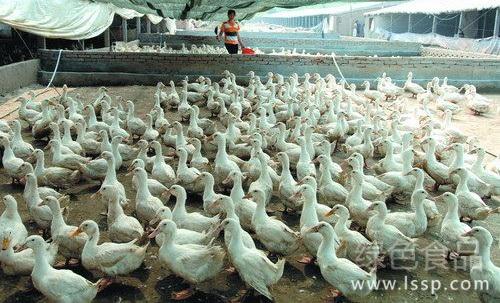
Key Points for Spring Meat Duck Feeding and Management
Raising ducklings in spring means fewer diseases, easy survival, fast growth and easy management, making it the best brooding season of the year. The following six points must be mastered in feeding:
One, never let the temperature swing between hot and cold. Spring weather is changeable, so during brooding great attention must be paid to keeping them warm, and the temperature must never be allowed to rise and fall unpredictably. The suitable temperature for brooding ducklings is: 30°C at 1-3 days of age, 25°C at 4-7 days of age, and after 3 weeks of age they can be raised at normal ambient temperature.
Two, give water before starting feed. After ducklings hatch, at 24 hours they should be given water first and then feed, and an appropriate amount of vitamin C and glucose should be added to the first water to help cleanse the digestive tract and promote the expulsion of meconium. Providing nutrition: after drinking, ducklings show signs of wanting to eat. At the start, half-cooked rice can be used first; scatter it on a clean mat and let them peck freely. Feed them to about 70-80% full each time, 6-8 times per day and night. After 1 week of age, feed 4-6 times a day; after 3 weeks of age, feed 3-5 times a day. At the same time, some fish, shrimp, earthworms, loaches and the like can be added appropriately. When feeding, these meaty feeds can be chopped and mixed into the feed, or first cooked into a soup paste and mixed into the feed.
Three, maintain a suitable density. Stocking density is related to the air hygiene in the brooding house and the healthy growth of the duck flock, so the flock should be divided at the proper time and piling up must be strictly prevented. Especially in early spring weather and in the second half of the night, observe the behavior of the ducklings and drive apart piles promptly. The suitable density for ducklings is: within 1 week of age, 25-30 birds per sq m; at 2 weeks of age, 15-20; at 3 weeks of age and above, 5-7. For duck farms (households) with large numbers, they can be divided into several small groups according to size, strength and age, with 200-300 birds per group being suitable, and adjusted once more after a week.
Four, supplement light reasonably. Generally, within 3 days of age, light should be provided all day; afterward reduce it by 2-3 hours each week, and after 4 weeks of age they can be raised under natural light.
Water release and herding, ecological breeding
Five, train them to enter water and graze. For ducklings raised on the ground, training to enter water should begin at 5 days of age. For the first 1-5 days, a nylon film can be spread outdoors, with the edges raised and clear water poured into the middle, about 2 cm deep (the water temperature should not be too low), and then the ducks put in. At first, 1-2 times a day, about 5 minutes each time; after a week, increase to 3-4 times, 5-10 minutes each time, and then gradually extend the time. Each time after coming out of the water, let the ducklings preen their feathers in a windless, warm place, and only drive them back into the house after the feathers are dry. After 5 days, they can be allowed to enter water freely, and then trained to graze near the duck house. Start with 20-30 minutes, then slowly extend it, but do not exceed 2 hours. Grazing is best done once in the morning and once in the afternoon each day.
Six, pay attention to hygiene and epidemic prevention. After ducklings reach 1 week of age, they can be vaccinated against duck plague and fowl cholera; at 10-20 days of age, inject duck plague viral hepatitis serum once; at 60 days of age, immunize once more with duck plague vaccine.