Eight key points for stocking fish fry in winter to increase production
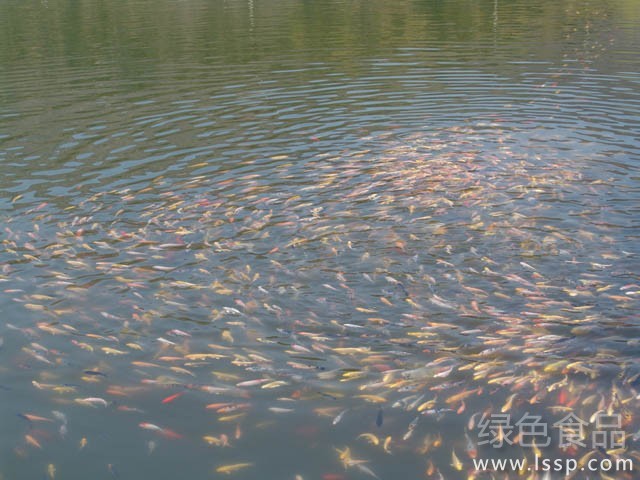
Stocking fish fry in winter: eight key points to increase production
At present, many fish farmers generally use the traditional "stock in spring, catch in winter" farming method. Practice has proved that the best method should be "stock in winter, catch in winter", that is, stocking fish fry around the "Winter Solstice" of the first year and catching them for market in the winter of the second year. "Stock fish fry in spring and the fish get sick; stock fish fry in winter and they grow three tenths", practice has proved that the period from the Winter Solstice to the Start of Spring is the best time to stock fish fry. Because the water temperature is low, the fish scales are tight, and the fish are weak in activity, the fish body is not easily injured during the stocking operation, and the survival rate of the fry after being put into the pond is high., increase fish production.
To do a good job of stocking fish fry in winter, the following key points should be grasped:
1. Pay attention to clearing the pond and disinfecting it. Keep the pond at a water depth of 10 cm. First, for every 667 sq m (1 mu), use 90 kg of quicklime or 4 kg of bleaching powder containing 30% chlorine, mix into a paste and evenly splash it over the whole pond; then fill the pond with water, and for every 667 sq m use 12 kg of bleaching powder, spread it evenly, and stir it thoroughly. Generally, fish fry can be stocked after 7 days.
2. Pay attention to putting fish into fertilized water. Apply base fertilizer 5-7 days after clearing the pond. Generally, for every 667 sq m of pond, apply 500-700 kg of fermented pig or cow manure or 200 kg of human manure (new ponds or lean ponds can be given more), then fill with water, which is conducive to the growth of phytoplankton and provides natural food.
3. Pay attention to suitable size. For the stocked fish fry, the body length of grass carp, silver carp and bighead carp should be 15 cm, common carp 13 cm, and crucian carp and bream more than 10 cm. The selected fish fry should be uniform in size and strong in constitution, which is conducive to improving the survival rate of the fry.
4. Pay attention to stocking early. Around the period from the Winter Solstice to the Spring Festival, or when the water temperature is 8-10°C, is the best time to stock fish fry. At this time the water quality is stable, the fish body is firm, the fish body is not easily injured during catching and transportation, and the mortality and disease rates are low. At the same time, the fish fry quickly get sparse stocking, adapt to the environment earlier, start feeding earlier, and gain weight quickly. When stocking, it is better to choose noon on a sunny day. Frosty days and rainy or snowy days with too low temperatures are not suitable for stocking, and care should be taken to prevent the fish body from being frostbitten.
5. Pay attention to disinfecting the fish fry. The fish fry should be put into the pond after disinfection. Generally, soak the fish fry with 3%-5% bleaching powder and 8% copper sulfate for 20-30 minutes; or soak them with 3%-5% salt water for 5-10 minutes to kill pathogenic bacteria on the body surface of the fish.
6. Pay attention to reasonable mixed culture. Determine the reasonable stocking density and stocking amount according to the water quality, food, and size of the fish fry in the fish-farming water area. If the water is fertile, mainly apply fertilizer and combine it with feeding, and silver carp and bighead carp should be the main species; if the water is lean, mainly feed, and if there is a lot of green feed, grass carp should be the main species. The stocking amount per 667 sq m is about 1000 fish.
7. Pay attention to strengthening management. The pond should have a dedicated person responsible for management. The water should be changed once every 20 days, adding 15-20 cm each time, stocking first and then filling, to regulate water quality. When the weather suddenly turns cold, the water level should be deepened to more than 2 m; for ponds that have not been replenished with water for a long time and have low oxygen content, for every 667 sq m use 5-6 kg of ammonium nitrate and 3-4 kg of superphosphate, mix them and put them into a fine-mesh cloth bag and hang it underwater. At noon on a sunny day, use a bamboo pole to stir part of the pond bottom, and after a period of time stir another part, once a month. In overwintering ponds, some pig manure, distillers' grains, soybean cake or rapeseed cake should be appropriately added to raise the water temperature and meet the needs of overwintering fish fry for a small amount of food. When the water temperature reaches 7-8°C in early spring, feed and fertilize early to cultivate fertile water and promote rapid fish growth.
8. Pay attention to preventing and treating fish diseases. During the overwintering period, fish fry are prone to infection with saprolegniasis, red-skin disease, and so on. For saprolegniasis, use a mixture of 4% salt and 4% baking soda solution and splash it over the whole pond, or for every 667 sq m with a water depth of 1 m, sprinkle a 10 mg/kg bleaching powder solution over the whole pond. For red-skin disease, on the first day splash 1 mg/kg bleaching powder over the whole pond once, on the second day splash 0.5 kg of quicklime once, and on the fourth day splash 1 mg/kg bleaching powder again. For chilodonelliasis and filariasis, for every cubic meter of water use 0.1-0.2 g of mercurous nitrate dissolved in water and sprinkle it over the whole pond, or for every cubic meter of water use 0.25 g of dried chili powder and 0.1 g of ginger, add water, boil and take the liquid, and sprinkle it over the whole pond, using it twice in a row. For fish lice, use 0.2-0.5 mg/kg of 90% trichlorfon crystals and sprinkle it over the whole pond.
Stocking fish fry in winter
Precautions
In winter the temperature is relatively low, and management of the farming environment is relatively difficult. It is now recommended to prevent shallow water. If the overwintering pond water is shallow, the water temperature changes quickly, and the temperature difference is large, which is unfavorable to fish growth. After the water level drops, the fish population density increases accordingly, which easily causes oxygen deficiency and makes the fish stop growing or even die. Therefore, the fish pond should maintain a normal water level in winter.
Under normal circumstances, oxygen-deficiency pond turnover mostly occurs in the high-temperature seasons of summer and autumn, and is rare in winter. However, in fertile-water fish ponds, deep-pool dead-water fish ponds, and under cage-culture conditions, oxygen-deficiency fish deaths also occur in winter. In the above water areas, as the temperature drops, the surface water temperature falls, its density increases and it sinks, and the oxygen-deficient and anoxic water at the bottom floats up, which can cause severe oxygen deficiency in the upper water body. In addition, in winter the light duration is short, the photosynthesis of phytoplankton in the water weakens, and the amount of oxygen produced decreases, which can also cause insufficient dissolved oxygen in the aquaculture water body. Therefore, in these water areas, oxygen-increasing measures should be taken in a timely manner in winter to prevent pond turnover and fish deaths.