Detailed Explanation of the Causes and Prevention Techniques of Swine Enzootic Pneumonia
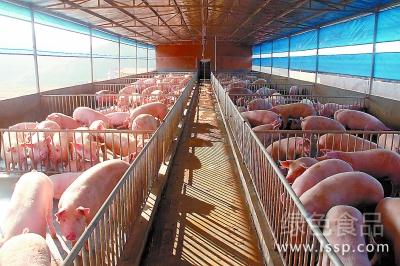
Pig Farm
Swine enzootic pneumonia, also known as swine pneumonia, or Mycoplasma hyopneumoniae pneumonia, is a chronic respiratory infectious disease of pigs. The main clinical symptoms of this disease are coughing and panting, and the pathological changes are mainly located within the thoracic cavity. The lungs are the main organ affected. Acute cases are mainly characterized by pulmonary edema and emphysema; subacute and chronic cases show "shrimp meat"-like consolidation of the lungs. Affected pigs grow slowly, have low feed conversion efficiency, and the fattening period is prolonged.
Pathogen and Epidemiology of Swine Enzootic Pneumonia
Mycoplasma hyopneumoniae is one of the 3 main pathogens causing respiratory diseases in pigs, with a detection rate of about 19% in cases of respiratory disease in pigs.
Mycoplasma hyopneumoniae mainly exists in the respiratory tract, lung tissue, hilar lymph nodes and mediastinal lymph nodes of infected pigs. Sick pigs and carrier pigs are the main sources of infection. Its transmission routes mainly include: respiratory tract transmission, direct contact transmission and droplet transmission. The pathogen infects only pigs. In the early stage of infection, Mycoplasma hyopneumoniae exists on the surface of the trachea and bronchi and damages the mucosal-ciliary barrier, causing proliferation of lymphoid cells around the bronchi and blood vessels. The immune response of infected pigs to Mycoplasma hyopneumoniae mainly occurs in the later stage of the disease, which shows that this infection has a certain immunosuppressive effect.
There is no difference in breed, age or sex in the occurrence of this disease, and it can occur throughout the year, being more common in cold, rainy, humid or suddenly changing weather. Poor feed quality, overcrowded, humid and poorly ventilated pig houses are the main predisposing factors. When infected alone, the mortality rate is not high, but once it is introduced into a pig herd, it is very difficult to completely eliminate without strict measures.
Under natural infection conditions, secondary infection with Pasteurella, pneumococci, Actinobacillus pleuropneumoniae, Salmonella and various pyogenic bacteria, Mycoplasma hyorhinis and granular Chlamydia, etc., is common, thereby causing aggravation of the disease and increased mortality.
Pig Farm
Prevention and Treatment of Swine Enzootic Pneumonia
1. Improving air quality is the key to preventing and treating this disease
Swine enzootic pneumonia can only be transmitted through direct contact between sick pigs and healthy pigs. When sick pigs cough, pant and sneeze, they spray secretions containing the pathogen, forming droplets that infect through the respiratory tract. Infection cannot occur through wounds, subcutaneous injection or the digestive tract. This is because the occurrence of an infectious disease requires infection with a certain number of pathogens to cause disease. For diseases transmitted by airborne droplets, increasing ventilation can reduce the pathogen concentration in the pig house and control the occurrence and spread of the disease.
2. Carry out vaccine immunization
Vaccination is an important means of controlling the occurrence of infectious diseases. For farms where swine enzootic pneumonia commonly occurs, vaccine immunization is recommended. For adult breeding pigs, immunize once a year with the attenuated lyophilized vaccine for swine enzootic pneumonia; for replacement breeding pigs, immunize once before mating; for piglets, immunize once at 7~15 days of age. For already infected sick pigs, the lapinized lyophilized vaccine for swine enzootic pneumonia can be injected intraperitoneally. After vaccination, try not to inject antibiotics. However, feedback on the use of the vaccine currently shows that there are many cases of vaccine immunization failure, and there are still a few local cases of disease occurrence after immunization. Controlling the occurrence of swine enzootic pneumonia through vaccine immunization is a worldwide problem. In recent years, the immune protection rate of the vaccine has improved somewhat, but local minor outbreaks still cannot be avoided.
3. Antibiotic treatment
Mycoplasma suis is not sensitive to penicillin or sulfonamides, but is sensitive to spectinomycin, oxytetracycline and kanamycin.
For affected pig farms, the following methods can be used for treatment: add 200 grams of lincomycin per ton of feed and feed continuously for 21 days. Kanamycin sulfate 10~20 mg per kg body weight, intramuscular injection twice a day for 5 consecutive days. Oxytetracycline hydrochloride 30~40 mg per kg body weight, diluted with 0.25% procaine injection or 4% borax solution, then injected intramuscularly once a day for 7 consecutive days. Feed 0.05% oxytetracycline in the feed for 5~7 days, while intramuscularly injecting kanamycin 20,000~40,000 units per kg body weight once a day for 3~5 consecutive days. Tylosin injection 0.4 ml per kg body weight, intramuscular injection, twice a day.
4. Preventive medication during high-incidence seasons
According to the epidemiological characteristics of swine enzootic pneumonia on the farm, preventive medication can be given in advance during the seasons when swine enzootic pneumonia commonly occurs. During seasonal transitions or at weaning, piglets can be fed 400~800 grams of oxytetracycline base per ton of daily ration mixed into the feed; for newborn suckling piglets with weaker disease resistance, inject 0.5 ml of long-acting D-Micina injection intramuscularly at 2, 7 and 21 days of age respectively.
5. Strengthen feeding management
Strengthen scientific management and create a good growth environment. In winter and spring, strengthen cold protection and warmth preservation; in summer and autumn, do a good job of heatstroke prevention and cooling, and reduce stimulation from various adverse factors.
Reduce stocking density. Generally speaking, if stocking density doubles, the probability of occurrence of infectious diseases increases tenfold. Reducing stocking density is also an important means of controlling the spread of disease. Pay attention to environmental disinfection. According to the epidemic situation, disinfect the pig house 1~2 times a day. The pathogenic microorganisms carried by manure and dirty water must undergo harmless treatment. Commonly used disinfectants include 0.5% formalin, 0.5% caustic soda, 20% lime milk, 1% carbolic acid, etc. Scientifically prepare the daily ration with reasonable mutual matching. Give less at a time and add frequently. Strengthen ventilation and air exchange, keep the pig house dry, reduce ammonia irritation and reduce dust, as dust carries a large number of pathogenic microorganisms.
6. Establish a healthy breeding pig herd free of the pathogen
For breeding pig farms with the necessary conditions, quarantine and purification work can be carried out to establish a breeding pig herd that does not carry the Mycoplasma hyopneumoniae pathogen. In areas or pig farms without this disease, implement the principle of self-breeding and self-raising. The introduction of breeding pigs must be strictly quarantined, and all veterinary epidemic prevention systems must be strictly implemented to prevent the introduction of the pathogen.
For pig herds that are affected or infected with the swine enzootic pneumonia pathogen, purification work can be carried out. At present, there are many detection methods for swine enzootic pneumonia, with simple operation and high sensitivity. The swine enzootic pneumonia hemagglutination test and the swine enzootic pneumonia-ELISA test are both convenient to implement at the grassroots level. Breeding pigs that test negative are raised in isolation. After multiple rounds of purification to remove infected pigs and culling positive pigs, a healthy pig herd that does not carry the Mycoplasma hyopneumoniae pathogen is established.