Correct Stocking for Increased Yield and Income: Technique for Breeding Oriental River Prawn Fry in Earthen Ponds
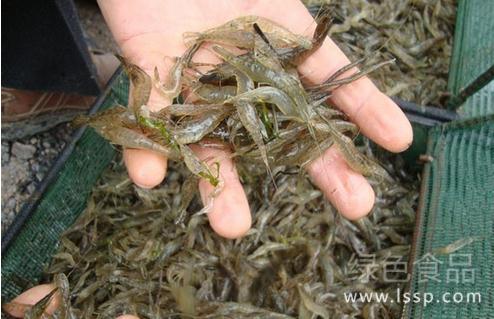
Oriental river prawn
Some oriental river prawn farmers, in order to save effort, directly use the berried prawns left over from spring prawn culture ponds sold off, allow them to reproduce naturally in the original pond, and then, without clearing or drying the pond, carry out the second half of the year's oriental river prawn culture directly in the original pond. Year after year of this cyclic culture, the yield and economic returns will be very poor.
Why will the yield and economic returns be very poor? First, the traits of the oriental river prawn degenerate, growth is slow, and the size of the marketable prawns produced is not large; second, the number of prawn seed bred in the pond cannot be estimated, the fry vary greatly in size, and some large fry reach 3~4cm by August, have already matured, and then reproduce another batch of autumn prawns, causing excessive density. The prawn seed in the pond varies unevenly in size, which directly affects the market rate of the oriental river prawn in the second half of the year and seriously affects the economic returns of the pond.
To overcome the above shortcomings, during the oriental river prawn breeding season, mature wild berried prawns should be used to breed fry in dedicated earthen ponds. The main techniques are described below:
1. Pond clearing and disinfection
The fry rearing pond must be cleaned and renovated 20 days before fry rearing. Then, 15 days before oriental river prawn hatching (before releasing the berried prawns), thorough pond clearing and disinfection should be carried out. Shallowly fill the pond with 30cm of water to let the loaches, rice-field eels, snails and other organisms hidden in the mud emerge from their burrows on their own, then use a high-efficiency pond-clearing agent or pond-clearing drug to kill the above harmful organisms. After 2 days, drain the medicated pond water, then spread 400kg of quicklime per mu over the whole pond; ponds with higher acidity should be treated with more, and after application, fill with 10~20cm of water and soak for 3~5 days.
2. Fertilizing the water
After 3~5 days of quicklime disinfection, fill the pond with water to 30~40cm, and per mu use one bag (2kg) of high-efficiency algae-culturing agent or 250ml of high-efficiency water-culturing agent, diluted with water and splashed over the whole pond. For a new pond, 15~20kg of chicken manure may also be applied, decomposed and fermented with water, then splashed over the whole pond. After 3~4 days, the water color can be seen to be pale yellow-green or tea-brown, then use 0.3g/m3 bromochloro hydantoin or 0.3g/m3 prawn bacteria-clearing agent, splashed over the whole pond for disinfection. After 2~3 days, the water color can be seen to be yellow-green or bean-green; gradually add water to 70~80cm, and the berried prawns can then be released.
3. Setting up hatching cages and shelters
⟧ Set up 3 oriental river prawn hatching cages per mu of hatching pond, with specifications of 2m×1m×0.7m, mesh of 9~10 mesh/cm2, fixed in the pond with bamboo poles, with the bottom 20cm from the pond bottom and the top 20cm above the water surface. Place 0.5m2 of alligator weed in the cage, arranged in strips parallel to the long side of the cage, for the oriental river prawns to climb and rest on. If there are no cages, some branches, alligator weed or mesh sheets can also be placed directly in the pond, submerged about 30~40cm in the water, as resting sites for the oriental river prawns and young prawns.
4. Selection of berried prawns
In mid-May, purchase berried oriental river prawns from fishing boats. The berried prawns are required to be over 5cm in individual size, robust in constitution, free of injury or deformity, with a large number of eggs, and the egg color is green-brown, with good and uniform maturity.
5. Time for stocking berried prawns
Generally, this is controlled from mid-May to early June, stocking 4~5kg of berried prawns per mu, with 1~1.5kg of berried prawns per hatching cage; if there are no cages, the berried prawns can also be placed directly into the pond to hatch.
Oriental river prawn culture
6. Feeding and management
(1) Feeding
The berried oriental river prawns are fed with soybean cake or pellet feed. To enable normal hatching of the oriental river prawns and reduce mutual predation among them, feed should be given once a day, with the feeding amount accounting for 3%~5% of the prawn body weight.
(2) Checking the hatching status of the oriental river prawns
After the oriental river prawns are put into the pond, patrol the pond every day to check the hatching status of the oriental river prawns and remove frog eggs from the pond. When the oriental river prawns have finished hatching (about 7~10 days), take the hatching cages out of the pond together with the oriental river prawns.
(3) Fertilizing
About 3~5 days after the oriental river prawns are put into the pond, the hatching of oriental river prawn larvae can be detected, and at this time fertilizer should be applied in time: apply 25~50kg of fermented chicken manure slurry per mu (equivalent to about 5~10kg of fresh chicken manure) or splash 250mg of water-culturing agent per mu. After 3~5 days, the water color can be cultivated to yellow-green or tea-brown, with a transparency of 25~30cm. At this time, the pond already has abundant natural opening feed for the oriental river prawns. Scoop a cup of pond water with a glass cup and hold it against the sunlight, and many small white dot-like rotifers can be seen.
(4) Add new water at the right time to promote the reproduction and growth of natural feed
After feeding in the pond, according to water quality, add 5~10cm of water every 5~6 days, keeping the pond water transparency at 25~30cm, so that the pond water is both fertile and fresh.
(5) Feeding fry feed
Generally, about 7~10 days after the berried prawns are stocked, young fry can hatch out. After the fry have all emerged, per mu use 0.5~1kg of soybeans ground into slurry and splash it over the whole pond every day, splashing twice a day. In the early stage, the soybean milk needs to be filtered to remove residue; after 1 week, unfiltered soybean milk can be fed. After 10 days, gradually mix fishmeal, soybean cake powder, cooked trash fish, etc. into the soybean milk fed. After juvenile prawns are seen, crushed feed can be directly fed on the shallow shoals. After about 1 month or more of rearing, about 500,000 fry can be produced per mu, with a size reaching 1.5~2cm, and at this time they can be caught and stocked in separate ponds.
(6) Disease prevention and control
At the seedling stage of the oriental river prawn, especially during the larval metamorphosis period, the more common parasitic diseases include Epistylis and Carchesium. Preventing and controlling the occurrence of the above diseases mainly depends on always keeping the water quality tender and fresh, and not allowing the water body to age.
(7) Catching the fry
After the oriental river prawn larvae hatch out, after about 30 days of careful rearing, when the larvae grow to 1.5~2cm, they can be divided among ponds. The fry can be pulled out with a fish fry net, and after counting, adult prawn culture can be carried out. When catching fry with a seine net, the movements must be slow, strictly preventing the fry from sticking to the net and suffocating to death. Oriental river prawn fry are not easy to pull out completely with a net; after pulling the net several times, pump the water to catch them, and when pumping water, care should be taken to block it tightly with fine-mesh netting, so as to avoid the fry being pumped out with the water. The caught fry are placed in a cage with slight flowing water for oxygenation, and only after the fry move normally can they be counted, transported and divided among ponds; otherwise, the fry will die.