How to seize the golden autumn season and do a good job of cow breeding
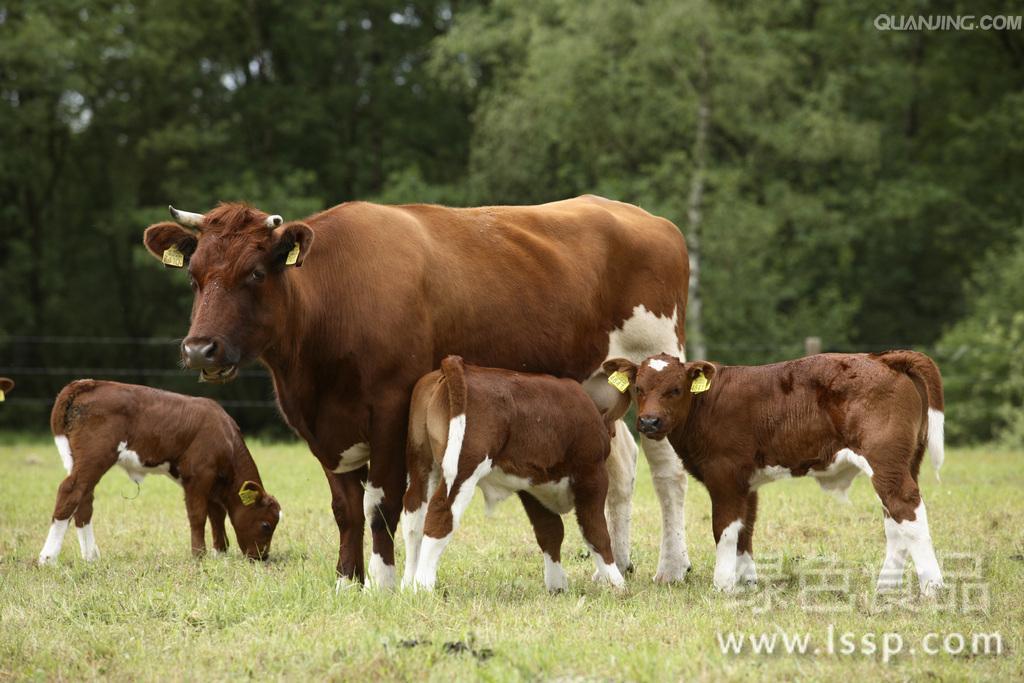
Cows
Cows generally come into estrus, ovulate and are bred in autumn and spring. In autumn the weather is cool, forage is abundant and feed is plentiful; in addition, the cattle are in the rest-from-work period, the cows' body condition improves, the bulls are full of vigor, and the cows' estrous cycle is short while the duration is long, so it is the golden season for cattle breeding. Therefore, farmers who raise cows should strengthen management and breed the cows in good time.
I. Achieve both without neglect
The eighth to the tenth month of the lunar calendar is the peak season for autumn estrus and breeding of cows, so "both work and breeding without neglect" should be achieved. Before the breeding season arrives, cows of suitable age should have medium body condition; being too fat or too thin is not conducive to breeding. For thin and weak cows, mix 40% corn, 30% barley, 20% wheat and 10% soybean, soak the mixture in clean water for 4 to 6 hours, then pulping it, add 8% to 10% of the total feed weight of soybean cake, 5% bran, 1% salt and 3% to 5% bone meal, and supplement-feed the cows twice a day, morning and evening, 7.5 kg to 10 kg each time including the liquid; extend grazing time and cut grass to feed the cows, so that the cows come into estrus and are bred within a short period. Only when the cows are in good body condition, come into estrus normally, are fertilized and conceive can this be guaranteed.
II. Select good breeding bulls
The quality of breeding bulls has a great influence on the quality of the herd, so good breeding bulls must be selected. If natural mating is used, for every 20 to 30 adult cows one fine bull aged over 3 years and under 8 years should be selected and kept, raised by a dedicated person. Breeding bulls should be given additional green fodder and concentrated feed, and when breeding is busy they should also be given additional animal feed such as eggs and fish meal; at the same time, inbreeding and indiscriminate mating with inferior breeds must be prevented.
III. Seize the timing
The estrous cycle of female water buffalo is 18 to 25 days, lasting 2 to 4 days; the estrous cycle of yellow cattle is 18 to 21 days, lasting 1 to 2 days. After a cow comes into estrus, its appetite decreases, it is excited and restless, likes to approach bulls, mounts other cattle, often assumes a urinating posture but passes little urine, its vulva is flushed red, congested and swollen, slightly open, often with white translucent mucus flowing out, and a few cows even discharge a small amount of blood from the vagina.
At this time, if the cow's rump is touched, the tail is raised high, it stands still and quiet, spreads its two hind legs and makes mating movements; afterwards its appetite gradually recovers, sexual desire declines, the swelling of the vulva gradually subsides, and the mucus becomes scanty and thick (on rectal examination, estrus is at the stage of follicle maturation or ovulation). This is the most suitable time to breed or inseminate the cow. Cows ovulate from the late estrus stage to 10 to 15 hours after the end of estrus; the suitable breeding time is 8 to 12 hours after the start of estrus for yellow cattle and around 20 hours after estrus for water buffalo.
IV. Adopt repeat breeding
About 70% of female yellow cattle ovulate at night. According to this special pattern, it is best to inseminate and breed the cow at around 7 p.m. on the day the estrous signs begin to appear. To increase the conception rate, the repeat breeding method can also be adopted, that is, breeding is repeated once 8 to 12 hours after the first breeding. If the cow is bred at 7 p.m., it can be bred again once between 5 a.m. and 8 a.m. the next morning.
V. Artificial insemination
Using artificial insemination is an important part of raising the conception rate of cows, and the rectal palpation method is especially effective. During the operation, insert the insemination tube straight into the cervix 5 cm to 7 cm, then slowly inject the semen; after insemination is completed, slowly withdraw the insemination tube to prevent damage to the cow's vagina or backflow of semen.
VI. Estrus induction and breeding
For opposite-sex induction of estrus, use a bull in estrus to chase cows not in estrus, so as to make the cows come into estrus.
VII. Hormone drug induction of estrus
For multiparous cows not in estrus, one of the following estrogens may be chosen for injection, with dosages of 25 mg to 35 mg of diethylstilbestrol, 40 mg to 60 mg of hexestrol, and 3 g to 5 g of Sanhesu; after injection the cows can come into estrus and be bred.
VIII. Traditional Chinese medicine induction of estrus
Decoction of 30 g of Leonurus japonicus (motherwort), 24 g of pumpkin leaves and 15 g of safflower, given to the cattle by drenching; 0.5 kg of the inner layer of cracked bark of old jujube trees, 1 kg of brown sugar, add 3 kg of water, decoct and drench the cattle twice a day, morning and evening, for 2 to 3 consecutive days, and the cows can come into estrus and be bred.
Cows
IX. Strengthen management after breeding
Within 1 to 2 hours after breeding, do not let the cow have strenuous exercise, and try to avoid the cow drinking water or eating too much. Within 15 days after breeding, feed supplements at night, and at the same time add 1 kg to 1.5 kg of bran or distillers' grains, and give clean drinking water with a small amount of salt to help the fertilized egg implant; the daily salt allowance is 25 g to 28 g.
During pregnancy, the cow's own growth as well as the development and growth of the fetus, placenta and uterine body all require large amounts of nutrients, so pregnant cows should be supplied with feed rich in protein, vitamins and minerals. If the feed is monotonous or the feed supply is insufficient, it will cause malnutrition in the cow and fetus, affect the normal growth and development of both mother and young, and in severe cases even cause fetal death.
Special attention must be paid to preventing miscarriage: do not feed moldy, spoiled, toxic or highly acidic feed; do not feed frozen feed or feed with strong irritants, so as to prevent enteritis, miscarriage, or the birth of weak or dead fetuses; do not let pregnant cattle be frightened, to avoid nervous tension causing uterine contractions and miscarriage; after being frightened, cows also show increased adrenaline secretion, which causes blood vessels to constrict, and as a result less blood flows to the placenta, easily causing miscarriage; prevent mechanical miscarriage in cows caused by crowding, collisions, slipping and falling, whipping or head-butting.
⟦27
X. Drug treatment for preventing miscarriage
10. Medical tocolytic treatment
When immunizing with the freeze-dried Brucella melitensis strain 5 attenuated vaccine, pregnant cows may be given an intramuscular injection of 0.5 g to 1 g of progesterone, once a day for 1 consecutive week. Remember: use dexamethasone with caution.