Raise pigs with plenty of observation: 10 simple methods to help you spot pig diseases
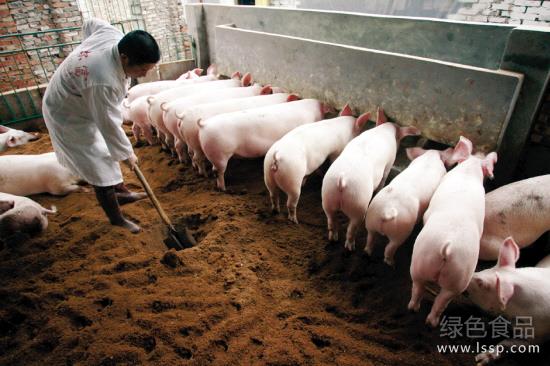
Pig farming
Early identification is the top priority of disease management. This work is carried out by the keepers, who use sight, hearing, touch, smell and other senses to spot abnormal animals and single them out from the normal ones. All pigs should undergo a clinical examination every day. For a pig farm with 100 sows, this work takes half an hour a day, while for large farms it is an important daily routine that can be divided up at the department level. How many pig farm managers set aside enough time for this work?
As long as you observe carefully, you can detect pig diseases early, which allows early prevention and early treatment. The methods are as follows:
1. Look at the eyes. A healthy pig has bright, spirited eyes; if a pig's eyes are dull, red, or have excessive eye discharge, it is a sign of illness.
2. Look at the skin. A healthy pig has smooth, rounded skin and full muscles; if the pig's skin is coarse and hard and lacks elasticity, with swelling, ulcers, red patches, or eroded patches, it is a sign of illness.
3. Look at the coat color. A healthy pig has a glossy, lustrous coat; if the pig's hair is coarse, hard, lacks elasticity, and is messy, it is a sign of illness.
4. Look at the nose disc. A healthy pig has a moist nose disc with droplets of sweat; if the pig's nose disc is dry with no sweat droplets and a large amount of mucus overflows from the nostrils, it is a sign of illness.
5. Look at the movements. A healthy pig wags its tail constantly and can respond quickly and sensitively to external stimuli. A healthy adult pig is greedy for food and fond of sleep. If food is given, it comes at the call, lies down and dozes after eating its fill, and when a stranger approaches, it stands up, raises its head, and wags its tail constantly. If the head and tail droop, it is a sick pig.
6. Look at the neck. A healthy pig moves its head and neck freely, with no swelling or hardness; if the pig's head and neck do not move freely or there is swelling and hardness, it is a sign of illness.
7. Look at the breathing. A healthy pig breathes normally 10-20 times per minute; if abdominal breathing is too fast or too slow, it is abnormal.
8. Look at the tail area. A healthy pig has a clean anus with no feces; if the pig's anus and the area around it, or even the tail, are stuck with thin feces, or the rectum protrudes from the anus, or the tail droops and does not move, it is a sign of illness.
9. Look at the posture. A healthy pig mostly sleeps on its side and breathes with thoracoabdominal breathing (depending on the situation, abdominal breathing also occurs); if it sits in a dog-sitting posture and breathes with its mouth open, it is a sign of illness.
10. Listen to the sounds. A healthy pig makes loud and clear calls; if the call is hoarse, it is a sick pig.