Every part of the sika deer is treasured; a detailed guide to scientific breeding techniques
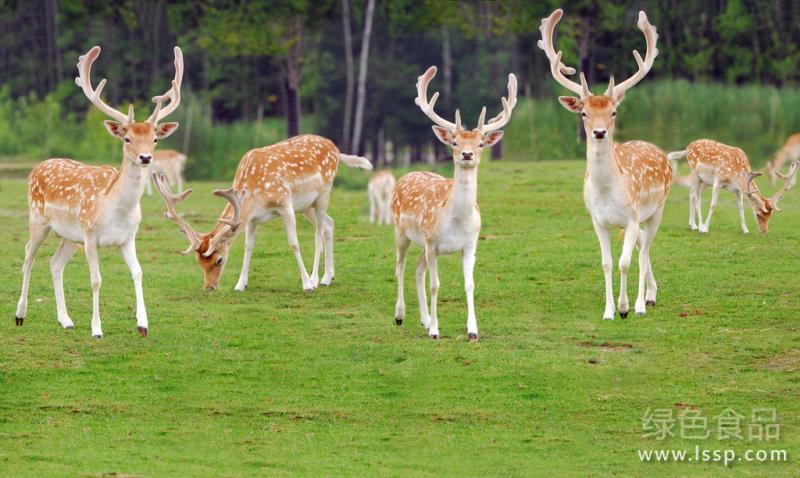
sika deer
Deer vary in body size; generally males have a pair of antlers and females do not. Most deer live in forests and feed on tree buds and leaves. Antlers grow larger with age. Deer are distributed across most of the Americas and the Eurasian continent. Among them, the velvet antler of the sika deer is a precious traditional Chinese medicinal material. Large-scale artificial breeding has already been carried out domestically, along with live-antler harvesting (which does not harm the deer). Every part of the deer is treasured. Raising deer not only produces velvet antler with extremely high medicinal value, but also produces a variety of by-products, such as deer fetus, deer heart, deer blood (velvet blood, heart blood), deer sinew, deer penis, deer tail, venison, and so on.
I. Breeds and physical characteristics
Today's sika deer are mostly Northeast sika deer and the artificially selected and bred Shuangyang sika deer, Xifeng sika deer, and Changbai Mountain sika deer. The quality of sika deer velvet antler is superior to that of other deer velvet antlers. Sika deer generally reach sexual maturity at 1.5 to 2.5 years of age, and the suitable breeding age is 2 to 3 years. They come into estrus every year in September to October in autumn, with October being the peak estrus period. The average estrus cycle of a doe is 12 days, lasting 12 to 36 hours. The gestation period is 230 to 250 days, and they give birth in May to June of the following year, generally producing 1 fawn per litter, and occasionally 2 fawns. Sika deer have a wide feeding habit, consuming various plants and the tender branches and leaves of trees and shrubs; they are also tolerant of coarse feed, and their adaptability, vitality, and disease resistance are all very strong.
sika deer breeding
II. Deer farm design and construction
Sika deer like to inhabit quiet and secluded places. The terrain of the deer farm should be relatively flat, with a slight slope toward the south or southeast, which facilitates drainage and keeps the deer farm dry. Avoid noisy and polluted environments; it is best to build on sandy soil that is sheltered from the wind, sunny, favorable for drainage, firm in texture, good in water permeability, and free of pollution. The deer farm should maintain a certain distance from residential areas and should be far from cattle and sheep pens to reduce the occurrence of disease.
The deer shed is a comprehensive place for the penned deer herd to feed, ruminate, move about, and rest. It should be divided into buck sheds, doe sheds, growing deer sheds, birthing pens, and isolation sheds for sick deer, etc. One shed has a building area of 14 to 20 m long and 5 to 6 m wide; the exercise yard is 25 to 30 m long and 14 to 20 m wide. A deer shed of this size can house 20 to 30 bucks, or 15 to 20 does, or 30 to 40 growing deer, or 45 to 65 weaned fawns. Deer raisers can appropriately reduce the shed area according to their own conditions.
Valuable breeding bucks and prime-aged bucks with high production performance should be housed separately or given an enlarged activity area. For a three-walled deer shed, the front eave is 2.1 to 2.2 m above the ground, and the rear eave height is about 1.8 m. Ventilation windows are left in the rear wall of the shed, opened in spring, summer, and autumn, and sealed tightly in winter. The ground inside the deer shed should be lower in front and higher in back, with the lowest point 3 to 5 cm higher than the exercise yard, to prevent dripping from the front eave from flowing into the shed. The walls should have rear windows, with no front wall. The bedding area can use wooden board bedding, which has good heat preservation performance, or can be paved with brick or cement brick, or tamped with a lime-clay-gravel mixture. The exercise yard ground can be brick-paved, cement, or sandy loam, etc. It is best to use a lime-clay-gravel mixture or clay as the base, and then spread soil containing more sand on top, so that the deer herd cannot easily dig it up; this kind of ground also has better drainage. The birthing pen is built on one side or in one corner of the deer shed, keeping warm in winter and shading from the sun in summer, with an area of 6 to 10 sq m being suitable. In addition, there are pen gates, partitions, passages, and enclosing walls.
The deer herd's feeding and watering equipment includes feed troughs and water troughs. The deer farm also needs a feed processing and preparation room (main equipment includes feed boxes, soaking troughs, stoves and pots, water tanks, coarse feed fermentation room, and rest room for the keepers), a concentrate feed storehouse (suitable for storing 3 to 6 months' worth of concentrate feed), a coarse feed shed (for storing dry leaves, dry grass, bean pods, and crushed agricultural by-products), silage pits, and commonly used machinery and equipment.
Feeding of sika deer
III. Feeding and management of deer
A fully penned sika deer requires an average of 350 to 400 kg of concentrate feed per animal per year, 1200 to 1500 kg of coarse feed, and a feed area of 0.1 to 0.2 hectares.
1. Give priority to green and coarse feed, with concentrate feed as a supplement. When preparing feed, green, succulent feed and coarse feed should be the main components, making maximum use of locally low-priced, abundant, widely available, and stably supplied feed to reduce costs.
2. Rationally match the feed. Deer have different nutritional needs at different stages. For example, bucks need more nutrition than does during the breeding period and antler-growing period, and does need more nutrition during pregnancy and lactation. Therefore, during the feeding process, feed supply plans should be made in advance, and feed should be carefully prepared. Rotten, moldy, and toxic feed must never be fed.
3. Feed at fixed times and in fixed amounts. The number of feedings should be relatively fixed, feeding multiple types of feed at fixed times and in fixed amounts every day, and the amount fed each time should be appropriate. If the amount fed is insufficient, the deer will soon be hungry again after feeding, and not only will they be unable to rest quietly, but their digestive function will also be affected, so do not feed sometimes more and sometimes less. Deer have well-developed sensory organs such as sight, hearing, smell, and taste, and are extremely sensitive to changes in external environmental conditions. Therefore, establishing a stable feeding conditioned reflex is of special significance for increasing the deer's feed intake and digestion rate. In the process of raising deer, the feeding time, order, and frequency must be strictly observed, and cannot be arbitrarily advanced, delayed, or changed. Under normal circumstances, feeding times change with the seasons, but should remain relatively stable. In the penned feeding method, the feeding order should preferably be concentrate feed first and then coarse feed. The feeding frequency should preferably be 3 times a day, with 2 times during the day in winter and 1 time at night.
4. Keep the amount and types of feed relatively stable. Sika deer have a habit regarding the feed they consume, and the microorganisms in the rumen also have a certain selectivity and adaptability to the feed consumed. When the feed composition changes suddenly, it will not only reduce the deer's feed intake and digestion rate, but also affect the normal growth and reproduction of microorganisms in the rumen, thereby causing digestive dysfunction and nutritional imbalance in the deer. Therefore, feed changes must be made gradually.
5. Fully supply drinking water. Drinking water must be clean. In summer when it is hot, clean drinking water should be added at any time; in winter, it is advisable to provide warm water to prevent freezing. Create conditions for the deer herd to drink freely and at will as much as possible, and ensure sufficient drinking water.