The five methods to master when selecting breeding rams at the most critical stage of reproduction
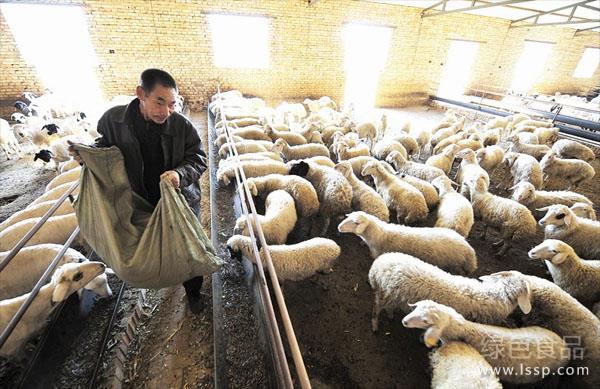
Sheep farming
Sheep reproduction occupies a very important position in the sheep production process, so the broad working people all want to improve the overall quality of the offspring, thereby raising the economic benefits of the entire sheep farming industry. To improve the overall quality of the offspring lambs, breeding sheep must be carefully selected and the pairing of rams and ewes must be decided. At present, a major problem in our province's sheep farming industry is that sheep and goat breeds are not of good quality and are too mixed. For example, with Boer goats, the first generation is especially good, but each subsequent generation is worse than the last. This problem is also mainly caused by the selection of breeding sheep and inappropriate matching of the mating pair. How specifically to select breeding sheep and decide the pairing of rams and ewes is mainly considered from the following aspects:
1. It depends on the actual local situation
The most effective measure to rapidly improve the production performance of meat sheep is the use of economic crossbreeding, improving local sheep breeds by introducing excellent meat-type breeds to increase their growth rate and meat production performance. Each locality should, according to the germplasm characteristics of the local breed, carry out targeted introduction and improvement, so as to improve the performance and growth rate of local goats. Where conditions permit, crossbreeding improvement trials should be done first, and then the improvement goal determined, so as to avoid straying into the strange cycle of blindly introducing breeding stock and speculating in breeding stock.
2. It depends on body conformation
It is necessary to look at the body conformation, fatness or thinness, and appearance of the flock to judge the purity of the breed and whether the animals are healthy. The coat color, head shape, horns and body conformation of breeding sheep must conform to breed standards; livestock technicians can be asked to help. The body conformation, body condition and constitution of breeding sheep should be sturdy, with a broad and deep forechest, thick and strong limbs, and well-developed muscle tissue. Rams should have a large and majestic head, large and spirited eyes, well-proportioned development, and strong libido, with special attention to whether they have a single testicle or a cryptorchid testicle; ewes should have a long loin, long legs, and well-developed udders. Ewes with a narrow chest, sloping rump, pendulous abdomen, concave back, or forelimbs and hindlimbs shaped like an "X" are not suitable for breeding use.
3. It depends on age
This is mainly judged by the teeth. Goats have a total of 32 teeth, of which 8 incisors all grow on the lower jaw.
When lambs are 3-4 weeks old, the 8 incisors have already grown in fully. They are milky white, relatively neat, tall and narrow in shape, close to a long cylindrical form, and are called milk teeth; the sheep at this time is called "original mouth" or "milk mouth". After 12-14 months of age, the two centermost incisors fall out and are replaced by two larger teeth. These teeth are more yellow in color, wide and low in shape, close to square, and are called permanent teeth; the sheep at this time is called "two teeth" or "paired teeth". After that, about one pair of teeth is replaced each year, and when all 8 incisors have been replaced by permanent teeth, the sheep is called "full mouth".
Therefore, an "original mouth" sheep refers to a sheep within 1 year of age, "paired teeth" is 1-1.5 years, "four teeth" is 1.5-2 years, "six teeth" is 2.5-3 years, and "eight teeth" is 3-4 years. After 4 years of age, the age of the sheep is mainly judged by the size of the wear surface of the incisors and the gaps between the teeth; the cross-section of the teeth of a 5-year-old sheep is round, and gaps appear between the teeth; at 6 years the gaps between the teeth become wider and the teeth become shorter; at 7 years the teeth are even shorter, and at 8 years they begin to fall out.
When introducing breeding stock, carefully observe the teeth and judge the age of the sheep, so as to avoid mistakenly introducing old sheep.
4. It is necessary to judge the health status of the sheep
Healthy breeding sheep are lively and active, with bright and spirited eyes, glossy wool, a strong appetite, normal breathing and body temperature, and strong and powerful limbs; sick sheep, on the other hand, have scattered, rough and lusterless wool, large but spiritless eyes, stand blankly, have a poor appetite and rapid breathing, elevated body temperature, or have diseases on the body surface and limbs, etc.
5. It is necessary to carry a pedigree card and a quarantine certificate
Generally, breeding sheep farms all have pedigree archives, and breeding sheep leaving the farm should carry a pedigree card, so as to grasp the blood relationship of the breeding sheep and the production performance of the parents and grandparents, and estimate the performance of the breeding sheep itself. When introducing breeding stock from other places, a quarantine certificate should be obtained from the introducing unit. First, this allows understanding of the occurrence of epidemic diseases, so as to avoid introducing sick sheep; second, during inspection en route, only livestock and poultry breeds with complete procedures are allowed to pass.