How to Select High-Quality Crab Fry: Robust Constitution and Strong Crawling
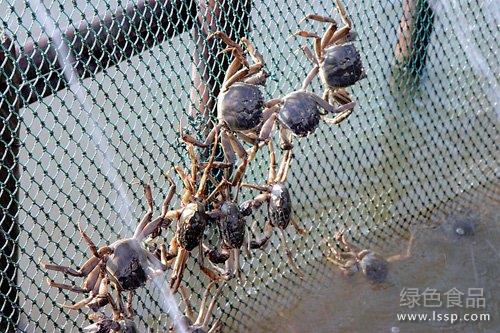
Crab Farming
Crab fry, commonly known as "megalopa," are formed when stage V zoea larvae molt into megalopa. They have a pair of compound eyes attached to the tips of long eyestalks, protruding from the eye sockets, hence the name. Megalopa is the foundation for breeding crab seed and farming adult crabs, and their quality directly affects the survival rate of stage II to stage V juvenile crabs. Therefore, attention must be paid to the selection of crab fry.
I. Understanding the Crab Fry Breeding Process Before purchasing crab fry, farmers should first understand the entire production process of the crab fry farm, mainly including: parent crabs, feed used, breeding cycle, and so on. The parent crabs used for breeding crab fry should preferably come from large natural lakes and open water bodies, and male and female crabs should come from different water bodies to avoid inbreeding. Parent crab specifications: female crabs should be no less than 125 grams, and male crabs no less than 150 grams.
Crab fry bred with Artemia (brine shrimp) are of better quality, while those bred with freshwater daphnia, egg yolk, and other substitute feeds are of poorer quality.
In addition, the crab fry breeding cycle is generally 19 to 21 days, and the water temperature at the time of release is around 21°C.
II. Doing a Good Job in Identifying Crab Fry Quality 1. Body Color High-quality crab fry have a pale yellow body color with luster and a transparent feel, and microscopic examination shows no foreign matter such as Zoothamnium or filamentous bacteria on the body surface. Poor-quality crab fry have dull body color, ranging from dark to light, appearing milky white or orange-red, and microscopic examination shows bacteria and parasites on the crab fry.
2. Constitution High-quality crab fry are robust and uniform in size, have phototaxis, feed aggressively, and swim strongly against the current. When handled, the crab fry crawl vigorously and react quickly when blown on. When a small number of crab fry are picked up by hand, the water is shaken off, and they are gently held into a ball, they will immediately scatter once the hand is released. Poor-quality crab fry have empty stomachs with no food, poor swimming ability, tend to move on the bottom layer of the water body, and when grasped by hand easily form a ball that does not readily scatter.
3. Crab Fry Specifications Normal crab fry released from the pond should be 120,000 to 140,000 per kilogram, with a maximum of no more than 170,000. Crab fry reaching this specification have fewer fake fry and transform into juvenile crabs more smoothly. If the number of crab fry is too large, it indicates that the crab fry are young in age and have soft shells, and cannot withstand handling and transportation. If the number of crab fry is too small, the crab fry are large in size and close to the molting period, and will die from molting during transportation.
4. Salinity and Temperature of the Nursery Water When crab fry are released from the pond, the water salinity is required to be no higher than 4‰, the desalination time should be no less than 7 days of age, the water temperature at release should be around 21°C, and the temperature difference between the nursery pond water and the farming pond water should be within 2°C, with a maximum of no more than 4°C.
III. Precautions (1) One day before the crab fry are released from the pond, it is best to disinfect them once with medication to kill some harmful organisms, reduce the occurrence of diseases during farming, and at the same time eliminate some crab fry with poorer constitution.
(2) When catching crab fry, aeration and feeding should be stopped, and light trapping should be used, so that the crab fry have fewer impurities and stronger vitality. Before boxing, the water must be drained, and when placing them in the box, they should be spread evenly to prevent the crab fry from sticking to each other and clumping together, which can cause death.
(3) Early fry should preferably be transported during the day, and late fry should preferably be transported at night. During transportation, protect against sunlight and wind. For motor vehicle transportation, close the doors and windows while driving, and open the doors and windows for ventilation when stopping. Smoking is prohibited inside the vehicle. Spray water once every 2 hours during the journey to increase the humidity of the crab fry box.
(4) After long-distance transportation, crab fry are basically dehydrated. If they are directly placed into water, bubbles are likely to form in the gills of the crab fry, affecting the survival rate. Therefore, before the crab fry enter the pond, there must be an adaptation process: first open the crab release box, sprinkle water on the crab fry for 5 minutes, soak the crab fry box and all the crab fry in the pond water, then remove them from the water and place them on the shore, repeat once after 15 minutes, and finally slowly release the crab fry into the pond for stocking.