Pengze crucian carp: fast growth, good meat quality, easy reproduction, detailed breeding technology
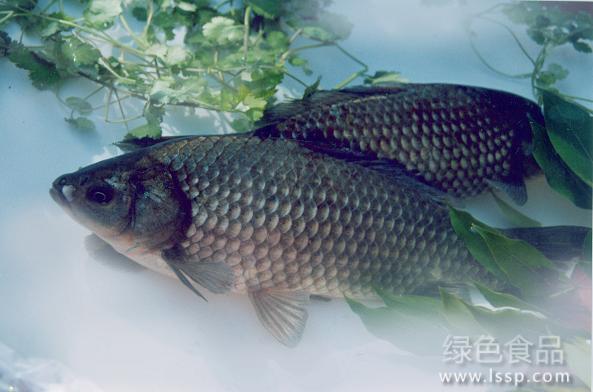
Pengze crucian carp
Pengze crucian carp, also known as Pengze large crucian carp and Luhua crucian carp, belongs to the order Cypriniformes, subfamily Cyprininae, genus Carassius. It originated in Pengze County, Jiangxi Province, and is one of the freshwater aquaculture species that the Ministry of Agriculture focuses on promoting. It has excellent economic traits such as large individual size, fast growth, omnivorous feeding habits, strong disease resistance and high yield. It is generally welcomed by farmers and consumers across the country and is a variety with promising prospects. Pengze crucian carp is a local population of crucian carp. Crucian carp is one of the important freshwater economic fish in China, and in some natural waters it can account for about 30% of the catch. Raising Pengze crucian carp has the following advantages:
1. Omnivorous feeding habits and strong environmental adaptability. It can be raised alone or in polyculture, and can be farmed in ponds, mountain ponds and reservoirs, and cages. It feeds on organic detritus and plankton in the water, and also eats commercial feed. This variety has stable genetic genes and strong disease resistance.
2. Fast growth. Fry stocked in the same year can grow to commercial fish size and be marketed. Under polyculture conditions, when the main fish are fed commercial feed, by the end of the year individuals can generally reach about 0.5 jin. When the main fish are not fed commercial feed, they can generally grow to about 0.25 kg.
3. Good meat quality, attractive body shape, high price and good market sales. This variety has tender meat and is delicious and tasty, with a protein content of nearly 17.1%. It is a nourishing food for pregnant women and patients. Its body shape and color closely resemble the local native crucian carp, and it is very popular with consumers. In Meizhou, the market price of Pengze crucian carp remains at about 12 yuan per kg, 50% higher than grass carp.
4. Seedlings are easy to breed and the variety is pure. It is not a hybrid, but the result of the application of fish gynogenesis technology, making it easy to protect variety quality. For seedling breeding, as long as the correct operating methods and general breeding techniques are mastered, good breeding results can be achieved.
During the rearing process, in addition to strengthening daily management and selecting suitable compound feed, the following measures must also be taken to further increase the yield of Pengze crucian carp.
1. Stock healthy fish fingerlings that are free of disease and injury, to reduce the occurrence of fish diseases and increase the survival rate. When the fry are put into the pond, they can be soaked in 3—5% salt water for 5—10 minutes, or soaked in thiamphenicol at 0.5—1 ml per cubic meter of water for 3—5 minutes, to eliminate pathogens and harmful bacteria on the body surface and improve disease resistance.
2. The stocking size of fingerlings should be 4—5 cm, and they should be uniform in size, which helps increase the survival rate and the quality of commercial fish. Stocking 2—3 cm fingerlings reduces the survival rate by 30—40 percentage points compared with 4—5 cm fingerlings.
3. Reasonable stocking density is one of the measures to increase yield. If stocking is too sparse, the pond water body and feed cannot be fully utilized, affecting fish yield; if stocking density is too high, the yield may be relatively higher, but it will more or less affect the growth of other fish and affect the total pond yield, resulting in small individual commercial fish and a decline in economic benefits instead. For conventional aquaculture, the stocking density can be controlled at 15—20% of the total number of fry stocked, that is, 200—300 Pengze crucian carp fry polycultured per mu. When the main fish (grass carp) are fed commercial feed, the average daily weight gain can reach more than 2 grams. Calculated at a survival rate of 80% and 0.25 kg per commercial fish, 50—60 kg of commercial fish can be harvested per mu. Because this variety has a higher commercial value than other polycultured fish, under the condition of controlling the total number of fry stocked, the variety structure can be adjusted by reducing the stocking amount of common carp and mud carp, and appropriately increasing the proportion of Pengze crucian carp stocked, so as to improve economic benefits.
4. Optimize the water source environment to promote growth. The main environmental factors affecting fish growth include water temperature, acidity and alkalinity (pH value), dissolved oxygen, transparency, etc. Feed factors include organic detritus, plankton, compound feed, etc. During rearing, it is necessary both to ensure sufficient feed and to make the water environment suitable for fish habitat. In polyculture ponds, overall fish growth must be considered comprehensively, rearing management must be strengthened, feed must be supplied reasonably, water must be added in a timely manner, and good water quality must be maintained.
⟧ In short, Pengze crucian carp has good economic and social benefits in both fish breeding and adult fish farming. It is an excellent variety that is easy to breed and easy to raise, and is worth vigorously promoting.