How to ensure the survival rate of "water bloom" fry when they are stocked into clear pond water
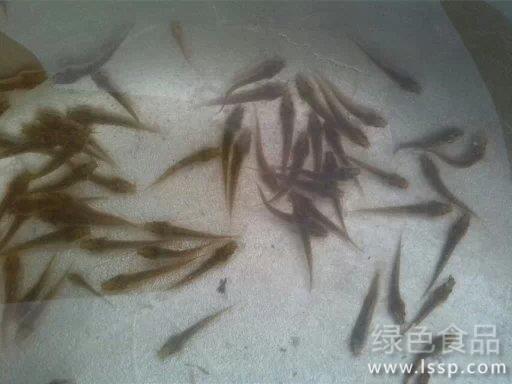
Stocking "water bloom" fry into the pond
Fish fertilized eggs, through an artificial flowing-water environment, under appropriate conditions of water temperature, dissolved oxygen, water quality and so on, develop over a certain period of time into larvae capable of horizontal swimming, which we customarily call "water bloom". During the horizontal-swimming stage, "water bloom" larvae have relatively poor swimming ability and weak feeding ability, and can only indiscriminately swallow small particles around the mouth opening that are smaller than the mouth gape. "Water bloom" develops very quickly from the passive-swallowing horizontal-swimming stage to the active food-seeking stage with strong swimming ability. During this period, the nutritional supply for the growth and development of "water bloom" is very special; the remaining yolk in the body has a certain ability to provide nourishment, and as long as "water bloom" can timely obtain food and nutrition before the internal nutrition is exhausted, continued survival and growth can be ensured. One of the keys to ensuring the survival rate of "water bloom" is to grasp the reasonable timing for stocking "water bloom" into the pond, that is, to comprehensively consider multiple factors such as transport and weather, and ensure that when "water bloom" is stocked into the pond, it has a certain swimming ability and there is a nutritional supply in the body.
When "water bloom" is stocked into clear pond water, the amount of plankton in the pond water is relatively small, which requires the farmer to timely provide suitable food for the "water bloom". Therefore, before stocking "water bloom" into the pond, feeding part of the egg yolk, or immediately splashing soybean milk, is particularly important. In fact, when "water bloom" is first stocked into the pond, its initial food intake is very small, and it has the habit of swimming along the edges. Generally, 100,000 to 150,000 fry are stocked per mu, and 3 to 7 jin of dry soybean milk are fed per day, twice a day; the soybean milk will blend into the water body and play a role in fertilizing the water.
Through repeated practice, it has been found that the "water bloom" culture pond is generally best at about 3 mu, with a regular rectangular shape, a flat bottom, and about 10 cm of bottom mud. If the area is too small, the water quality is difficult to control and the fry survival rate is low; if the area is too large, production management is troublesome. When "water bloom" is stocked into the pond, the water depth is best controlled at 60 to 80 cm; when the temperature is low, the water should be deeper.
On the day "water bloom" is stocked into the pond, a small amount of tender mugwort grass or decomposed manure fertilizer can be applied (tender mugwort 500 jin/mu, manure fertilizer 300 jin/mu); this not only helps rapidly produce natural food for the fry, but also does not cause excessive stress to the fry.
After "water bloom" is stocked into the pond, when conditions are appropriate, the growth and development of "water bloom" is extremely fast, and it also has considerable adaptability. If the weather is normal and feeding is reasonable, after 15 to 20 days, "water bloom" can develop to the summer-fry stage with a body length of about 3 cm and feeding habits close to those of its adult fish, and the survival rate can reach 40% to 50%. At this time, the water surface can no longer meet its growth needs, and it should be divided into ponds in a timely manner; otherwise, growth and survival will be affected. Before dividing into ponds, full preparations should be made; generally, 2 to 3 times of net-pulling exercise are carried out on the fry before pond division, with the purpose of improving the fry's adaptability to net pulling, so as to avoid damage to the fry caused by higher water temperature, jumping of the fry and so on during pond division.