Understand the patterns of fish disease onset and avoid common pitfalls in fish disease prevention and treatment
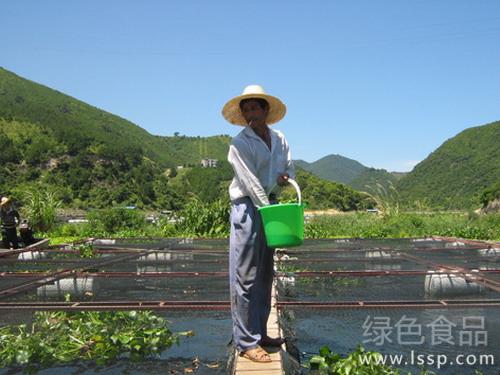
Spraying medication in a fish pond
Fish disease prevention and treatment is an important measure for improving the survival rate of fry and fingerlings and for achieving high and stable yields of adult fish. However, in everyday aquaculture production, many farmers have misconceptions about fish disease prevention and treatment, using drugs indiscriminately and thus causing unnecessary losses.
1. Making light of prevention and stressing treatment: Most fish farmers only start using medication after fish have fallen ill, which often leads to increased drug costs and unnecessary losses such as fish deaths. Fish disease prevention and treatment should follow the principle of "prevention first, with prevention outweighing treatment." Fish disease prevention should implement the "four fixeds" and "four disinfections." That is, feeding should be fixed in quality, quantity, time, and location. The four disinfections are: disinfection of the fish pond, disinfection of fingerlings, disinfection of the water body, and disinfection of feed, feeding areas, and tools. Only by doing these things can fish disease outbreaks be controlled and avoided.
2. Not asking about the cause of the fish disease. To understand the patterns of fish disease onset, you must first understand the causes of fish disease, and the causes of fish disease are very complex, involving both external and internal factors. For example, if the pH of the fish's water environment is above 9.5 or below 5.0, it will cause fish death. Therefore, changing the acidity or alkalinity of the water environment can alleviate the fish disease, and treatment can then be carried out according to the condition. Some farmers do not analyze the cause of the fish disease, and as a result they only get half the results with twice the effort.
3. Not prescribing the right medicine for the illness. The types of fish diseases are very complex. When divided by the affected part, they can be classified into four types: skin diseases, gill diseases, intestinal diseases, and diseases of other organs. When divided by different pathogens, there are diseases caused by viruses, bacteria, and fungi, known as infectious diseases; diseases caused by parasites, known as invasive fish diseases; and in addition, various fish diseases caused by predators. If the right medicine is not prescribed for the illness and bleach powder, strong chlorinated disinfectant, copper sulfate, quicklime, and the like are used indiscriminately, not only will it fail to produce the effect of curing the disease, but sometimes it will even be counterproductive.
4. Using the same medication for different fish. The dosage cannot be the same for fish of different species and sizes.
5. Using medication without regard to pond size. After fish become ill, in addition to examining and diagnosing the sick fish, it is sometimes necessary to splash medication according to the pond size and water quality conditions. However, many farmers do not make precise calculations for fish disease medications, resulting in drug concentrations in the pond that are too high or too low and affecting the treatment effect.
6. Not changing the type of medication for many years. Practice has proved that long-term use of a single drug can sometimes cause drug resistance in sick fish, while alternating use gives better results. For example, for dactylogyrosis, alternating use of yuchongning, 90% crystalline trichlorfon, and copper sulfate gives better results.
7. Using expired medication. Every medication has a certain shelf life. Some farmers, seeking cheapness, buy expired medications or are unwilling to throw away expired medications and continue using them. The result is not only ineffectiveness, but even the production of toxic substances, often causing mass fish poisoning. Such "saving" really costs more than it saves.
8. Not paying attention to the timing and conditions of medication. When the temperature exceeds 38°C, pests stop feeding, and at this time the sprayed medicinal liquid evaporates quickly and cannot achieve a preventive or curative effect. The correct method is to choose early morning or evening for timely application. Another example is disinfecting fish bodies when fingerlings are divided and stocked into ponds, usually soaking them in bleach powder or copper sulfate for 20—30 minutes, but note that the water temperature condition is 10—15°C, otherwise the proper effect cannot be achieved.
9. Not paying attention to low residues. Some farmers only seek to cure fish diseases and do not consider choosing highly effective fish medications with low residues. For example, to treat ichthyophthiriasis, the conventional effective drug is mercurous nitrate, but mercury preparations are highly toxic and are high-residue drugs, and are now prohibited. Yuchongning, chili powder, ginger slices, and the like can be used instead to prevent and treat ichthyophthiriasis, with the same effect.
10. Using medication without regard to economic benefit. Many farmers apply drugs indiscriminately. In fact, fish diseases can sometimes be treated with different medicines for the same disease or the same medicine for different diseases. On the premise of ensuring efficacy, the drugs used should also be selected by considering factors such as the effective dose and selling price, so as to minimize medication costs and improve economic benefits.