Six key points to note for scientifically digging high-yield fish ponds
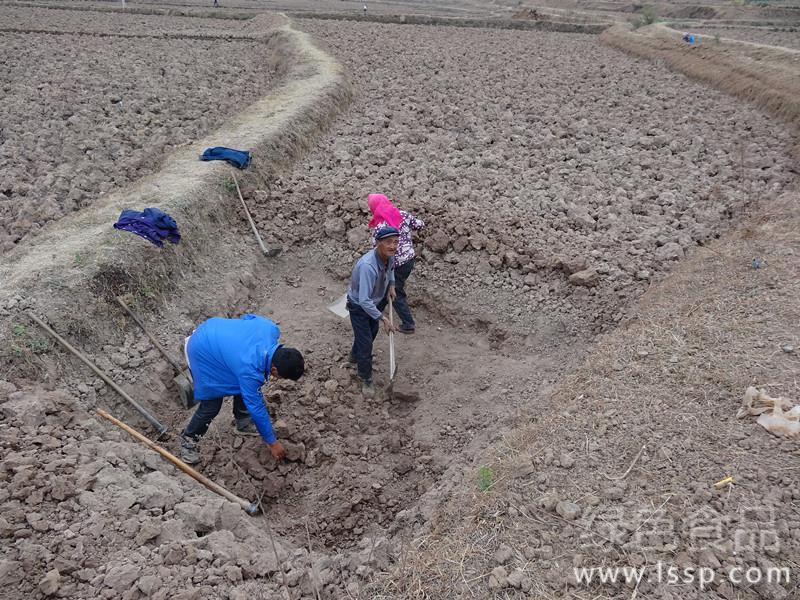
Farmers digging fish ponds
Comparatively speaking, aquaculture requires less investment, offers high returns, produces quick results and involves low risk, so aquaculture has become a practical and effective way to get rich in rural areas. Winter is the golden time for digging fish ponds, and the following six points must be noted for scientifically digging high-yield fish ponds:
1. No drought, no flooding. When choosing a site for developing a fish pond, full consideration must be given to ensuring no drought during long dry spells and no flooding during long rainy spells, while also having an adequate water source that can be used for irrigation at any time, with good water quality and no pollution, which is beneficial to fish growth.
2. Pond shape and pond depth. Digging a fish pond should suit local conditions and follow scientific planning. The pond shape should be rectangular as far as possible, with the long side running east-west, an area of about 6670 sq m (10 mu) per pond, a pond depth of 2.5-3 m, and a water storage depth of 2-2.5 m.
3. Water inlet and drainage. The water inlet must be unobstructed, and drainage must be convenient and thorough. There should be an inlet channel leading into the fish pond, able to naturally flow in or use mechanical pumping to add new water. It is best to install a hidden drainage pipe at the bottom of the pond so that complete self-drainage is possible. Generally, it is ideal to set the inlet and outlet on opposite sides of the fish pond. The water inlet and drainage between fish ponds should each be independent, with no “pass-through ponds”, as only this is conducive to water level and water quality regulation and healthy aquaculture.
4. Water retention and fish retention. When digging a fish pond, it is best to use mechanical construction, with dam and side slopes of 1:2-2.5, and each time an earth dam is built 0.8-1 m high, it should be rolled once to prevent seepage and water leakage. Anti-escape screens should be set at the water inlet and outlet to avoid fish escaping and wild miscellaneous fish entering.
5. Electricity and road access. A high-yield fish pond should be connected to three-phase high-voltage electricity so as to use aerators, water pumps, feeding machines and so on. The dam surface of the fish pond should be at least 2-3 m or more wide, with a traffic road that transport vehicles can directly reach the pond edge.
⟧ 6. Economical and attractive. Building fish ponds should be planned according to the terrain to reduce the amount of earthwork excavation. If large-scale contiguous fish ponds are designed, they should also be arranged neatly in rows both lengthwise and crosswise, with a reasonable layout of the water inlet and drainage system, power supply lines and traffic roads. This is not only attractive, but also reduces the corresponding overall construction investment and provides convenient conditions for production. In addition, it is best to provide the fish ponds with supporting land, including the dam and side slopes, for planting grass to feed fish or raising livestock and poultry.