Eight Precautions to Prevent Accidental Losses When Stocking Fry into Ponds
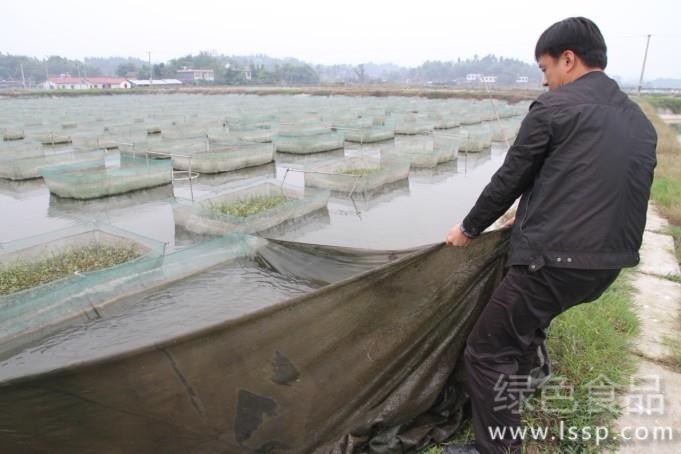
Stocking Fry into Ponds
The spring equinox each year is the nearest time for releasing fry. Newly purchased fry are delicate, and a moment of carelessness at stocking time can cause considerable losses, or even total wipeout. Therefore, the author especially reminds farmers that the following 8 points must be truly kept in mind when stocking fry:
1. One day before the fry are stocked, pull a fine-mesh net through the empty pond several times.
On one hand, this fully dissolves any remaining pond-clearing chemicals piled on the pond bottom, preventing them from poisoning the fry; on the other hand, it further removes enemies. If enemies are found, trichlorfon at a concentration of 0.5 g/cubic meter can be splashed over the whole pond to kill them; this concentration has no killing effect on rotifers.
2. Before the fry are stocked, be sure to check whether the toxicity of the pond-clearing chemicals has disappeared and whether the water fertility is suitable.
⟧ First take half a bucket of water, because sometimes the toxicity of the surface water has disappeared while the toxicity of the bottom layer is still very strong. Put the fry into the water and observe for 8-10 hours to see whether they behave normally, so as to determine whether the fry can be stocked. The pH value should be within the range of 7-8.5. Second, judge the water fertility based on water color, transparency and the condition of feed organisms. If the pond water is found to be too fertile, add clear water to adjust it; if the pond water is not fertile enough, immediately apply a small amount of chemical fertilizer or increase the input of artificial feed.
3. When the fry are stocked, the pond water temperature must not be lower than the water temperature for transporting the fish by more than 3°C. If the temperature difference is too great, gradually adjust the temperature difference first, and stock the fry only after they have adapted.
For fry transported in plastic bags, before stocking, open the plastic bags and slowly place them in the pre-arranged spot; after 10-20 minutes, slowly pour the fry together with the water into the container, thereby adjusting the water temperature difference and the fry's adaptation to the change in air pressure inside the bags. Some people call this "acclimating the fry." If, when the bag is opened, the fry are found lying on their backs, this is carbon dioxide poisoning; as long as they are acclimated and placed in clear water for a period, they will recover. If the fry are poured directly from the bag into the pond, even if they appear to be living normally by visual observation at release, they will still die after entering the pond, that is, death after transport. Therefore, for fry transported in plastic bags, stocking must be carried out with special care, and the acclimation treatment is an indispensable and important step.
4. The fry should be disinfected with medication before being stocked.
Before the fry are stocked, they can be soaked in 1% baking soda water for 20-30 minutes, or soaked in a 10,000 IU/L penicillin solution for 1 hour.
5. Persist in stocking the fry into the pond after they have eaten their fill.
Production practice in fry rearing has proved that feeding the fry 1-2 times with cooked egg yolk or feed yeast before stocking, or ideally catching rotifers to feed them, clearly raises their survival rate and growth speed compared with not feeding them. Therefore, many places persist in stocking the fry into the pond after they have eaten their fill.
After the fry arrive, first feed them in a net cage, then count them again and stock them into the pond. When taking fry from the net cage, the fry at the windward end are generally stronger in constitution and larger in size, while the fry at the leeward end are weaker in constitution and smaller in size. In this way, fry of different sizes and different strengths of constitution can basically be separated, so as to prevent the large, strong fry from crowding out the small, weak fry during rearing and gradually forming size differentiation. However, during operation, strictly guard against oxygen deficiency in the net cage to avoid losses.
6. When stocking the fry into the pond, choose a deep-water spot and release the fry slowly, close to the water surface.
According to experiments, pouring fry into water from a height of 30 cm can injure 5-10%; from a height of 60 cm above the water surface, the injury rate of the fry can reach 20-30%. Therefore, when stocking the fry, be sure to release them slowly and gently. After releasing the fry, do not leave immediately; wait until the fry have dispersed and swum into the pond before leaving. If the fry are found densely clustered in a ball, gently splash water droplets to make them disperse and swim into the pond. In windy weather, stock them at a deep-water spot on the windward side, so that the fry are not blown by the wind onto the pond slope or pressed to the pond bottom and killed or injured.
7. The same pond should be stocked with fry of the same species and uniform size, and one should strive to stock enough in one go, so as to avoid big fish eating small fish and uneven sizes at pond harvest.
When fry of non-uniform size are stocked together, the growth speed of the large fry far exceeds that of the small fry, and the polarization becomes even more obvious.
8. Standards for stocking self-hatched fry into the pond.
When two eye spots and one waist spot, these three spots, are visible and the fry can swim horizontally, they can be stocked; otherwise, feed them in time to prevent the fry from dying of starvation. The time for stocking should be chosen on a windless, clear morning; avoid stocking on windy days, rainy days or at night.