Essential Knowledge on Animal Disease Prevention and Control: What Every Farmer Must Know
Epidemic Prevention
In recent years, with the rapid development of China's livestock economy, large-scale farms have continued to increase, and the prevention and control of livestock and poultry diseases has become a bottleneck restricting the development of large-scale farms. Because farmers have weak awareness of epidemic prevention and poor feeding management, combined with frequent introduction of breeding stock, high stocking density, and unreasonable production facilities at large-scale farms, the incidence of diseases at large-scale farms has increased, bringing serious economic losses. Learning epidemic prevention knowledge and mastering epidemic prevention methods are necessary measures to improve farming profitability.
Several Concepts Every Farmer Must Know
Animal epidemic prevention refers to the prevention, control, and eradication of animal diseases, as well as the quarantine of animals and animal products. In a narrow sense, animal epidemic prevention means that, in order to prevent a certain animal disease, the animals being raised are given targeted vaccination to produce a clear immunity against that disease, that is, preventing the occurrence of animal diseases through vaccination.
Disease prevention refers to epidemic prevention measures that use all means to exclude a certain infectious disease from an uninfected animal population. Through various isolation facilities and quarantine measures, a certain infectious disease is prevented from entering an area that has not yet been contaminated; or through measures such as immunization, medication prophylaxis, and environmental control, animals are protected from the harm of disease.
Disease control refers to prevention and control measures that use various methods to reduce the morbidity and mortality of a certain infectious disease already present in an animal population, and to restrict that infectious disease to a local area for on-site eradication. It mainly includes methods such as isolation, disinfection, treatment, and emergency immunization of sick animals, or locking down epidemic areas and eradicating sources of infection, so as to prevent the disease from spreading among susceptible animal populations.
Disease eradication refers to the collective term for various measures taken to root out one or several pathogenic microorganisms within a defined area. This is achieved through the conscientious implementation of comprehensive veterinary epidemic prevention measures, strict legislation and law enforcement, timely selective slaughter of sources of infection, quarantine and isolation and slaughter and culling of sick animals, herd immunization, strict disinfection, and control of transmission vectors.
Disease purification is the state in which, through technical measures such as quarantine, disinfection, culling, or elimination, one or several animal infectious diseases in a certain area or farm are gradually cleared within a limited time.
Why Animals Must Be Vaccinated
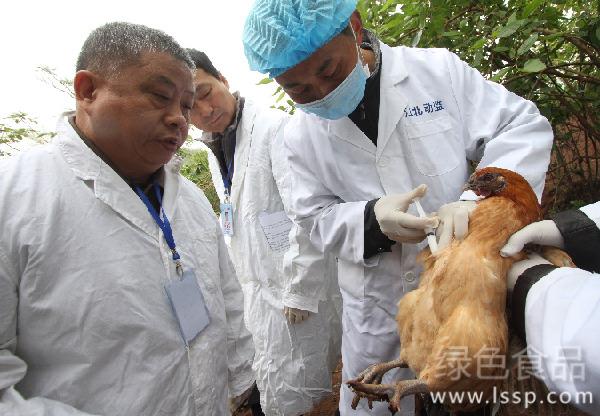
The main purpose is to prevent and control the occurrence of infectious diseases. The occurrence of an infectious disease must involve three links: the source of infection, the route of infection, and susceptible animals, none of which can be missing. In epidemic prevention, cutting off any one link terminates the infection. Vaccination is a means of introducing effective biological products (vaccines, bacterial vaccines, toxoids) as antigens into the animal body, or injecting immune serum, to stimulate the animal body to produce specific resistance, transforming susceptible animals into non-susceptible animals. Because injection was commonly used in the past, people customarily call immunization vaccination. Organized and planned immunization is one of the important measures to prevent and control the occurrence and spread of animal infectious diseases. In the prevention and control of certain infectious diseases such as avian influenza, foot-and-mouth disease, and swine fever, immunization plays an even more critical role. Therefore, vaccination escorts the breeding industry, can avoid the occurrence of diseases, reduce losses from death, and increase income for the breeding industry.
What Is Compulsory Immunization
Compulsory immunization belongs to the national unified epidemic prevention policy. It refers to a series of compulsory measures taken by the state for animal diseases that seriously endanger the production of the breeding industry and human health, including formulating compulsory immunization plans, determining biological products for immunization and immunization procedures, and monitoring immunization effects, so as to achieve the purpose of preventing, controlling, and eradicating animal diseases in a planned and step-by-step manner.
Types of Compulsory Immunization Vaccines for Animals
For pigs, foot-and-mouth disease, swine fever, and highly pathogenic blue ear disease vaccines are currently mainly used.
Cattle foot-and-mouth disease vaccine. Sheep foot-and-mouth disease vaccine.
For poultry, there is avian influenza vaccine; for dogs, there is rabies vaccine. The state also produces new vaccines in a targeted manner according to the occurrence of different diseases in different animals.
Immunity Period After Vaccine Injection
Most vaccines currently used are multivalent vaccines. Immunity is produced 21 days after injection, and the validity period is generally 6 months, but the validity period of the Newcastle disease strain II vaccine for chickens is only 3 months. Therefore, animals that have passed the immunity period but have not yet been sent to market are equivalent to having no epidemic prevention at all, and there is a risk of disease occurrence.
When Is the Best Time to Vaccinate
The state previously promoted general vaccination in spring and autumn, but with climate change and disease occurrence conditions, general vaccination throughout the year is now promoted. Piglets can be vaccinated against swine fever at 30-60 days of age, that is, at the time of castration. First, it connects with the immunity piglets obtain in the mother's body; second, it is convenient to operate; third, immunization density is improved; fourth, animals obtain the strongest immunity during this period; fifth, it prevents individual farmers from selling pigs right after vaccination, causing adverse consequences.
Can Pregnant Female Animals Be Vaccinated
In some places, there is a saying that vaccinating female animals easily causes miscarriage. This has no scientific basis. It is only that when vaccinating female animals in late pregnancy, care should be taken to prevent the female animals from running around and causing mechanical miscarriage.
Can One Refuse Animal Epidemic Prevention Injection
The state clearly stipulates in the Animal Epidemic Prevention Law, the Animal Husbandry Law, and the Regulations on Emergency Response to Major Animal Epidemics that “those engaged in livestock and poultry breeding shall do a good job in the prevention and treatment of livestock and poultry diseases. Those who do not perform or refuse to perform epidemic prevention work for the animals they raise shall bear the costs of handling on their behalf and legal liability.” Therefore, not vaccinating is not acceptable, and one will also be punished.
What Are the Consequences of Not Accepting Compulsory Animal Immunization
According to Article 73 of the Animal Epidemic Prevention Law, the animal health supervision institution shall order correction and give a warning; if correction is refused, the animal health supervision institution shall handle it on behalf of the violator, and the required handling costs shall be borne by the violator, and a fine of up to 1000 yuan may be imposed.