How to choose compound fertilizer wisely? Master these key points for selecting fertilizer
How to choose compound fertilizer wisely? Please note that compound fertilizer has advantages such as high nutrient content, few secondary components, and good physical properties, and plays a very important role in balanced fertilization, improving fertilizer use efficiency, and promoting high and stable crop yields. But it also has some disadvantages, such as its nutrient ratio is always fixed, while...
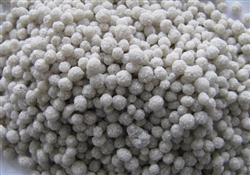
How to choose compound fertilizer wisely? Please note
Compound fertilizer has advantages such as high nutrient content, few secondary components, and good physical properties, and plays a very important role in balanced fertilization, improving fertilizer use efficiency, and promoting high and stable crop yields. But it also has some disadvantages, such as its nutrient ratio is always fixed, while the types, amounts, and ratios of nutrient elements required by different soils and different crops are diverse. Therefore, before use, it is best to conduct a soil test to understand the texture and nutrient status of the field soil. In addition, attention should be paid to applying it in combination with single-element fertilizers to achieve better results.
Compound fertilizer has a long fertilizer effect and is suitable as a base fertilizer. A large number of experiments have shown that both binary and ternary compound fertilizers are best applied as a base fertilizer. This is because compound fertilizer contains multiple nutrients such as nitrogen, phosphorus, and potassium. Crops are especially sensitive to phosphorus and potassium in the early stage, requiring phosphorus and potassium fertilizers to be applied early as a base fertilizer. Compound fertilizer should not be used as a seedling-stage fertilizer or a mid-to-late-stage fertilizer, to prevent excessive vegetative growth and lodging. Compound fertilizer decomposes relatively slowly. For crops that use compound fertilizer as a base fertilizer at sowing, quick-acting nitrogen fertilizer should be supplemented in a timely manner during topdressing according to the fertilizer requirements of different crops, to meet crop nutritional needs.
The concentration of compound fertilizer varies greatly, so attention should be paid to choosing a suitable concentration. At present, most compound fertilizers are formulated according to the average nutrient status of a certain regional soil type and the fertilizer requirement ratio of crops. There are high-, medium-, and low-concentration compound fertilizer series on the market. Generally, the total nutrients of low concentration are between 25% and 30%, medium concentration is between 30% and 40%, and high concentration is above 40%. Depending on the region, soil, and crop, an economical and efficient compound fertilizer should be selected. Generally, high-concentration compound fertilizer is used on cash crops, with good quality, less residue, and high use efficiency. Compound fertilizer has a relatively high concentration, so direct contact between seeds and fertilizer should be avoided. Compound fertilizer has high nutrient content. If it directly contacts seeds or seedling roots, it can affect emergence and even burn seedlings and rot roots. When sowing, seeds should be 5-10 cm away from compound fertilizer applied in holes or bands.
Compound fertilizers use different raw materials in their formulations, so attention should be paid to the scope of use of nutrient components. Different brands and different concentrations of compound fertilizer use different raw materials, and in production, selection and use should be based on soil type and crop type. Compound fertilizer containing nitrate should not be used on leafy vegetables or in paddy fields; compound fertilizer containing ammonium ions is not suitable for application on saline-alkali land; compound fertilizer containing potassium chloride or chloride ions should not be used on chlorine-sensitive crops or saline-alkali land; compound fertilizer containing potassium sulfate is not suitable for application in paddy fields or acidic soil. Otherwise, fertilizer efficiency will be reduced and crops may even be harmed. Compound fertilizer contains two or more major elements. Nitrogen applied on the surface volatilizes and is easily lost or washed away by rain, while phosphorus and potassium are easily fixed by soil. In particular, phosphorus has low mobility in soil. When applied to the surface, it is not easily absorbed and utilized by crop roots, nor is it conducive to deep root growth. In drought conditions, the fertilizer cannot dissolve, and fertilizer efficiency is even worse. Therefore, compound fertilizer should be applied deeply and covered with soil.
Click to get more compound fertilizer application techniques
Click to get more fertilizer application techniques