How to choose compound fertilizer? Master these purchasing tips
What tips are there for choosing compound fertilizer? Here is an introduction. When choosing compound fertilizer, you can refer to the following methods: The three major trends in the development of compound fertilizer: The first is multi-variety specialization. Different crops have different specialized fertilizers, and specialized fertilizers are developed and produced according to the growth and development patterns of crops and their fertilizer absorption. When farmers choose compound fertilizer, they should...
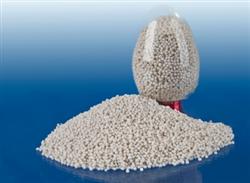
What tips are there for choosing compound fertilizer? Here is an introduction.
When choosing compound fertilizer, you can refer to the following methods:
The three major trends in the development of compound fertilizer:
The first is multi-variety specialization. Different crops have different specialized fertilizers, and specialized fertilizers are developed and produced according to the growth and development patterns of crops and their fertilizer absorption. When farmers choose compound fertilizer, they must select the corresponding specialized fertilizer for different crops. If it is not specialized, it violates the fertilizer absorption patterns of crops, the yield-increasing potential of crops cannot be brought into play, and at the same time some nutrient elements are wasted.
The second is multifunctional pesticide integration. By combining pesticides and fertilizers, the seed dressing procedure is eliminated, and a single application can both ensure the nutrients needed by crops and control underground pests and early seedling pests, achieving multiple effects.
The third is high concentration and long-lasting effect. With the development of agricultural production, high-concentration, long-lasting compound fertilizers are increasingly welcomed by farmers. The application of this type of fertilizer reduces the amount of fertilization, facilitates cultivation, eliminates the need for topdressing, reduces labor, improves fertilizer use efficiency, saves labor, effort, and time, and improves quality and efficiency.
How should compound fertilizer be chosen?
First, look at the packaging. Qualified products have double-layer packaging to prevent moisture and dampness. The outer surface of the packaging has three certificate numbers: namely the production license number, the business license number, and the product quality qualification registration certificate number. It has content labels for the three major nutrient elements nitrogen, phosphorus, and potassium, and has the manufacturer, address, and so on. After opening the outer packaging, there should be a product instructions manual inside the bag.
Second, look at the physical properties of the compound fertilizer. Compound fertilizer with good product quality has uniform and consistent particle size, does not cake, and does not crumble into powder.
Third, buy from regular manufacturers, whose production equipment and production technology are relatively advanced, and whose produced products have uniform particles, balanced nutrients, and stable quality. The products are developed by experts through long-term experiments according to soil nutrient conditions and the fertilizer requirements of crops, with scientific and reasonable formulas, strong targeting, complete nutrients, and sufficient content.
Fourth, choose compound fertilizer suitable for the local area. Most compound fertilizer produced locally is produced according to the soil nutrient content conditions of the local and surrounding areas, the fertilizer requirement patterns of crops, and fertilizer effects, and is highly targeted. Some farmers blindly buy compound fertilizer not suitable for local application, which not only affects crop growth and development, causes waste of individual nutrient elements, but also affects yield.
Fifth, avoid using "double-chlorine" compound fertilizer year after year. "Double-chlorine" compound fertilizer is compound fertilizer produced with ammonium chloride and potassium chloride as raw materials, in which the chloride ion content is high. Chloride ions are trace elements required for crop growth; an appropriate amount can promote crop growth, while an excessive amount can cause fertilizer damage. If "double-chlorine" compound fertilizer is applied year after year, the amount of chloride ions remaining in the soil is large, and excessive absorption by crops will cause "chlorine damage," while the soil will also suffer "salt damage."
Compound fertilizer is generally applied as a base fertilizer. Base application methods include application during pre-sowing land preparation, application in one line with seed fertilizer, and application in the second line of seed fertilizer, that is, side-deep fertilization. At present, compound fertilizer, especially long-lasting compound fertilizer, has the best effect when applied by side-deep placement. The position of side-deep application generally needs to reach a fertilizer distance of 5-7 cm to the side and deep from the seed. Side-deep application achieves separation of seed and fertilizer, avoiding burning of seeds and seedlings.
Click to get more compound fertilizer application techniques
Click to get more fertilizer application techniques