Sheep pox has a high mortality rate and causes severe losses; sheep farmers must guard against its spread
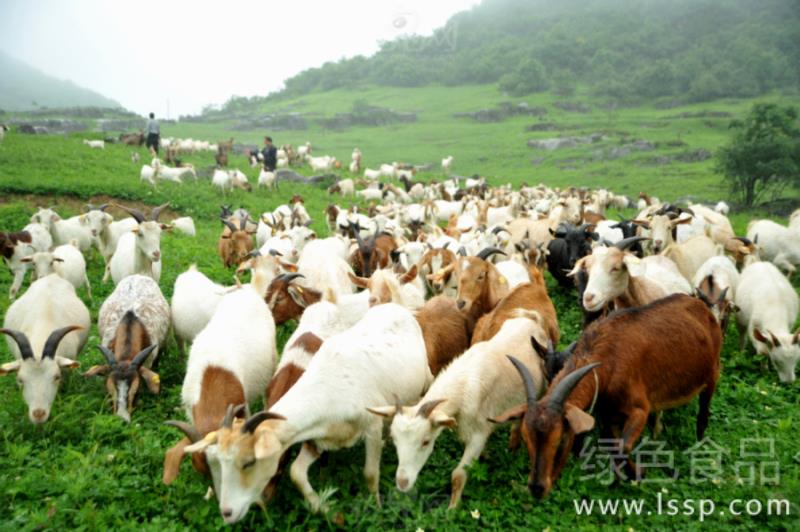
Sheep farming
Sheep pox is an acute, febrile, contagious infectious disease of sheep and goats caused by the sheep pox virus. The sheep pox virus mainly exists in the skin of diseased sheep, in the papules, pustules and scabs of mucous membranes, and in nasal mucosal secretions; when the body temperature of affected sheep rises, large amounts of the virus are also present in the blood of the diseased sheep. Diseased sheep are the main source of infection, and the disease is mainly transmitted through the air via the respiratory tract, but it can also invade the body through damaged skin or mucous membranes. The keepers and managers, nursing tools, fur and hide products, feed, bedding and external parasites are all vectors of transmission, and lambs are more susceptible than adult sheep, with a high mortality rate. An outbreak of sheep pox in a flock not only directly causes a relatively high mortality rate among diseased sheep, but also causes pregnant ewes to abort, and most affected ewes lose their productive capacity after the disease, which will bring enormous economic losses to sheep farms and households.
(1) Introduce breeding stock cautiously and strengthen quarantine to strictly prevent the introduction of the pathogen
When sheep farms and households introduce breeding stock or purchase sheep to raise, in addition to introducing stock from regular farms that have been certified by the animal husbandry department at or above the county level and issued a "Breeding Livestock and Poultry Production and Operation License," and the seller of the breeding sheep should also issue to the buyer relevant documents such as the "Breeding Sheep Certificate," "Breeding Sheep Pedigree File" and "Veterinary Health Certificate," before introducing stock or purchasing sheep, sheep farms and households should first investigate and learn from the animal quarantine department whether there is a sheep pox epidemic, and choose to introduce stock or purchase sheep from disease-free areas. When introducing stock or purchasing sheep, strict quarantine should be carried out through the local animal quarantine department, and only after the flock is proved healthy may the stock be introduced or the sheep purchased. After introducing breeding sheep or purchasing sheep, sheep farms and households should also carry out strict re-inspection and quarantine, and isolate the introduced breeding sheep or purchased sheep for feeding and observation for more than half a month. Only after they are confirmed healthy without doubt may they be moved into the pens and mixed with the flock for normal feeding, so as to strictly prevent the introduction of the pathogen through introduced stock or purchased sheep and cause infection and spread of sheep pox.
(2) Carry out flock vaccination well to improve the immunity of the flock
Sheep farms and households can vaccinate the flock with attenuated sheep pox vaccine in spring and autumn each year. Vaccinating pregnant ewes with sheep pox vaccine can easily cause abortion in ewes, so sheep farms and households should be cautious about vaccinating pregnant ewes with sheep pox vaccine; they can vaccinate about 20 d after the ewe gives birth. Newborn lambs can obtain a relatively high level of antibodies from the mother's colostrum, but lambs should be promptly given a booster vaccination against sheep pox at around 30 days of age, so as to improve the overall immunity of the flock.
(3) Do a good job in flock feeding and management to reduce the incidence of disease in the flock
Sheep farms and households should, according to the nutritional status of the flock, appropriately supplement the flock with concentrated feed to fatten them and maintain their body condition. You can use 40% soybean, 30% corn, 20% barley and 10% wheat, soak them in warm water for 6 to 8 h, grind them into a slurry, then add soybean cake, bran, salt and bone meal amounting to 10% to 15%, 5% to 8%, 1% and 3% to 5% of the total feed such as soybean respectively, and supplement-feed the flock 2 to 3 times a day, feeding each sheep 50 to 100 g of mixed concentrated feed each time. For young sheep and pregnant ewes, the amount of mixed concentrated feed should also be appropriately increased. At the same time, cold protection and warmth preservation for the flock should also continue to be done well; the sheep shed should be cleaned frequently, kept clean and dry, and the sheep shed, feeding utensils and surrounding environment should be disinfected regularly, so as to reduce the chance of natural infection with sheep pox in the flock.
(4) Promptly isolate and treat diseased sheep, and do a good job in follow-up disinfection of diseased sheep and harmless disposal of dead sheep
Once sheep farms and households discover an outbreak of sheep pox in the flock, they should promptly isolate the diseased sheep and suspected diseased sheep, and thoroughly disinfect the pens, feeding utensils and exercise yard. For diseased sheep, the pox areas can be washed with 0.1% potassium permanganate solution, then coated with iodine glycerin or Yunnan Baiyao plus propolis alcohol mixture, applying 2 to 3 times a day until the diseased sheep recover; serum can also be extracted from the blood of sheep that have recovered from sheep pox and separated for treatment. Generally, adult sheep are injected subcutaneously with 10 to 20 ml of serum per sheep, and young sheep are injected subcutaneously with 5 to 10 ml of serum per sheep. While carrying out symptomatic treatment on the affected parts of diseased sheep, corresponding antiviral, antibacterial and anti-inflammatory drugs should also be used. Ribavirin can be used at 0.1 g per kg of sheep body weight, and penicillin potassium or sodium salt at 4 to 5 mg, injected once a day, with 3 d of continuous medication as 1 course of treatment, and another course of treatment after an interval of 2 to 3 d; generally 2 to 3 courses of treatment can cure the disease. In addition, in order to prevent the spread of the pathogen, sheep farms and households should strengthen quarantine, daily hygiene management and disinfection of the flock, and strictly prohibit diseased sheep or suspected diseased sheep from entering breeding sites and flock grazing areas. Utensils, pens and sites contaminated by diseased sheep can be disinfected with 5% to 10% quicklime milk, or 1% to 2% caustic soda, or 30% plant ash water. Dead sheep must be subjected to harmless disposal such as deep burial or burning, and it is strictly prohibited to sell them or throw them away anywhere, so as to strictly prevent the spread of the pathogen.