Analysis of Causes of Death in Newborn Lambs and Nursing and Treatment Measures
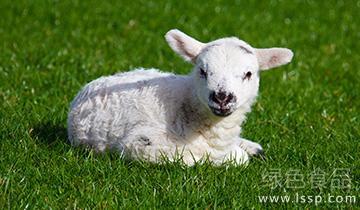
Lamb
Newborn lambs have low immunity and are prone to infection by various diseases, which can lead to death. The most common causes are as follows:
I. Lamb suffocation:Due to difficult birth in the ewe (intrauterine suffocation) or the lamb inhaling amniotic fluid, the newborn lamb within a short time (0.5-1 minute) has only a heartbeat and no breathing; this is lamb suffocation.
1. Symptoms: The newborn lamb has bluish-purple lips, breathing is gasping or very weak, or there is even no breathing; the heartbeat is slow and strong or fast and weak, and the heart rate is irregular; there are moist rales in the larynx and trachea, coughing, and weakness of the limbs.
2. Treatment: A medical intravenous infusion tube can be used to suck out the obstructing material in the lamb's respiratory tract (mucus, amniotic fluid), combined with artificial respiration. The operator holds the head of the sick lamb with the left hand and grasps the carpal joints of both forelimbs with the right hand, using the shoulder as the axis to swing back and forth. The rate is 30-60 times per minute, first fast then slow, until the lamb resumes breathing. Alternatively, 25 ml of 25% glucose, plus 0.1 g of vitamin C and 0.3 ml of 25% nikethamide, can be injected into the umbilical vein.
II. Lamb constipation:One to two days after birth, the lamb has difficulty passing meconium.
1. Symptoms: The sick lamb is listless, has no appetite, arches its back, and keeps groaning without passing feces. In most lambs, a small amount of dark green meconium can be seen outside the anus.
2. Treatment: Soft soapy water or warm water can be put into a rubber ear syringe and connected to a medical catheter for deep enema. Oral phenolphthalein-type laxatives may be given, such as 1-2 tablets of bisacodyl acetate, or 1/2-1 tablet of phenolphthalein (each tablet contains 0.1 g of phenolphthalein).
III. Lamb pneumonia:Lambs can develop pneumonia either in the uterus or after birth, and the common form is bronchitis. It generally occurs from infection before birth or 2-3 days after birth. The main causes are poor warmth keeping, catching cold, and weakened body resistance, with pneumonia caused by infection with Escherichia coli, Staphylococcus, or Streptococcus.
1. Symptoms: Mental depression, reduced suckling, slow response, choking cough, foaming at the mouth, accelerated heartbeat, shallow and rapid breathing, bluish-purple lips, and even coldness of the whole body, with weak bleating or no bleating.
2. Treatment: For lambs that develop the disease 3 days after birth, inject 0.5-1 ml of kanamycin intramuscularly, twice daily. For affected lambs more than 3 days after birth, use 200,000-400,000 units of penicillin and 0.125-0.25 g of streptomycin, intramuscularly once daily, or inject penicillin into the thoracic cavity, that is, take 50,000-100,000 units of penicillin solution and inject 1-2 cm deep at the 6th-8th intercostal space on the side of the sick lamb, 4-5 cm from the middorsal line, twice daily for 2-3 consecutive days.
IV. Lamb dysentery:It is mostly seen 1-3 days after birth in lambs. The pathogens are relatively complex, and common ones include Clostridium welchii types B and D, Escherichia coli, enteric bacilli, and Salmonella.
1. Symptoms: There are several kinds of bacteria that cause lamb dysentery, and they can cause disease alone or in mixed infection. The clinical symptoms fall into two categories: one type has an acute onset, with lethargy, thin saliva flowing from the mouth, weakness of the limbs in the sick lamb, lying down and unable to rise, and death within 2-4 hours. In cases with a slightly longer course, there is severe diarrhea, with white, yellow, or green watery feces and a foul odor, containing purulent mucus and undigested flocculent milk curds, sometimes with bloody feces, groaning, arched back and contracted abdomen, tenesmus, and anal incontinence. The animal is dull and the eyeballs are sunken, and it dies of exhaustion within 1-2 days.
The other type is that the sick lamb has reduced appetite, and the condition rapidly worsens, with white foam at the mouth, difficulty breathing, cyanotic mucous membranes, shallow and rapid breathing at 60-170 times per minute, and a normal or slowed heartbeat at 70-150 times per minute. Gastrointestinal peristalsis is weakened or absent, and abdominal distension and abdominal pain may be seen without diarrhea; finally, the animal becomes comatose, body temperature drops, and it dies within several hours.
2. Treatment: Orally administer oxytetracycline or intramuscularly inject 0.5-1 ml of kanamycin, twice daily. Alternatively, 5 ml of 10% sodium sulfathiazole, 50 ml of 25% glucose, 1 ml of 0.1% atropine, and 0.5 ml of 25% caffeine sodium benzoate can be mixed and injected intravenously.
The above are several common situations. Different treatment and nursing measures should be adopted according to different conditions, so as to improve the survival rate of newborn lambs and increase breeding benefits.