How to carry out prevention and control in winter free-range chicken farming to improve profitability
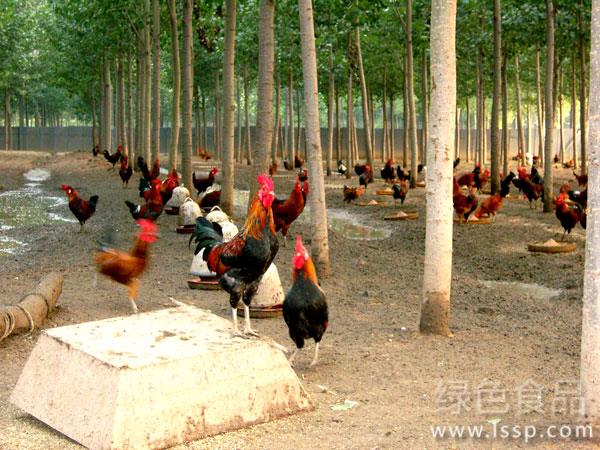
Free-range chicken farming
In recent years, people's demands for food safety and nutritional value have grown higher and higher, which has greatly promoted ecological free-range chicken farming, and the farming scale has kept expanding. However, in actual production, some chicken farmers do not understand the characteristics of free-range chicken farming or the techniques for epidemic prevention and disease elimination, and assume that free-range chickens have strong disease resistance, so they do not even inject vaccines and simply let them fend for themselves. As a result, free-range chickens suffer frequent outbreaks of disease and low survival rates, which seriously reduces overall farming profitability.
Right now we are in the transition between autumn and winter, when the climate is cold and changeable, the temperature difference between day and night is large, and chickens have low resistance, making them prone to Newcastle disease, avian influenza, fowl pox and other diseases. Therefore, when raising free-range chickens, everyone should be extra attentive, raise them carefully and do a good job of epidemic prevention. As long as the effort is put in, farming profitability will naturally rise.
I. Chicks are prone to infectious bursal disease; disinfection and immunization for prevention
The pathogen of infectious bursal disease is infectious bursal disease virus of the family Reoviridae. The disease occurs most often at 2-6 weeks of age, and immunized flocks still develop it. Generally, clinical symptoms appear 2-3 days after infection.
Clinical symptoms
1. Eyes closed and drowsy, complete loss of appetite, self-pecking in the early stage, and white milk-like watery droppings. 2. Rapid onset, high incidence, showing a sharp-peak mortality curve. Generally deaths peak 3-4 days after infection and decrease at 7-9 days. 3. Chickens that survive are anemic, grow poorly and suffer from many diseases.
Necropsy changes
1. Hemorrhagic spots or patches on the pectoral muscles and leg muscles, ulcers and hemorrhagic patches at the junction of the gizzard and proventriculus, and hemorrhages in the intestinal mucosa. 2. The kidneys are swollen to varying degrees, with urate deposits inside. 3. The bursa of Fabricius is enlarged, with yellow transparent gelatinous material on the outside; in severe cases the bursa of Fabricius looks like a purple grape, with swollen, hemorrhagic inner folds and inflammatory secretions inside; in the late stage of infection the bursa of Fabricius atrophies, with white mucus inside. The ceca and tonsils are swollen and ulcerated.
Prevention and control measures
1. Raise the maternal antibody level of breeding free-range chickens. Breeder chickens are vaccinated twice with bursal disease oil vaccine at 18-20 weeks of age and 40-42 weeks of age. 2. Do a good job of environmental sanitation. This disease is most susceptible at 3-8 weeks of age; during this period, the brooding room, chicken house and equipment should be thoroughly disinfected. 3. Formulate a reasonable immunization program.
II. Actively prevent avian influenza; vaccinate with multivalent vaccines
Avian influenza is prone to occur during the transition between autumn and winter, and most poultry and wild birds are susceptible. The pathogen is type A influenza virus of the Orthomyxoviridae. It spreads through the digestive tract, respiratory tract, contact, air and other routes.
Clinical symptoms
Highly lethal type: 1. Sudden outbreak, death without any symptoms. 2. In cases with a slightly longer course, elevated body temperature, reduced feed intake, purple comb and wattles, swollen head, tearing and difficulty breathing. 3. Diarrhea in broilers, with neurological symptoms and incoordination.
Low-lethality type: 1. Green watery droppings, with individual cases of swollen head, swollen eyes and swollen lower jaw. 2. Hemorrhage and blackening of the comb, with secretions in the nostrils. 3. Reduced feed intake, decreased egg production or even complete cessation of laying. 4. Faded eggshell color and an increase in deformed eggs. 5. Hemorrhage in the heart muscle and leg muscles, and red, swollen, hemorrhagic bursa of Fabricius. These are newly emerging lesions. 6. Patchy and streaky hemorrhages at the junction of the proventriculus and gizzard and at the junction of the proventriculus and esophagus.
Necropsy changes
In the most acute cases there are no gross lesions; in cases with a slightly longer course, hemorrhages occur in the oral mucosa, proventriculus, keratin layer of the gizzard, anterior segment of the duodenum, cloaca and leg scales, and the pancreas is hemorrhagic or necrotic.
Preventive measures
Because there are many viral serotypes and they mutate quickly, multivalent vaccines should be used as far as possible.
Immunization program: first vaccination at 10 days of age, 0.25 ml per bird, by subcutaneous injection in the neck; second vaccination at 40-50 days of age, 0.5 ml per bird, by subcutaneous injection in the neck or intramuscular injection; third vaccination at 100-110 days of age, 0.5 ml per bird, by intramuscular injection; the fourth vaccination is carried out in the middle of the laying period.
Treatment methods
There are no effective treatment measures for highly pathogenic influenza. For moderately and low pathogenic influenza, disinfect with the chickens 1-2 times a day, use Kedu Jingang, Qingwen Baidu San and others continuously in the feed for 5-6 days, and at the same time add antibiotics to drinking water or feed to prevent secondary infection. Appropriately increase the amount of Vc and VE in drinking water. After laying hens recover, use oviduct medication for 3-4 weeks to promote oviduct healing and enhance laying function.
III. Once Newcastle disease occurs, emergency vaccination requires a sequence
Newcastle disease, commonly known as fowl pest, is a highly contagious, acute infectious disease caused by Newcastle disease virus. It can occur in all four seasons, but early spring, autumn and winter are periods of susceptibility, and the incidence and mortality rates are as high as over 90%. Free-range chickens of all ages can be infected; chicks are mostly affected at 20-40 days of age, and laying hens are mostly affected at 180-250 days of age.
Clinical symptoms
Virulent type: difficulty breathing, watery yellow-green droppings, a sharp drop in the laying rate of laying hens, a marked increase in soft-shelled and deformed eggs, and typical neurological symptoms during the recovery period.
Atypical type: 1. Respiratory symptoms of varying degrees, such as open-mouth breathing and panting, and occasionally yellow-green watery droppings. 2. A small number of chickens with a longer course of disease show neurological symptoms such as head tilting, unsteady standing, drooping wings or paralysis. 3. Laying hens show a decreased laying rate, an increase in soft-shelled and thin-shelled eggs, green watery droppings, accompanied by respiratory symptoms. 4. After disease occurs in chicks or growing flocks, the main manifestations are neurological symptoms such as paralysis, head shaking and twisting; the daily mortality rate is not high, but deaths last for a long time.
Necropsy changes
Severe hemorrhage and congestion of the trachea, the crop filled with sour-smelling liquid, hemorrhage of the proventricular papillae, hemorrhagic patches in multiple places in the intestinal tract or jujube-pit-shaped ulcer foci in the lymphoid follicles, and severe hemorrhage of the cloaca.
Treatment methods
Once Newcastle disease occurs in a flock, emergency prevention and control measures should be taken immediately: seal off the chicken farm, carry out emergency disinfection, isolate in groups, and carry out emergency vaccination for the entire flock. For vaccination, use Newcastle disease strain IV vaccine at 2-4 times the dose. The vaccination sequence is healthy flock, suspect flock, affected flock.
In the early stage of the disease in the flock, 100 g of Kangdu Ling can be mixed with 600 jin of water and 100 g of Changgankang with 400 jin of water to prevent secondary infection; the combined use of Wendu Ke and Pugan Xin has a significant effect.
IV. Fowl pox is prone to spread in autumn and winter; wing-web stab vaccination is the most feasible
The pathogen of this disease is fowl pox virus. Chickens of all ages can be infected, but growing chickens and adult free-range chickens are most susceptible. It is prone to spread in autumn and winter; in winter the mucosal type is predominant, and in autumn the skin type is predominant. The disease spreads through bites by mosquitoes and mites and through infection of skin and mucosal wounds.
Clinical symptoms
1. Skin type: gray small nodules on the comb, eyelids, corners of the mouth and other parts, which later form black scabs. 2. Mucosal type: necrotic white pseudomembranes on the oral pharynx and tracheal mucosa. 3. Mixed type: both of the above occur at the same time, and the condition is more severe.
Fowl pox is easy to diagnose; a 1:5 suspension made from oral pseudomembranes or pox scabs is inoculated onto the skin hair follicles of chickens, and typical fowl pox symptoms appear in about one week.
Preventive measures
1. Strengthen sanitation, disinfection and management, and prevent mosquito breeding. 2. Vaccinate against fowl pox. Use the wing-web stab method; after vaccination, observe for 5-10 days to see whether scabs appear, and if not, revaccinate.
Treatment methods
At present there is no specific drug, and treatment is mainly symptomatic. Pox scabs on the skin are generally left untreated; when necessary, carefully peel off the pox scabs with tweezers and apply iodine tincture to the wound. For the diphtheritic type, peel off the pseudomembrane with tweezers, wash with 0.1% potassium permanganate, and then apply cod liver oil or iodine glycerin. When a large group is affected, Kangdu Ling and Banlangen can be used in drinking water, and morpholine guanidine and Abe cephalosporin mixed into the feed have a relatively good effect.